

Our Verdict
Raised beds are a genuinely practical option for gardeners dealing with poor native soil, limited mobility, or small, defined spaces. However, they require a meaningful upfront investment and ongoing attention to watering and soil replenishment that in-ground beds do not. They are not inherently superior - just different.
Ideal for gardeners with compacted or contaminated native soil, physical limitations that make bending difficult, or those who want precise control over a compact growing area.
What Is a Raised Garden Bed?
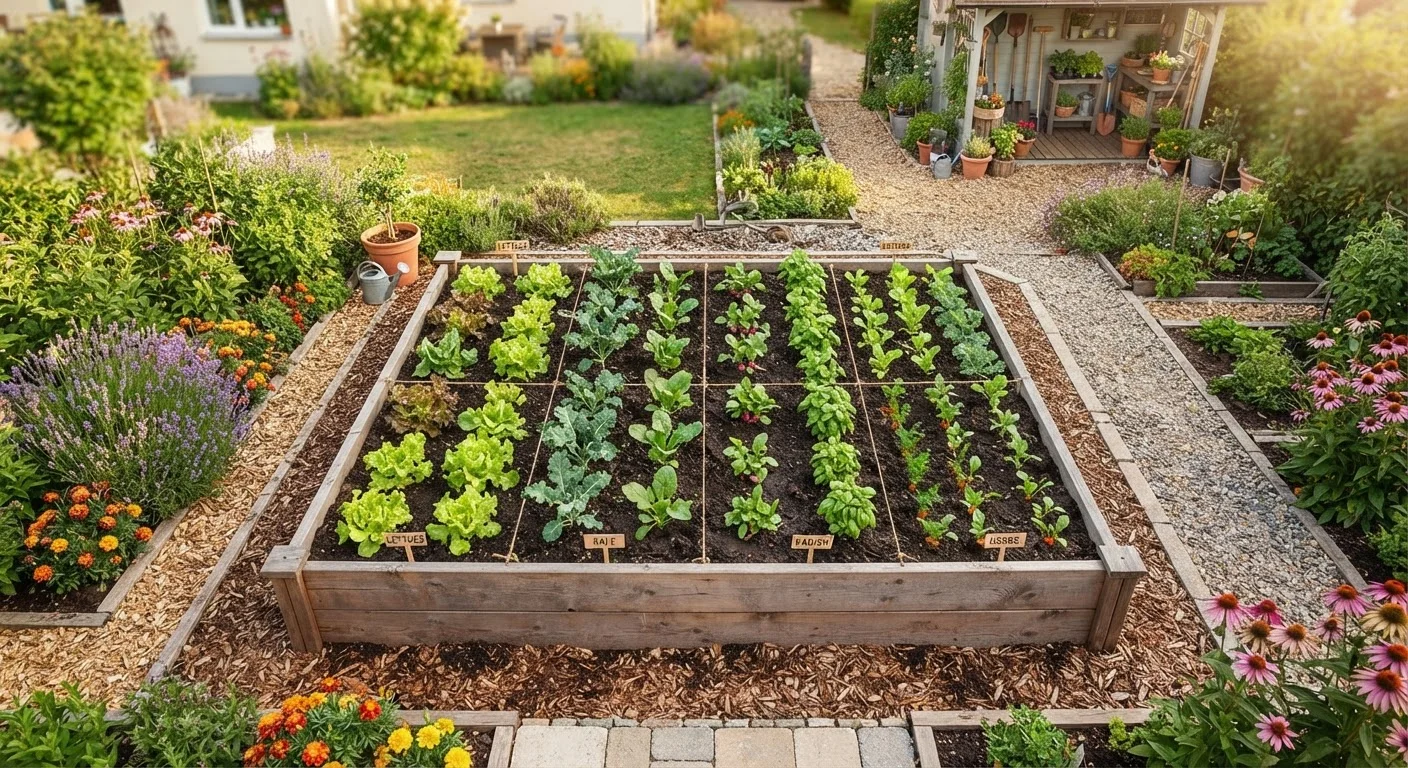
A raised garden bed is a contained growing space built above the existing ground level - typically framed with wood, galvanized metal, composite lumber, or brick. You fill it with a custom soil mix rather than relying on whatever soil already exists beneath it.
This simple distinction drives nearly every advantage and disadvantage on this list. Because you're building your growing environment from scratch, you gain enormous control - but you also take on the full cost and responsibility of creating and maintaining it. If you're new to growing food outdoors, our beginner's vegetable garden guide covers the foundational decisions you'll face regardless of which garden format you choose.
The Real Advantages
Full control over soil quality from day one
You choose what goes into your bed, which means poor native soil becomes irrelevant. A well-mixed blend of compost, topsoil, and amendments gives plants an immediate advantage.
Superior drainage in wet or clay-heavy yards
Elevated beds shed excess water naturally, reducing the waterlogging that stunts root growth and encourages root rot in flat, compacted ground.
Reduced weed pressure, especially early on
Starting with fresh soil eliminates much of the existing weed seed bank. Coupled with mulching, raised beds can dramatically reduce weeding time over a season.
Easier on the back and knees
A bed built 12-24 inches tall means significantly less bending. For gardeners with mobility limitations or chronic pain, this accessibility difference can be decisive.
Soil warms faster in spring
Elevated beds absorb heat more quickly than ground-level soil, allowing earlier planting dates - often by two to four weeks depending on climate and bed depth.
The soil control benefit is hard to overstate. Many American yards have clay-heavy, compacted, or nutrient-depleted native soil that makes growing vegetables genuinely difficult. Filling a raised bed with a quality mix of topsoil, compost, and other amendments sidesteps that problem entirely. To build and maintain excellent soil over time, pairing a raised bed with a home composting practice pays real dividends - see our guide on composting at home for a practical starting point.
Drainage is another meaningful win. Elevated beds don't become waterlogged after heavy rain the way flat ground can, which protects root health and reduces fungal disease pressure. Weeds are also significantly easier to manage, especially in the first season, because you're starting with fresh soil rather than an established weed seed bank.
6-8 inches
Minimum recommended raised bed depth
Most cooperative extension services suggest a minimum of 6-8 inches of soil depth for annual vegetables, with 12 inches or more preferred for root crops.
3-5 years
Average lifespan of untreated pine frames
Untreated softwood lumber typically begins to deteriorate within a few growing seasons in moist soil contact, according to general horticultural guidance from university extension programs.
The Real Disadvantages
High upfront cost for materials and soil
Between framing materials and enough quality soil mix to fill even a modest bed, initial costs can run well into the hundreds of dollars - far more than tilling an in-ground plot.
Dries out faster, demanding more frequent watering
Greater air exposure around the bed and faster drainage mean the soil dries out more quickly than in-ground gardens, which can strain water bills and scheduling during hot stretches.
Soil volume shrinks and needs annual replenishment
Organic matter in the soil mix decomposes over each growing season, causing the bed to settle. Topping up with compost or fresh mix each spring is necessary to maintain productivity.
Limits deep-rooted crops if built too shallow
Root vegetables like carrots and parsnips need at least 12 inches of loose soil depth. Beds shallower than that constrain what you can grow successfully.
Frame materials require maintenance or replacement
Untreated wood beds commonly last only three to five years before rotting. Longer-lasting options cost more upfront and may require research into material safety near food crops.
Cost is where raised beds lose the comparison against in-ground gardening most decisively. A single 4×8-foot bed can require several cubic feet of imported soil mix, and quality blends are not cheap. Frame materials add to that - untreated lumber will rot within a few years, pressure-treated lumber raises questions about chemical leaching near edibles (though modern formulations are considered safer), and long-lasting materials like cedar or galvanized steel carry a premium price. If keeping project costs manageable is a priority, our home improvement budgeting strategies article offers broadly applicable approaches to planning expenditures wisely.
Moisture retention is another consistent challenge. Raised beds expose more soil surface to air and sun, meaning they dry out faster than in-ground plots - sometimes requiring daily watering in hot weather. A drip irrigation system can help significantly; our comparison of drip systems and sprinklers explains the trade-offs between watering methods. Lastly, deep-rooted crops like parsnips or some potato varieties may feel genuinely constrained if bed depth is under 12 inches.
Raised Beds vs. Other Growing Options
It's worth placing raised beds in the context of the alternatives. In-ground gardening has a lower barrier to entry and virtually no material cost, but it requires workable native soil and more effort managing weeds and drainage. Containers, by contrast, offer even greater portability and control but at the cost of smaller volume and more intensive watering and feeding. Our container gardening guide is worth a look if you're weighing that option.
A Note on Bed Frame Materials and Food Safety
Older pressure-treated lumber used chromated copper arsenate (CCA), which is no longer approved for residential use. Modern pressure-treated wood uses different preservatives generally considered safe for garden use, though many gardeners still prefer untreated cedar, redwood, or galvanized metal as a precaution. If you're unsure about lumber at a salvage yard or inherited bed, it's safest to replace it. Always verify current guidance from your local cooperative extension service, as recommendations can vary.
One underappreciated consideration is sunlight. Raised beds don't conjure sun where none exists - if your yard is heavily shaded, a raised bed won't solve that problem. Before investing in materials, map your yard's sun exposure through a full day. For shaded situations, our shade gardening guide covers which plants actually thrive in lower-light conditions.
The content on this site is provided for informational purposes only and should not be considered a substitute for professional advice. While we strive to provide accurate and up-to-date information, we make no guarantees regarding its completeness or accuracy. Always consult a qualified professional for advice specific to your circumstances before making any decisions.