

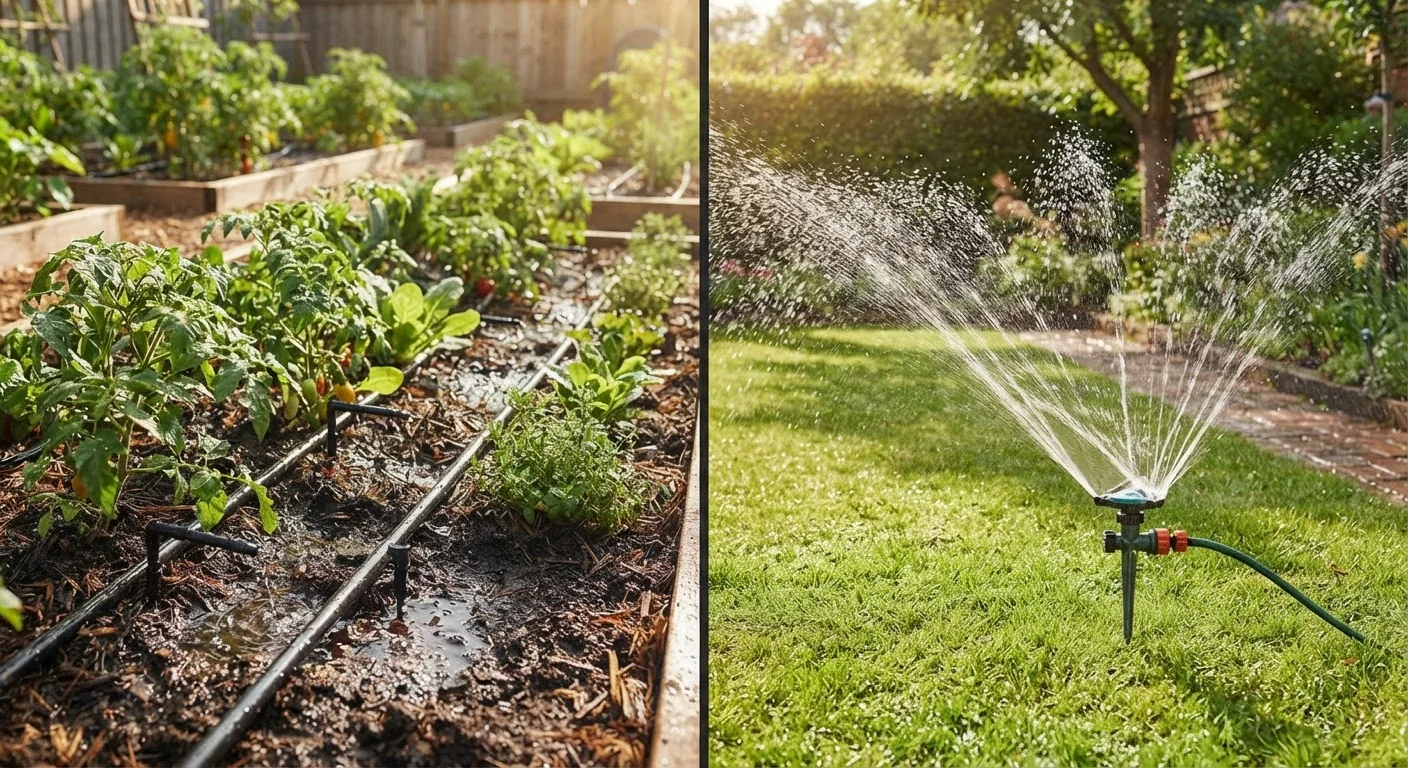
Option A
Drip Irrigation
The targeted, water-efficient method for beds and borders.
Best for: Best for vegetable gardens, flower beds, shrubs, and drought-conscious gardeners who want precise, low-waste watering.
Option B
Sprinkler Systems
The broad-coverage solution for lawns and open areas.
Best for: Best for established lawns, large open spaces, and gardeners who need uniform coverage over wide areas quickly.
How Each System Delivers Water
Understanding how these two systems work makes their trade-offs much easier to evaluate.
Drip irrigation uses a network of flexible tubing laid along the soil surface or buried just below it. Emitters - small fittings spaced along the tubing - release water slowly and directly at each plant's root zone. Flow rates are typically measured in gallons per hour rather than gallons per minute, which means the soil absorbs water gradually without pooling or runoff. Because water goes underground rather than into the air, evaporation losses are minimal.
Sprinkler systems distribute water overhead, mimicking rainfall. Pop-up heads or rotating rotors spray water across a set radius. Coverage is broad and relatively uniform, which is why sprinklers are the standard choice for lawns. The trade-off is that a meaningful portion of water is lost to evaporation - especially when running during warm or windy conditions - and wet foliage can invite fungal problems in some plants.
| Criterion | Drip Irrigation | Sprinkler Systems |
|---|---|---|
| Water delivery method | At the root zone via emitters | Overhead spray or mist |
| Best suited for | Beds, borders, vegetables, shrubs | Lawns and open turf areas |
| Water efficiency | High - minimal evaporation | Moderate - evaporation varies by conditions |
| Setup complexity | Moderate - DIY-friendly with planning | Higher - in-ground versions need trenching |
| Foliage wetting | None - keeps leaves dry | Yes - wets foliage and stems |
| Weed suppression | Better - only root zones are wet | Less - broad wetting encourages weeds |
| Winterization needed | Tubing removal or drainage | Blowout or drainage for in-ground systems |
Installation, Maintenance, and Cost Considerations
Neither system is plug-and-play, but their complexity differs in important ways.
A basic drip system can often be assembled from components available at home improvement stores, connected directly to an outdoor spigot with a timer. Tubing is cut to length, emitters are pressed in, and the layout follows your planting beds. The initial setup takes time - planning emitter placement around individual plants - but once installed, drip systems require relatively little day-to-day attention. Filters and pressure regulators help protect the small emitters from clogging, and seasonal flushing keeps the lines clear.
Sprinkler systems, particularly in-ground versions, typically require more planning, trenching, and often professional installation to ensure correct head placement and pressure zoning. Above-ground oscillating or impulse sprinklers are simpler to deploy but need to be moved manually for full coverage. In-ground systems usually need winterization in cold climates to prevent pipe damage from freezing.
Combining Both Systems Is Common
Many homeowners run drip lines through planting beds while a separate sprinkler zone covers the lawn - each system does what it does best. Modern irrigation controllers can manage multiple zones independently, allowing you to schedule each system according to the specific water needs of that area. This hybrid approach avoids the compromises that come from trying to make one system do everything.
For gardeners building out a dedicated planting space, the raised garden bed trade-offs guide covers drainage and soil control considerations that pair directly with drip irrigation planning.
Water Efficiency and Plant Health
Water efficiency is one of the clearest areas where these two systems diverge.
Drip irrigation applies water slowly enough for the soil to absorb it fully, which reduces both runoff and deep percolation below the root zone. Keeping foliage dry also lowers the risk of fungal diseases - a meaningful benefit for tomatoes, squash, and other moisture-sensitive vegetables. Pairing drip irrigation with a layer of mulch amplifies these benefits considerably; see the guide to mulch types for how different materials interact with soil moisture.
Sprinklers distribute water broadly, which is exactly right for grass - a crop that covers its entire root zone evenly. However, watering habits still matter enormously. Shallow, frequent watering from any system can weaken plant root systems over time. The guide on watering habits that weaken grass breaks down how timing and depth affect long-term lawn health, regardless of which irrigation method you use.
If you're also exploring lower-water planting strategies, native plants naturally pair well with drip systems since they often need less supplemental water once established.
~90%
Efficiency rate of drip irrigation
The U.S. Environmental Protection Agency estimates drip irrigation can be up to 90% efficient, compared to roughly 50-70% for conventional sprinkler systems.
50%
Potential water savings over sprinklers
According to EPA WaterSense program guidance, switching from overhead sprinklers to drip irrigation in garden beds can reduce water use by up to 50%.
The content on this site is provided for informational purposes only and should not be considered a substitute for professional advice. While we strive to provide accurate and up-to-date information, we make no guarantees regarding its completeness or accuracy. Always consult a qualified professional for advice specific to your circumstances before making any decisions.