

Start here
Choosing Your Plot: Size, Sun, and Location
Next
Preparing the Soil Before You Plant
Then
Picking the Right Plants for Beginners
When you're ready
Watering, Feeding, and Ongoing Care
Before you finish
Common First-Year Mistakes and How to Avoid Them
Choosing Your Plot: Size, Sun, and Location
The two non-negotiables for a productive vegetable garden are sunlight and reasonable soil. Before you dig anything, spend a day observing your yard and tracking which areas receive direct sun. Most vegetables require a minimum of six full hours of sunlight daily - eight is better for fruiting crops like tomatoes and peppers. Shaded spots can still host herbs or leafy greens, but expect slower growth and smaller yields.
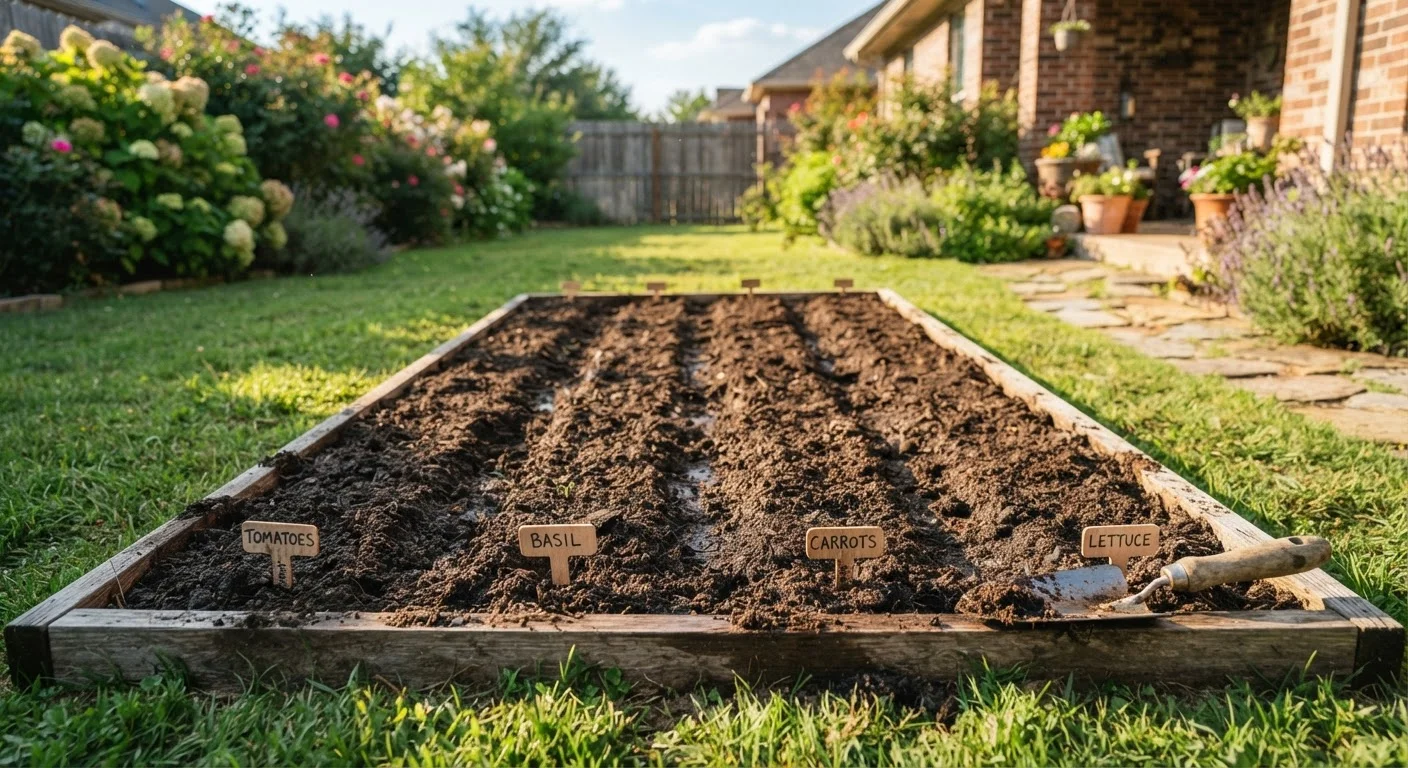
Keep your first plot genuinely small. A 4×8-foot bed is widely recommended for beginners because it offers a manageable workload, enough variety to learn from, and a footprint that won't become a chore. Trying to tend a large plot before you understand watering schedules, pest pressure, and soil behavior is one of the most common reasons first-time gardeners give up by midsummer.
Choose a spot close to a water source. Hauling a heavy hose across the yard on a hot afternoon is the fastest way to skip a watering session. Proximity to your kitchen is also underrated - gardens you can see from the window get tended more consistently. If you don't have ground space, container growing is a real alternative; see our guide to container gardening for vegetables and herbs for a full breakdown.
Preparing the Soil Before You Plant
Healthy soil does more work than any fertilizer or tool you can buy. Vegetable roots need loose, well-draining soil rich in organic matter to anchor the plant, draw up moisture, and access nutrients. Before planting anything, assess what you're working with.
Dig down about 12 inches. Loamy soil - dark, crumbly, and earthy-smelling - is ideal. If yours is dense and sticky (clay) or pale and gritty (sand), you'll need to amend it. The single most useful amendment for almost any soil type is compost. Working two to four inches of finished compost into the top 10-12 inches of soil improves drainage in clay, adds water retention in sand, and boosts microbial activity in both. Our guide to composting at home explains how to produce your own from kitchen and yard waste.
Test your soil pH if possible. Vegetables generally thrive in a slightly acidic to neutral range (roughly 6.0-7.0). Inexpensive soil test kits are available at most garden centers and give you a baseline before you invest in plants. Lime raises pH; sulfur lowers it - but adjust gradually and retest before adding more.
Loamy soil
A balanced mix of sand, silt, and clay that drains well while still holding moisture and nutrients - generally considered the most productive soil type for vegetables.
Compost
Decomposed organic material (food scraps, leaves, plant matter) that is mixed into soil to improve its structure, drainage, and fertility.
Soil pH
A scale from 0 to 14 measuring how acidic or alkaline your soil is. Most vegetables grow best when the pH sits between 6.0 and 7.0.
Direct-sow
Planting seeds directly into outdoor garden soil rather than starting them indoors in containers first.
Cool-season crops
Vegetables that grow best in cooler spring or fall temperatures and can tolerate light frost - examples include lettuce, peas, and spinach.
Last frost date
The approximate calendar date after which freezing temperatures are unlikely in your area. Used to time planting of frost-sensitive crops.
Picking the Right Plants for Beginners
Resist the urge to grow everything at once. A focused first garden - five to seven crop types - teaches you far more than a chaotic mix of twenty. Prioritize crops that are fast to germinate, tolerant of beginner mistakes, and satisfying to harvest.
- Lettuce and salad greens - ready in as little as 30 days; thrive in cooler weather
- Radishes - mature in 3-4 weeks; excellent for filling gaps between slower crops
- Bush beans - direct-sow after frost, minimal staking, heavy producer
- Zucchini - nearly foolproof; one or two plants yield more than most households eat
- Cherry tomatoes - more forgiving than large beefsteak varieties; prolific fruiting
Pay attention to your planting window. Cool-season crops (lettuce, peas, spinach, radishes) go in weeks before your last expected frost date. Warm-season crops (tomatoes, beans, cucumbers) wait until overnight temperatures are reliably above 50°F. Check the seed packet - it contains region-specific timing guidance that's hard to beat.
If you're starting from seed indoors, begin tomatoes and peppers 6-8 weeks before your last frost date. Everything else can typically be direct-sown into prepared soil outdoors.
Start With Transplants for Tomatoes and Peppers
If this is your first season, buying young tomato and pepper transplants from a local nursery is far easier than starting them from seed. Transplants give you a 6-8 week head start and skip the trickiest stage of growing. Save seed-starting for your second or third year once you've got a feel for your space and schedule.
Watering, Feeding, and Ongoing Care
Inconsistent watering is the most common cause of vegetable problems, from blossom drop in tomatoes to bitter lettuce. The goal is steady, deep moisture rather than frequent shallow sprinkles. Aim for about one inch of water per week through a combination of rainfall and supplemental irrigation.
Water at the base of the plant, not the leaves, to reduce disease pressure. Morning watering is preferable - foliage that gets wet in the evening stays damp overnight, which encourages fungal problems. A soaker hose or drip line is one of the most effective investments a beginning gardener can make because it delivers water where it's needed and frees up your time.
For feeding, compost-amended soil often provides enough nutrients for a full season. If plants show slow growth or yellowing leaves after several weeks, a balanced slow-release fertilizer applied according to package directions is a reasonable response. Avoid over-fertilizing with nitrogen - it encourages lush leafy growth at the expense of fruit production in tomatoes, peppers, and cucumbers.
Weed consistently, especially in the first few weeks. Young vegetable seedlings cannot compete with established weeds for water and nutrients. A two-inch layer of straw or wood chip mulch around plants suppresses weeds, retains moisture, and keeps soil temperature more stable.
Common First-Year Mistakes and How to Avoid Them
Even well-prepared beginners run into predictable stumbling blocks. Knowing them in advance gives you a meaningful edge.
- Planting too densely
- Crowded plants compete for light, water, and nutrients. Follow seed packet spacing - it exists for a reason. Thinning seedlings feels wasteful but produces healthier, more productive plants.
- Ignoring the seed packet
- Days to maturity, spacing, sun requirements, and planting depth are all printed on the packet. Treat it as your primary reference.
- Skipping the soil prep
- Buying transplants and dropping them into unprepared soil is a frequent first-year mistake. Soil investment pays back in yield more reliably than any other input.
- Overwatering
- More plants are killed by too much water than too little. Soggy soil starves roots of oxygen. The finger test - pressing two inches into the soil - is more reliable than a fixed daily schedule.
Before the season begins, it's also worth reviewing your full outdoor space. Our spring yard prep checklist walks through getting garden beds, tools, and the surrounding landscape ready zone by zone - a useful complement to your first planting plan.
Avoid Soil from Unknown Sources
Free or heavily discounted bulk soil can contain weed seeds, contaminants, or pathogens that set your garden back significantly. If you're sourcing soil or amendments in bulk, choose suppliers who can tell you the origin and composition. When in doubt, a bagged compost or garden mix from a reputable retailer is a safer starting point for a first garden.
Frequently Asked Questions
A 4×8-foot raised or in-ground bed is plenty for a beginner. That size gives you room to grow several different crops without the workload becoming overwhelming. You can always expand next season once you understand how the space performs.
Lettuce, radishes, green beans, zucchini, and cherry tomatoes are consistently forgiving choices. They germinate reliably, tolerate minor mistakes in watering or feeding, and produce harvests within a single season so you get meaningful feedback quickly.
Most vegetable gardens need about one inch of water per week, either from rain or irrigation. Rather than watering lightly every day, water deeply two to three times a week so moisture reaches several inches down. Check soil moisture by pressing a finger two inches into the soil - if it feels dry, water.
If you amend your soil with compost before planting, heavy fertilization is often unnecessary at first. A slow-release balanced fertilizer worked into the soil at planting time is a reasonable starting point. Monitor plant leaf color - yellowing can signal nitrogen deficiency and may prompt a mid-season feeding.
Both work well. Raised beds offer easier soil control and better drainage, which can be especially helpful if your native soil is heavy clay or compacted. In-ground beds cost less to set up. Our article on <a href="/home-garden/lawn-garden/raised-garden-beds-a-thorough-look-at-the-trade-offs">raised bed trade-offs</a> walks through the honest pros and cons.
The right timing depends on your local climate and the crops you want to grow. Cool-season crops like lettuce and peas can go in several weeks before the last expected frost. Warm-season crops like tomatoes and peppers should wait until after frost risk has passed. Check your USDA Plant Hardiness Zone for local frost date guidance.
The content on this site is provided for informational purposes only and should not be considered a substitute for professional advice. While we strive to provide accurate and up-to-date information, we make no guarantees regarding its completeness or accuracy. Always consult a qualified professional for advice specific to your circumstances before making any decisions.