

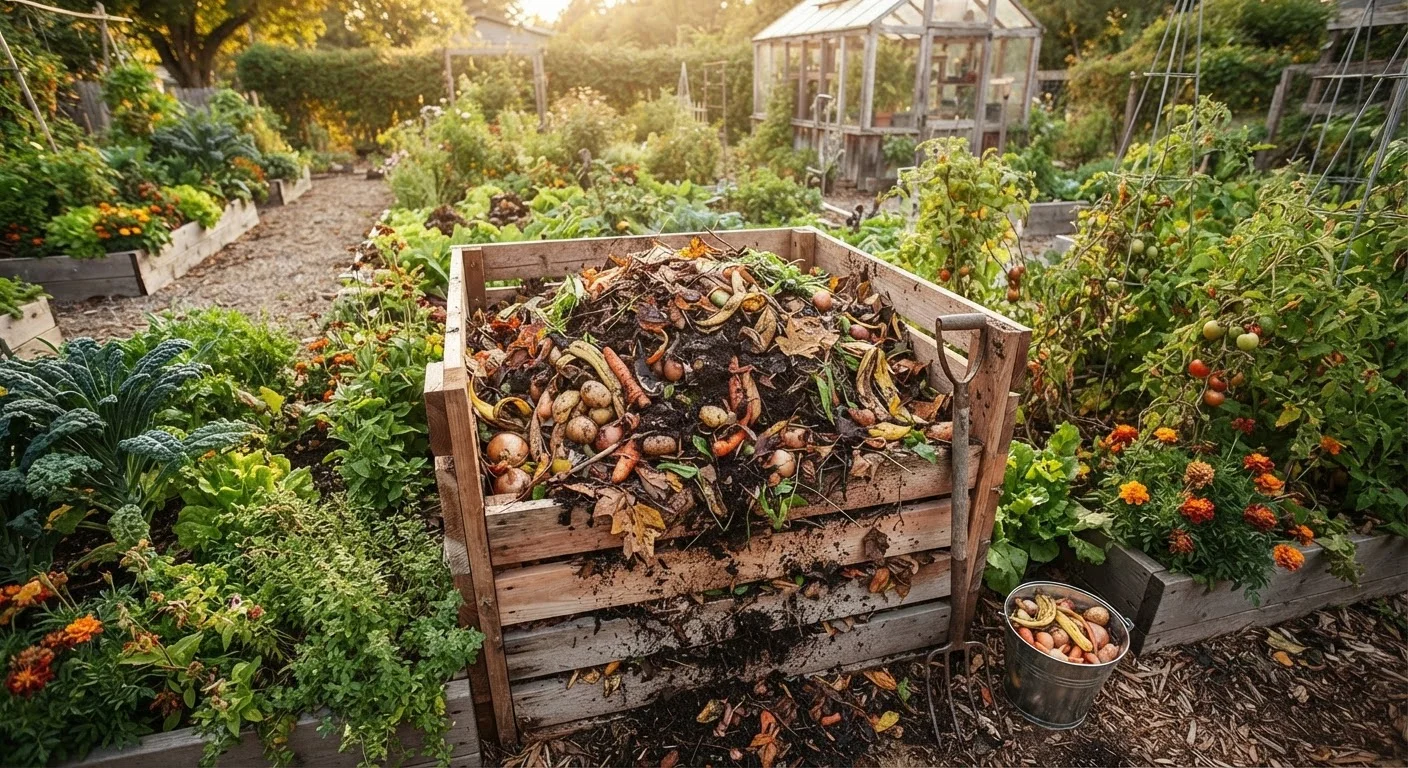
Why Home Composting Is Worth the Effort
Compost is often called 'black gold' by gardeners - and for good reason. When mixed into garden beds, finished compost improves soil structure, helps sandy soils retain moisture, and opens up clay-heavy soils so roots can penetrate more easily. It feeds the microbes, worms, and fungi that make nutrients available to plants in forms they can actually absorb. Unlike synthetic fertilizers, compost releases nutrients slowly over time and builds the long-term health of your soil rather than just delivering a quick boost.
From a practical standpoint, composting also diverts kitchen and yard waste from landfills. Food scraps that decompose in a landfill produce methane, a potent greenhouse gas, because they break down without oxygen. A backyard pile, managed with some airflow, processes those same materials aerobically and usefully. If you are planning a raised bed build or refreshing existing beds as part of your spring yard prep routine, a supply of homemade compost can meaningfully reduce what you spend on bagged amendments.
What you will need
What to Add and What to Avoid
Understanding what belongs in your pile is one of the most important fundamentals. The table below outlines common materials and whether they are appropriate for a standard backyard compost pile.
| Material | Category | Compost? |
|---|---|---|
| Vegetable and fruit scraps | Green | Yes |
| Coffee grounds and paper filters | Green | Yes |
| Grass clippings (untreated) | Green | Yes - in thin layers |
| Dried leaves | Brown | Yes |
| Cardboard (non-glossy, torn small) | Brown | Yes |
| Eggshells | Neutral | Yes - break them up |
| Meat, fish, or bones | - | No |
| Dairy products | - | No |
| Pet waste | - | No |
| Diseased plant material | - | No |
| Treated wood or glossy paper | - | No |
Never Compost These Materials
Avoid adding meat, fish, bones, dairy products, greasy or oily foods, pet waste, or diseased plants to a home compost pile. These can attract pests, create odor problems, and in some cases introduce pathogens into your garden soil. When in doubt, leave it out.
Chop and Shred for Faster Results
Smaller particles decompose significantly faster because they expose more surface area to microbes. Run leaves over with a lawn mower, tear cardboard into smaller pieces, and chop kitchen scraps before adding them. This simple habit can cut weeks off your composting timeline.
Troubleshooting Common Composting Problems
Even well-managed piles run into issues. Here are the most common problems and how to address them:
- Bad odor (rotten or sour smell): Usually caused by too much moisture or too many greens without enough browns. Add a generous layer of dry leaves or cardboard and turn thoroughly.
- Pile not heating up: The pile may be too dry, too small, or short on nitrogen. Add water, more green material, and turn to reintroduce oxygen.
- Pests and wildlife getting in: Burying food scraps under browns each time you add them helps, as does using a bin with a secure lid or base. Avoid adding materials that attract animals, such as cooked food or meat.
- Very slow decomposition: Particle size and turning frequency are the main levers. Shred or chop materials finer and turn more often.
Maturity Matters Before You Apply
Applying unfinished compost - material that is still actively breaking down - directly to plant roots can draw nitrogen away from your plants and potentially harm them. Finished compost should look dark and crumbly, smell earthy (not sour or ammonia-like), and show no recognizable food or plant material. If it doesn't pass these tests, let it cure longer before use.
Composting works well alongside other gardening efforts. Whether you are maintaining a container garden or building soil in ground-level beds, the finished product is one of the most versatile soil amendments available to a home gardener.
The content on this site is provided for informational purposes only and should not be considered a substitute for professional advice. While we strive to provide accurate and up-to-date information, we make no guarantees regarding its completeness or accuracy. Always consult a qualified professional for advice specific to your circumstances before making any decisions.