

Why Fluids Are the Lifeblood of Your Vehicle
Modern vehicles depend on a network of specialized fluids to lubricate moving parts, regulate temperature, transmit force, and protect critical systems. When any one of those fluids runs low, degrades, or becomes contaminated, the consequences range from reduced performance to outright mechanical failure - often expensive and sometimes sudden.
The good news is that fluid checks are among the easiest maintenance tasks any driver can perform. You don't need a lift, specialized equipment, or mechanical training to open a hood and read a dipstick. What you do need is a basic understanding of which fluids matter, what healthy fluid looks like, and how often each one needs attention.
This guide covers every major vehicle fluid, explains what each one does, and gives you a realistic check interval to follow. If you're new to vehicle ownership, this pairs well with our guide for first-year car owners for a broader maintenance foundation.
Engine Oil: Your Most Critical Check
Engine oil lubricates hundreds of metal parts moving at high speed under extreme heat. Without adequate, clean oil, friction builds rapidly and engine components wear - or seize - far ahead of their designed lifespan.
40%
Engine failures linked to lubrication issues
Industry maintenance data consistently attributes a significant share of premature engine failures to oil neglect, including running low or using degraded oil.
2-3 Years
Typical brake fluid replacement interval
Most vehicle manufacturers and automotive safety organizations recommend brake fluid replacement every two to three years due to moisture absorption.
5 Min.
Time needed for a basic fluid check
A full under-hood fluid level inspection - oil, coolant, brake, and washer fluid - typically takes under five minutes with no tools required.
How to Check It
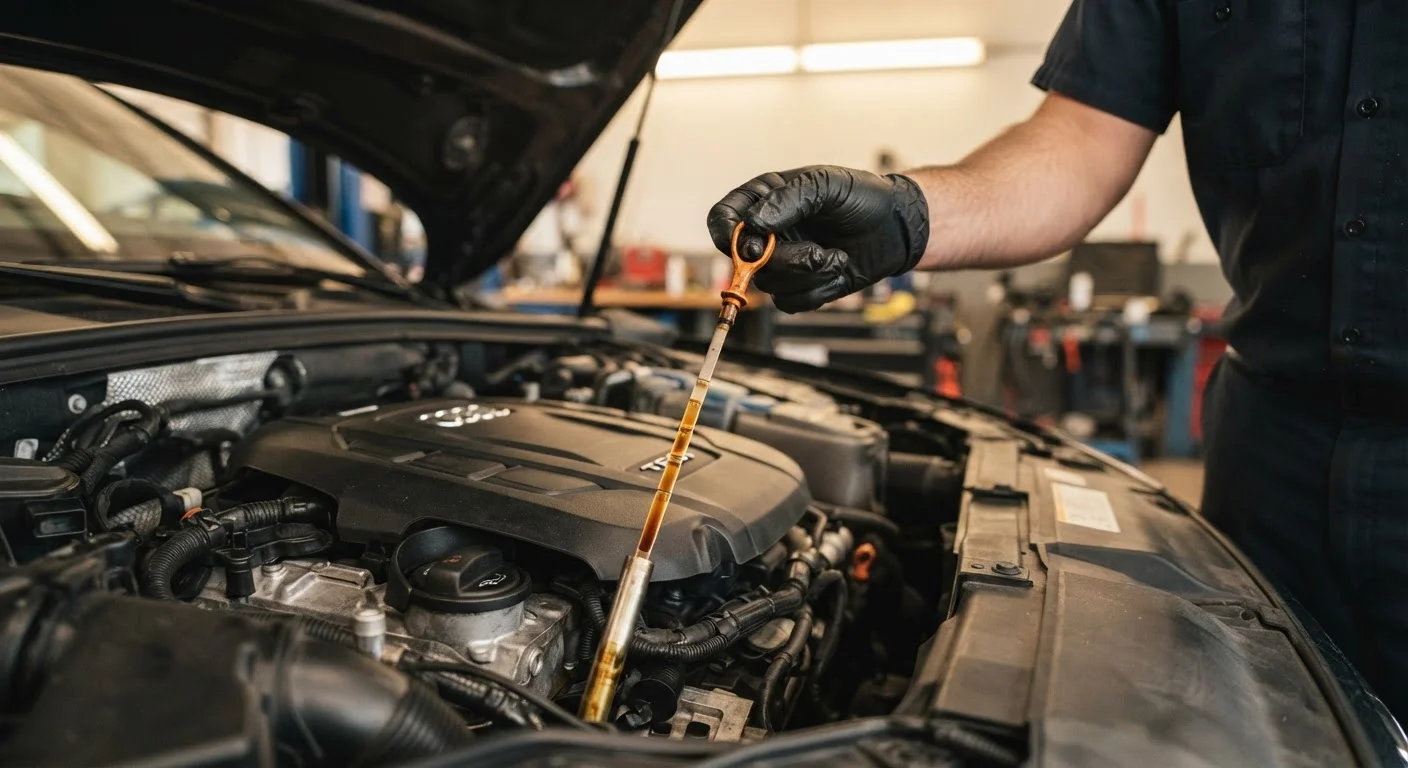
With the engine off and the vehicle on level ground, pull the dipstick, wipe it clean, reinsert it fully, then pull it again. The oil level should fall between the two marks on the dipstick. Also note the oil's color and consistency: fresh oil is amber and translucent; old or degraded oil appears dark brown or black. Milky or foamy oil can signal a coolant leak - a condition that warrants prompt professional attention.
How Often
Check the oil level monthly and before any long road trip. Oil change intervals depend on your vehicle and oil type: conventional oil typically requires changing every 5,000-7,500 miles, while many full-synthetic formulations are rated for 10,000-15,000 miles or more. Your owner's manual has the definitive interval for your specific engine - follow it rather than the old "every 3,000 miles" rule, which is outdated for most modern vehicles.
Check your oil when the engine is cold or has been off for at least 10 minutes - this gives you the most accurate reading, since oil needs time to drain back into the pan.
Checking immediately after driving can show a falsely low reading because oil is still circulating through the engine, leading some drivers to add oil unnecessarily.
Keep a small flashlight in your glove box specifically for fluid checks - color and clarity are impossible to assess in poor lighting, and clean vs. contaminated fluid can look identical in the dark.
Fluid color is one of the most useful indicators of condition; catching darkened transmission fluid or milky coolant early can prevent significant mechanical damage.
Coolant, Brake Fluid, and Transmission Fluid
These three fluids are among the most consequential - and among the most frequently neglected.
Coolant (Antifreeze)
Coolant circulates through the engine and radiator to prevent overheating in summer and freezing in winter. Over time, the additive package that prevents corrosion breaks down, and the fluid becomes acidic - silently damaging hoses, the radiator, and the water pump. Check the coolant level in the translucent reservoir (never open the radiator cap on a hot engine). Coolant should be topped off only with the type specified in your owner's manual, as mixing incompatible formulations can cause problems. Most manufacturers recommend a full coolant flush every 30,000-50,000 miles, though some extended-life formulations last longer. See our seasonal car care guide for how temperature extremes affect coolant performance.
Brake Fluid
Brake fluid transmits the force from your brake pedal through the hydraulic system to the calipers that stop your wheels. It is hygroscopic - meaning it absorbs moisture from the air over time. As water content rises, the fluid's boiling point drops, which can cause brake fade under heavy use. Most manufacturers recommend inspection every two years; replacement is commonly needed every two to three years regardless of mileage. A significant drop in the brake fluid reservoir without an obvious external leak may indicate worn brake pads or an internal leak - both require professional diagnosis.
Transmission Fluid
Transmission fluid lubricates the gears and clutch packs inside your transmission and helps maintain proper hydraulic pressure. In automatic transmissions, degraded fluid is a leading cause of premature transmission failure. Check intervals vary considerably: some vehicles have a dipstick for checking transmission fluid at home; others are sealed systems meant for shop inspection only. Replacement intervals range from 30,000 miles in severe use to 60,000-100,000 miles under normal driving. Transmission fluid is one of the most commonly skipped maintenance items - don't let it become an expensive lesson.
Power Steering, Windshield Washer, and Battery Fluid
Three additional fluids round out a complete fluid maintenance picture.
Power Steering Fluid
Vehicles with hydraulic power steering use a dedicated fluid to assist steering effort. Low fluid typically causes a whining noise when turning and heavier-than-normal steering feel. Check the reservoir monthly and top off as needed with the manufacturer-specified type. If the level drops repeatedly without apparent cause, have the system inspected for a leak. Note that most newer vehicles use electric power steering, which has no fluid to maintain.
Windshield Washer Fluid
While not mechanical in nature, washer fluid directly affects visibility - making it a genuine safety item. Use a formulation rated for your local climate; plain water can freeze in the reservoir and lines, and it won't remove road grime as effectively. Check and refill as needed; this is the one fluid where there's no meaningful overfill risk.
Battery Fluid (Conventional Lead-Acid Batteries Only)
Some older or non-maintenance-free lead-acid batteries have removable caps that allow inspection of electrolyte levels. If you have this type, check annually and top off with distilled water only if levels are below the minimum line. Most modern batteries are sealed and require no fluid attention, but do warrant periodic terminal cleaning to prevent corrosion.
Building a Fluid Check Routine That Sticks
Knowing what to check is only useful if you actually check it. The most reliable approach is to tie fluid inspections to something you already do consistently.
A practical monthly habit: when you stop for fuel, pop the hood and take 90 seconds to visually inspect the oil dipstick and coolant reservoir level. Once every season, run through the full checklist - brake fluid, transmission fluid (if accessible), power steering fluid, and washer fluid. Understanding how your manufacturer's mileage and time intervals work can also help; this breakdown of maintenance schedule numbers explains what those intervals actually mean in practice.
If a warning light appears on your dashboard related to temperature, oil pressure, or battery, treat it as urgent. Continuing to drive with an active oil pressure or temperature warning can cause irreversible engine damage in minutes. When in doubt about the meaning of a warning indicator, learn what your check engine light is actually telling you before dismissing it.
For tasks beyond basic level checks - such as a brake fluid flush or transmission service - a qualified mechanic should perform the work. Knowing where the DIY line falls prevents both unnecessary shop bills and genuine safety risks from jobs done incorrectly at home.
Consistent fluid maintenance is one of the highest-return habits in vehicle ownership: a few minutes of attention each month can prevent repairs that cost hundreds or thousands of dollars and protect the safety of everyone in the vehicle.
The content on this site is provided for informational purposes only and should not be considered a substitute for professional advice. While we strive to provide accurate and up-to-date information, we make no guarantees regarding its completeness or accuracy. Always consult a qualified professional for advice specific to your circumstances before making any decisions.