

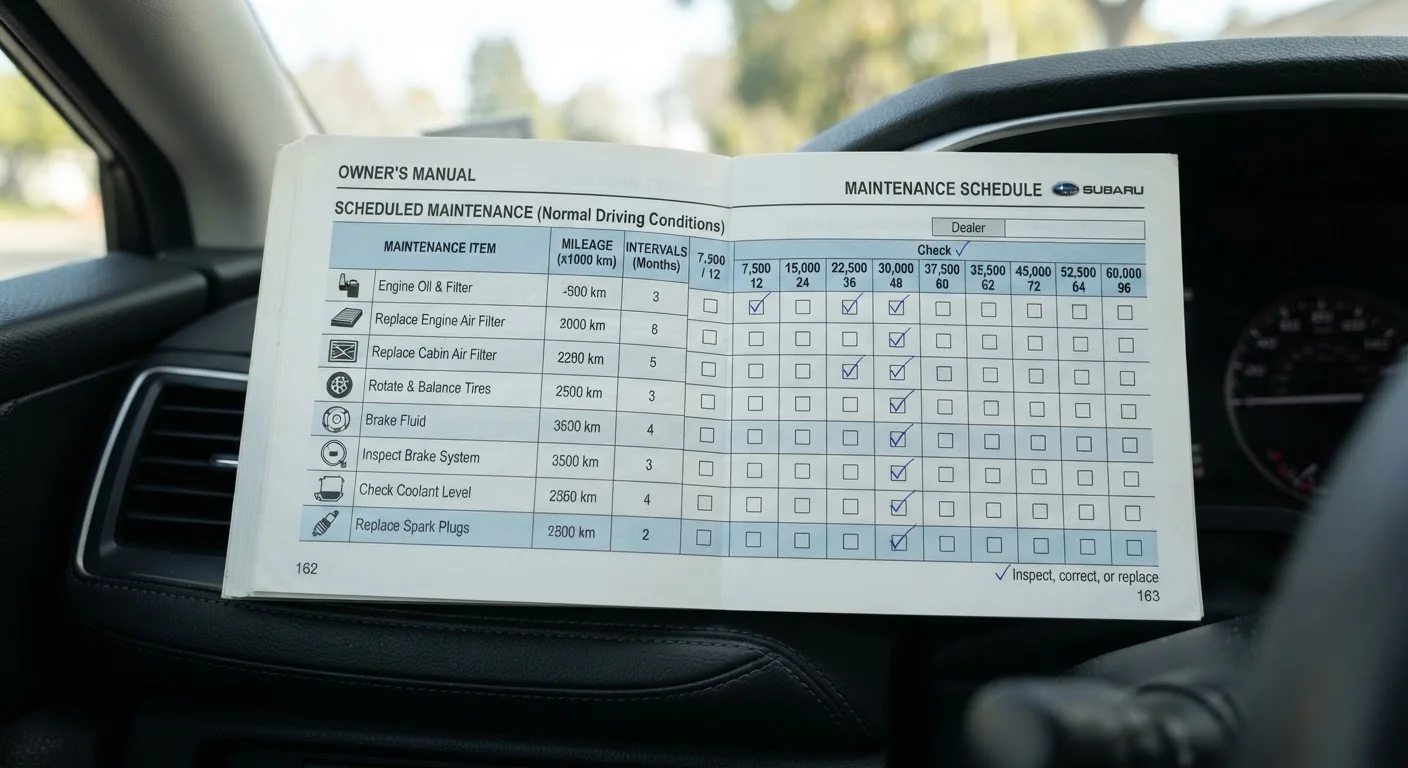
How Maintenance Schedules Are Structured
Every vehicle comes with a maintenance schedule - typically found in the owner's manual - that lists exactly what needs attention and when. These schedules use two primary triggers: mileage intervals and time intervals. Understanding both prevents you from servicing things too early (wasteful) or too late (potentially damaging).
Mileage intervals are the most common format. You'll see entries like "every 5,000 miles" or "every 30,000 miles," each tied to a specific component or fluid. Time intervals appear alongside them - usually expressed in months - because parts degrade even when a vehicle sits unused. The standard rule: whichever threshold you hit first is when service is due.
For example, if your schedule says "engine oil: every 5,000 miles or 6 months," a driver who logs only 3,000 miles in six months still needs an oil change at that six-month mark. Don't let the mileage numbers alone guide you if time-based decay applies.
For a deeper look at how fluids age and degrade over time, see our guide on car fluid maintenance.
Normal vs. Severe Driving Conditions
Most maintenance schedules include two service tracks: normal and severe (sometimes labeled "special" or "heavy-duty"). Many drivers assume they fall under normal use - but the severe category applies more often than you'd expect.
Severe conditions typically include:
- Frequent short trips under five miles (especially in cold weather)
- Stop-and-go city driving or heavy traffic commutes
- Towing or hauling heavy loads regularly
- Driving on dusty, unpaved, or salted roads
- Extreme heat or cold climates
Under severe conditions, intervals shorten significantly. An oil change recommended at 7,500 miles under normal use might be due at 3,000-5,000 miles under severe conditions. Ignoring the distinction is one of the more common - and costly - maintenance mistakes drivers make. If your daily commute involves a lot of idling or short cold-start trips, you're likely operating under severe conditions even if it doesn't feel that way.
Short Trips Are Harder on Your Engine Than You Think
When an engine doesn't fully warm up - common on drives under five miles - moisture and combustion byproducts accumulate in the oil rather than burning off. This degrades oil faster than highway driving does. If most of your driving involves brief errands or a short daily commute, the severe-condition schedule likely applies to you, even if your total annual mileage is low.
Drivers who skip items based on these misunderstandings often discover problems late. Our article on maintenance tasks drivers commonly skip covers what tends to get overlooked longest.
Decoding the Common Mileage Milestones
Maintenance schedules are built around predictable service windows. Here's what the most common mileage markers typically signal - though always verify against your specific vehicle's manual:
Mileage interval
A scheduled service point triggered when the vehicle reaches a specific odometer reading, such as every 5,000 or 30,000 miles.
Time interval
A maintenance trigger based on elapsed months rather than distance driven - relevant because fluids and materials degrade even when a vehicle sits unused.
Severe driving conditions
Operating patterns - such as frequent short trips, heavy towing, or extreme temperatures - that accelerate component wear and require shorter service intervals.
Scheduled maintenance
Proactive, manufacturer-defined service performed at set intervals to prevent premature wear, maintain safety, and preserve vehicle reliability.
Service interval
The recommended gap between the same maintenance task being performed, expressed in miles, months, or both.
30,000-mile services are often the first major inspection point, covering items like air filters, spark plugs (on some engines), and fuel system components. 60,000-mile services frequently involve drive belts, coolant replacement, and brake fluid inspection. 90,000-mile services may revisit timing belts (if applicable), transmission fluid, and suspension components.
The numbers themselves aren't arbitrary - they're based on engineering data about how long specific materials and fluids last under typical operating stress. Following them keeps your warranty intact on newer vehicles and helps preserve long-term reliability on older ones.
If you're new to owning a vehicle and the manual language feels unfamiliar, our guide for new car owners walks through the essentials in plain terms.
The content on this site is provided for informational purposes only and should not be considered a substitute for professional advice. While we strive to provide accurate and up-to-date information, we make no guarantees regarding its completeness or accuracy. Always consult a qualified professional for advice specific to your circumstances before making any decisions.