

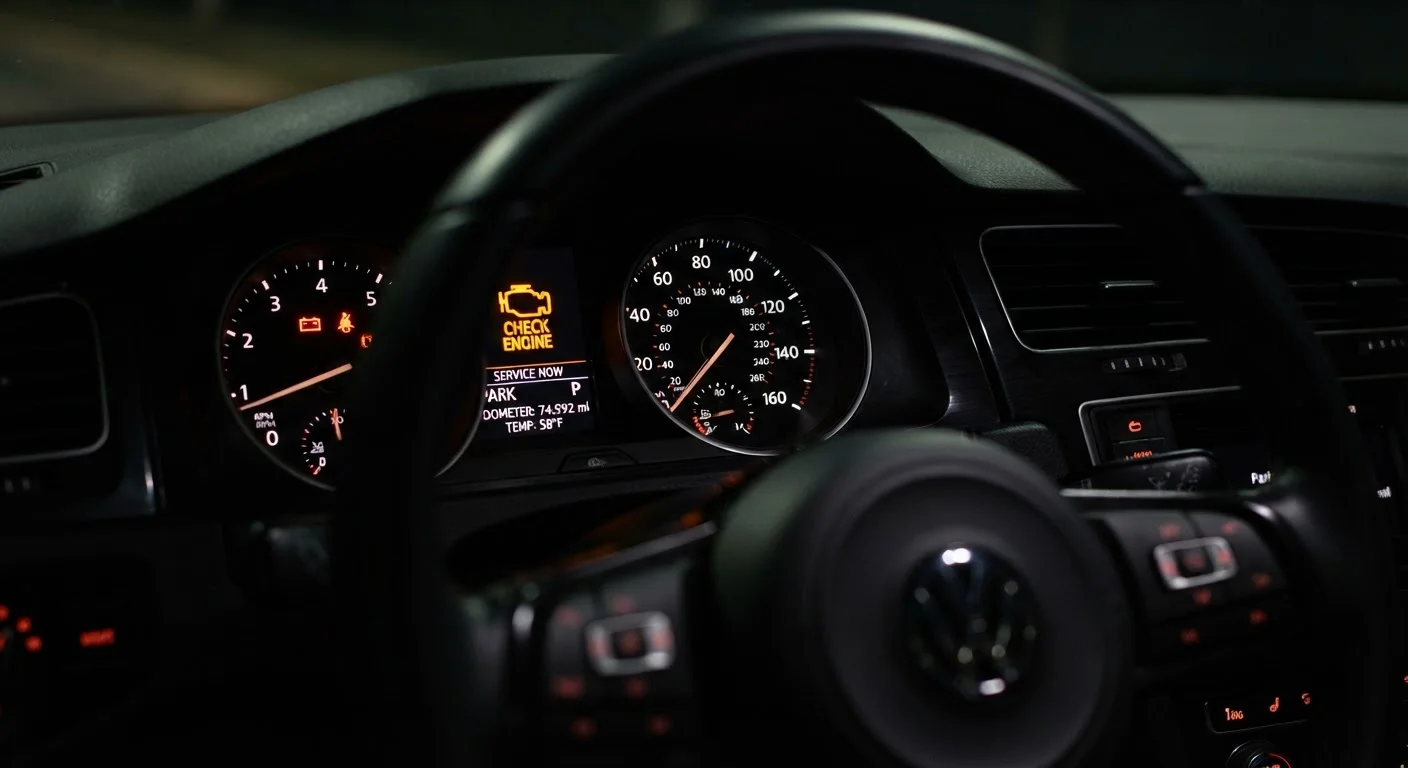
What the Light Is Actually Doing
Your vehicle's onboard diagnostics system continuously monitors dozens of sensors - covering the engine, transmission, emissions equipment, and more. When a sensor reading falls outside an acceptable range, the system logs a diagnostic trouble code (DTC) and triggers the check engine light. Think of it as your car's way of filing a report, not sounding an alarm.
That report doesn't tell you what broke - it tells you which system flagged a problem. A code like P0420, for example, points to catalyst efficiency below threshold, which could mean anything from a failing oxygen sensor to a worn catalytic converter. Decoding the root cause is where a qualified mechanic earns their value.
It's also worth knowing that the check engine light is separate from other dashboard warnings. Low oil pressure, overheating, and brake system alerts have their own dedicated lights. If those appear, treat them as more immediately urgent.
Steady vs. Flashing: Reading the Signal
The behavior of the light matters as much as its presence.
- Steady light: The system has logged a fault but considers the situation stable enough for continued operation. You still need to address it - ignoring it can cascade into larger, more expensive problems - but you typically have time to schedule a proper inspection rather than pulling over immediately.
- Flashing light: This signals an active engine misfire severe enough to damage the catalytic converter within minutes of continued driving. Slow down, avoid heavy acceleration, and have the car seen by a mechanic as soon as safely possible.
If the light comes on alongside a noticeable change - rough idling, loss of power, unusual smells, or the temperature gauge climbing - treat the combination as urgent regardless of whether the light is flashing.
When to Pull Over Immediately
If your check engine light is flashing AND you notice the temperature gauge rising, smell burning, see smoke, or hear knocking from the engine, pull over safely and turn the vehicle off. These combined signals can indicate conditions that cause rapid engine damage. Call for roadside assistance rather than continuing to drive.
Common Causes (From Simple to Serious)
Understanding the range of possible triggers helps calibrate your response. Not every lit light means a major repair bill.
~40%
Check engine lights linked to oxygen sensors or gas caps
Industry diagnostic data consistently shows these two categories account for a large share of check engine light triggers across all vehicle types.
$1,000+
Average catalytic converter replacement cost
Catalytic converter failure - often caused by unaddressed misfires - is among the costlier check engine light outcomes, underscoring the value of early diagnosis.
1996
Year OBD-II became mandatory on U.S. vehicles
The standardized OBD-II diagnostic port, required on all cars sold in the U.S. from 1996 onward, is what allows any compliant scanner to read fault codes.
Simple and often DIY-fixable
- Loose or faulty gas cap: Allows fuel vapor to escape from the evaporative emissions system. Tighten, reseat, or replace the cap and the light may clear within a few drive cycles.
- Oxygen sensor: These sensors monitor exhaust gases. A failing sensor affects fuel economy and emissions readings but doesn't immediately strand you.
Moderate - needs a mechanic's attention
- Mass airflow sensor: Measures air entering the engine. When it fails, fuel mixture goes off, affecting performance and efficiency.
- Thermostat: A stuck thermostat can prevent the engine from reaching optimal operating temperature, triggering the light and reducing fuel efficiency.
More serious
- Catalytic converter failure: Often preceded by other unaddressed faults. Replacement is one of the costlier repairs on modern vehicles.
- Spark plugs or ignition coils: Worn plugs or failed coils cause misfires - the direct source of a flashing check engine light.
For a broader view of what routine maintenance can prevent, see our guide to reading your vehicle's maintenance schedule.
What to Do When the Light Comes On
Keep calm and work through a simple sequence before spending anything.
- Check your gas cap first. Remove it, reseat it firmly, and drive normally for a day or two. If it was the cause, the light will clear on its own.
- Note any symptoms. Write down how the car is behaving - rough idle, hesitation, poor fuel economy - before you talk to a mechanic. This context is valuable. Our guide on talking to a mechanic without getting lost in jargon can help you communicate what you're observing.
- Get the code read. Many auto parts retailers provide free OBD-II scans. The code narrows the field and prevents you from walking into a repair conversation completely in the dark.
- Schedule an inspection. Armed with the code and your symptom notes, take the car to a qualified mechanic for proper diagnosis. A code is a starting point, not a complete diagnosis.
Keeping up with fluid checks is one of the best ways to avoid triggering fault codes in the first place. Car fluid maintenance done right covers what to check and how often.
Frequently Asked Questions
A steady light usually means it's safe to drive short distances while you arrange an inspection, but you should not ignore it indefinitely. A flashing light indicates a more serious issue - such as engine misfiring - and you should reduce your speed and have the vehicle inspected as soon as possible to avoid further damage.
Yes - this is one of the most frequent triggers. A loose or improperly sealed gas cap allows fuel vapors to escape, which the evaporative emissions system detects as a leak. Tightening or replacing the cap and driving a short distance often clears the light on its own.
Most auto parts retailers will read your OBD-II fault codes at no charge. You can also purchase an inexpensive OBD-II scanner that plugs into the diagnostic port under your dashboard. The code gives you a system reference point - a mechanic can then confirm the root cause and recommend the appropriate repair.
Sometimes. If the underlying condition resolves itself - like a temporary sensor hiccup or a gas cap that gets resealed - the light may clear after several drive cycles. However, if the fault persists, the light will stay on or return. Clearing a code without fixing the problem only delays diagnosis.
A steady light indicates a fault the system has logged but considers non-immediate, such as an oxygen sensor reading out of range. A flashing light means the engine is actively misfiring or experiencing a condition that can rapidly damage the catalytic converter - treat it as urgent and have the car inspected promptly.
The content on this site is provided for informational purposes only and should not be considered a substitute for professional advice. While we strive to provide accurate and up-to-date information, we make no guarantees regarding its completeness or accuracy. Always consult a qualified professional for advice specific to your circumstances before making any decisions.