

Our Verdict
DIY car maintenance makes real sense for routine, low-risk tasks where the consequences of a mistake are minor and reversible. For anything touching safety systems, requiring specialized equipment, or carrying serious risk of injury or vehicle damage, a qualified mechanic is the right call. Knowing the difference protects both your wallet and your safety.
| Best for | Recommended |
|---|---|
| Drivers comfortable with basic tools and simple upkeep | DIY maintenance |
| Safety-critical repairs or complex diagnostics | Professional shop |
| Hybrid or electric vehicle owners | Professional shop |
| Those wanting to save money on routine, low-risk tasks | DIY maintenance |
The Real Question Behind Every DIY Decision
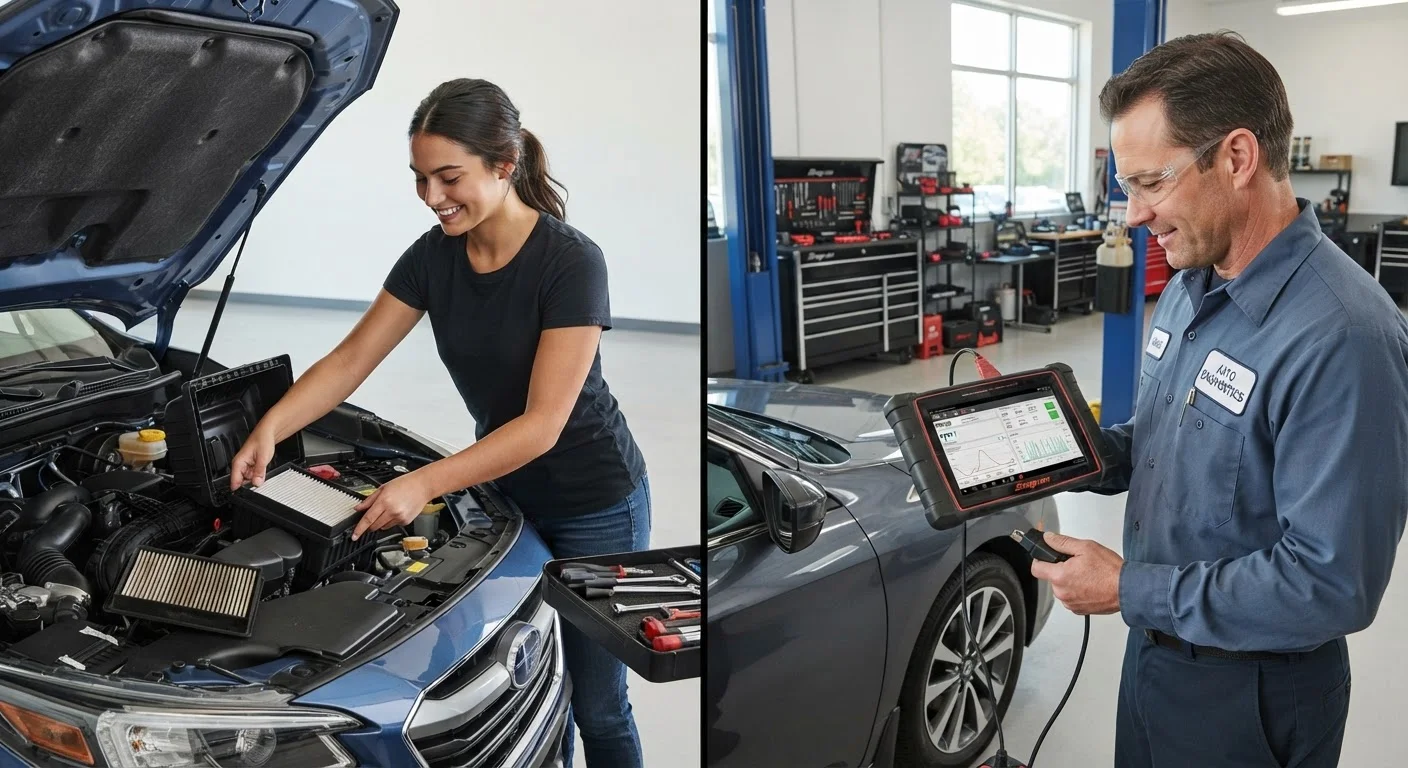
Not all car maintenance is created equal. Replacing a cabin air filter takes about five minutes and a flathead screwdriver. Replacing a brake caliper requires lifting the vehicle safely, bleeding hydraulic lines, and verifying torque specs - a mistake can cause brake failure at highway speed. The gap between these two tasks is enormous, yet they're both technically "car maintenance."
The smarter framework isn't about confidence or YouTube tutorials - it's about consequence. Ask yourself: if this goes wrong, what's the worst outcome? For low-stakes tasks, a minor error wastes an afternoon. For safety-critical systems, an error can put lives at risk. That's the line worth drawing.
For a broader perspective on applying this thinking to other areas of home upkeep, weighing DIY versus hiring a pro follows similar logic across different contexts.
Tasks That Are Genuinely DIY-Friendly
Several routine maintenance jobs require minimal tools, carry low mechanical risk, and are well within reach for most drivers willing to read the owner's manual.
- Engine and cabin air filters: Usually accessible with no tools or a basic screwdriver. Replacement intervals and filter types are specified in your owner's manual.
- Windshield wiper blades: Most automakers design these for tool-free swaps. The packaging typically includes model-specific instructions.
- Tire pressure checks and inflation: A quality tire gauge and an air compressor (or a gas station pump) are all you need. Check cold pressure against the sticker inside the driver's door - not the number on the tire sidewall.
- Battery terminal cleaning: Corrosion on battery terminals can cause starting issues. Disconnecting and cleaning them with a wire brush and baking soda solution is manageable, provided you follow the correct disconnect order (negative first).
- Checking and topping off fluids: Washer fluid, coolant (when the engine is cold), and power steering fluid reservoirs are typically labeled and accessible under the hood.
These tasks also make you a better-informed owner. Drivers who handle their own routine upkeep tend to notice developing problems earlier. See which maintenance items are most commonly overlooked for tasks worth adding to your routine.
| Task | DIY-Friendly | Shop Required | |
|---|---|---|---|
| Engine/cabin air filter | Yes - minimal tools | Not necessary | |
| Wiper blade replacement | Yes - tool-free | Not necessary | |
| Tire pressure check | Yes - gauge and pump | Not necessary | |
| Brake pad/rotor replacement | Not recommended | Yes - safety-critical | |
| Timing belt/chain | Not recommended | Yes - precision required | |
| Airbag/SRS system | Never | Yes - explosive components | |
| EV/hybrid high-voltage systems | Never | Yes - certified tech only | |
| Battery terminal cleaning | Yes - with correct steps | Not necessary |
Jobs That Belong in a Professional Shop
Other maintenance categories involve safety systems, pressurized components, or precision that realistically demands professional tools and training.
- Brake pads, rotors, and calipers: Brakes are your most critical safety system. Improper installation - wrong torque, contaminated surfaces, air in the brake line - can cause partial or total brake failure. This work belongs with a qualified mechanic.
- Suspension and steering components: Ball joints, tie rods, and control arms affect how your vehicle handles and stops. A failure here can mean loss of steering control.
- Timing belt or timing chain: Requires engine disassembly and precise alignment. An error can cause catastrophic engine damage or make the vehicle inoperable.
- Airbag and SRS system work: Airbags contain explosive charges. Improper handling can trigger accidental deployment, causing serious injury.
- Transmission service beyond fluid checks: Internal transmission components require specialized knowledge and equipment.
- High-voltage systems on EVs and hybrids: Battery packs and related components can carry lethal voltages. Only technicians certified for high-voltage work should touch these systems.
Never Work Under an Unsupported Vehicle
A hydraulic floor jack alone is not a safe support - it can fail or shift. Always use rated jack stands placed at manufacturer-specified lift points before going under any raised vehicle. This applies even for tasks that seem quick, like inspecting brake components. No repair is worth the risk of a vehicle falling.
When you do head to a shop, being able to describe symptoms clearly makes the visit more productive. Knowing the basics of repair terminology helps you follow the diagnosis and ask the right questions.
When to Reconsider a DIY Attempt Mid-Task
Sometimes what looks like a simple job reveals unexpected complexity once started. A rusted bolt that won't budge, a part that looks different from the tutorial, or a warning light that appears after reassembly are all signals to stop and reassess. Forcing components or improvising torque specs introduces new risk.
It's also worth being honest about your tools. Many jobs that seem DIY-friendly actually require a floor jack rated for your vehicle's weight, proper jack stands, a torque wrench, or an OBD-II scanner to clear codes. Improvising on structural support under a raised vehicle is never acceptable - it's one of the most preventable causes of serious garage injuries.
Understanding how scheduled maintenance fits into the bigger ownership picture also shapes when DIY makes sense. Comparing a proactive schedule against a reactive approach can help you plan which tasks to tackle yourself and which to budget for professionally. For new owners building their maintenance habits from scratch, a first-year maintenance overview is a practical starting point.
The content on this site is provided for informational purposes only and should not be considered a substitute for professional advice. While we strive to provide accurate and up-to-date information, we make no guarantees regarding its completeness or accuracy. Always consult a qualified professional for advice specific to your circumstances before making any decisions.