

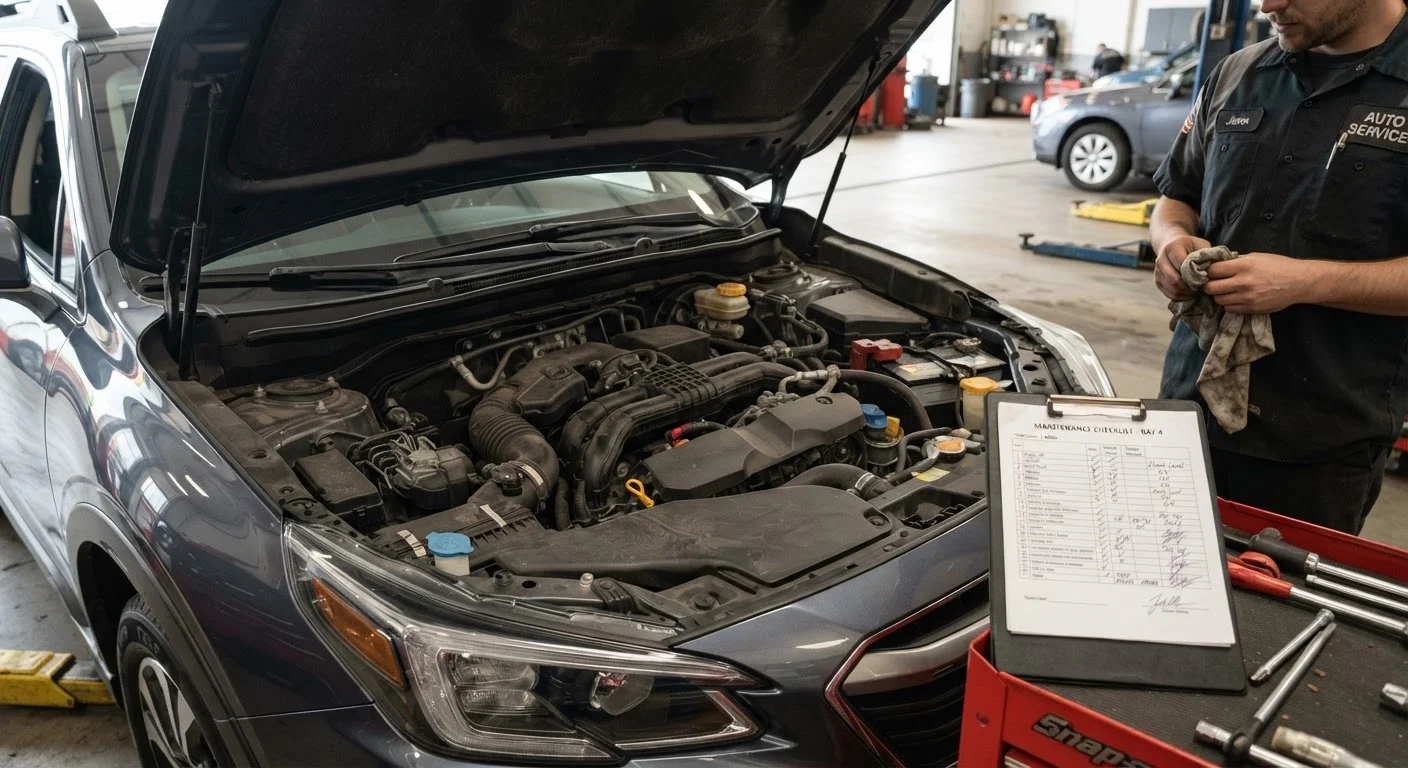
The Maintenance Gap Most Drivers Don't Notice
Oil changes get attention. Tire pressure gets attention. But a surprisingly large number of maintenance tasks sit quietly in the background - easy to overlook because they don't trigger a warning light or produce an obvious symptom until real damage has been done.
The pattern is familiar: drivers handle the visible stuff and defer the rest. The problem is that deferred maintenance has a compounding effect. Small neglected items stress other components, and what could have been a modest service interval becomes a significant repair bill. Understanding which tasks get skipped most often - and why they matter - is the first step toward breaking that cycle.
For a broader look at whether proactive maintenance genuinely pays off versus reacting to problems as they arise, see our breakdown of scheduled maintenance versus reactive repairs.
Cabin Air Filter
The cabin air filter cleans the air that passes through your heating and air conditioning system before it reaches you and your passengers. Most manufacturers recommend replacing it every 15,000 to 25,000 miles, but many drivers go years without touching it.
A clogged cabin filter restricts airflow, forcing your HVAC blower motor to work harder - which can shorten its lifespan. It also means dust, pollen, and other particles circulate through the cabin unchecked. Replacement is typically straightforward and inexpensive, making this one of the easiest wins in vehicle upkeep.
A clogged cabin filter forces your HVAC system to work harder, quietly wearing out the blower motor.
Transmission Fluid
Transmission fluid lubricates and cools the complex internal components of your transmission. Unlike engine oil, it doesn't have the same cultural visibility - most drivers couldn't tell you the last time it was serviced, or if it ever has been.
Automatic transmissions in particular are sensitive to degraded fluid. As fluid breaks down, it loses its ability to protect gears and clutch packs from friction and heat. The result can be sluggish shifting, slipping, and eventually transmission failure - a repair that routinely costs thousands of dollars. Service intervals vary widely by vehicle and driving conditions; your owner's manual is the authoritative source.
Transmission failure is one of the most expensive repairs a driver faces - and degraded fluid is a leading contributor.
Brake Fluid
Brake fluid is hygroscopic, meaning it absorbs moisture from the air over time. As water content increases, the fluid's boiling point drops. In hard braking situations - like descending a steep grade - degraded brake fluid can boil, creating vapor bubbles that compress in the brake lines and cause a sudden, dangerous loss of pedal firmness.
Most manufacturers recommend flushing brake fluid every two to three years regardless of mileage. Because brake performance is directly tied to safety, this is one task where staying on schedule matters more than almost any other on this list.
Brake fluid absorbs moisture over time, and degraded fluid can boil under hard use - compromising stopping ability.
Coolant Flush
Engine coolant (also called antifreeze) does more than prevent freezing in winter - it also raises the boiling point of the liquid circulating through your engine and carries heat away from critical components. Over time, coolant degrades chemically. The protective additives that prevent corrosion inside the cooling system break down, and the fluid becomes acidic enough to attack metal and rubber components.
A coolant flush removes old fluid and replenishes those protective properties. Skipping it can lead to corrosion inside the radiator, water pump failure, and, in severe cases, overheating damage to the engine itself. Intervals vary by coolant type - long-life formulations may last 100,000 miles or more; conventional coolant typically needs attention sooner.
Degraded coolant turns acidic and can corrode the very components it's meant to protect.
Differential and Transfer Case Fluid
On vehicles with all-wheel drive or four-wheel drive, the differential and transfer case are gear-driven components that distribute power between axles and wheels. They rely on their own dedicated lubricating fluid - separate from engine oil or transmission fluid - that also degrades over time.
Because these components operate quietly and out of sight, their fluid is easy to forget. Low or degraded fluid causes increased friction and heat, wearing down gears and bearings that are expensive to replace. Drivers of trucks, SUVs, and AWD vehicles in particular should check their owner's manual for service intervals on these often-overlooked systems.
AWD and 4WD drivers often forget that differentials and transfer cases need their own fluid service intervals.
Spark Plugs
Spark plugs ignite the air-fuel mixture in each engine cylinder. As they wear, they require a higher voltage to fire - taxing the ignition coils - and may misfire entirely, causing rough running, reduced fuel economy, and increased emissions. In some cases, a misfiring plug can allow unburned fuel to reach the catalytic converter, potentially damaging that component as well.
Modern iridium or platinum spark plugs can last 60,000 to 100,000 miles in many applications. But that long service life also means drivers can lose track of when they were last replaced. Ignoring them until the engine runs poorly means the wear has likely already had downstream effects. For more on how everyday habits affect engine longevity, see the habits that quietly shorten engine life.
Worn spark plugs stress ignition coils and can damage the catalytic converter - a far more expensive component.
Making These Tasks Part of Your Routine
None of the items on this list require advanced mechanical knowledge to understand, and several are straightforward enough to handle without professional help. For a clear sense of which jobs are genuinely beginner-friendly and which carry real risk, our DIY vs. shop guide draws that line plainly.
Start With Your Owner's Manual
Your vehicle's owner's manual lists manufacturer-recommended service intervals for every fluid, filter, and component covered here. If you've misplaced yours, most are available as free PDFs on the manufacturer's website or through a simple search by year, make, and model. Reviewing it takes less than an hour and gives you a reliable maintenance roadmap specific to your vehicle.
Your owner's manual remains the most reliable reference for service intervals specific to your vehicle. When in doubt about the condition of any fluid or filter, a qualified mechanic can inspect and advise - catching a problem early is almost always the less expensive path. And if you want to understand the full picture of fluids your vehicle depends on, our fluid maintenance guide covers what to check and how often.
The content on this site is provided for informational purposes only and should not be considered a substitute for professional advice. While we strive to provide accurate and up-to-date information, we make no guarantees regarding its completeness or accuracy. Always consult a qualified professional for advice specific to your circumstances before making any decisions.