

Our Verdict
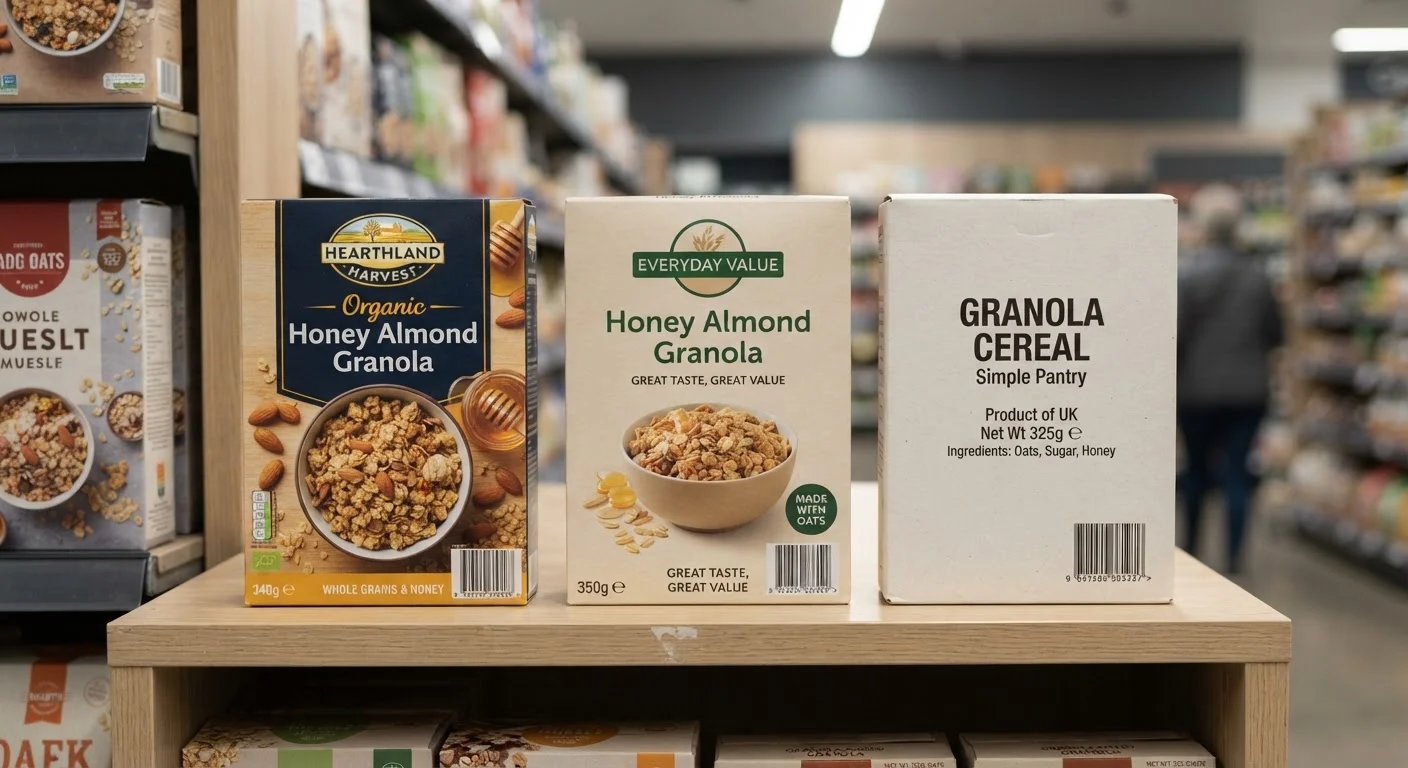
No single category wins across every purchase. OEM makes sense when compatibility, safety, or warranty coverage is at stake. Store-brand products frequently deliver comparable results at a meaningful discount in commodity categories. Generic products suit low-stakes, short-use situations where performance variation is acceptable. The key is matching the product tier to the actual demands of the situation.
| Best for | Recommended |
|---|---|
| Safety-critical or warranty-dependent purchases | OEM |
| Everyday household consumables and pantry staples | Store-Brand (Private Label) |
| Short-term or low-stakes use where price is the primary factor | Generic |
| Readers who want to dig deeper into quality signals | Review product specs and certifications first |
What These Terms Actually Mean
The labels OEM, store-brand, and generic get used loosely - sometimes interchangeably - but they describe meaningfully different production and distribution arrangements. Sorting them out is foundational to evaluating what you're actually buying.
OEM (Original Equipment Manufacturer) refers to a product made by the company that originally designed and engineered it. In the auto parts market, for example, an OEM brake pad comes from the same supplier that equipped the vehicle at the factory. In consumer electronics, OEM accessories are produced by or directly authorized by the device maker. OEM products typically carry the manufacturer's quality standards, warranty terms, and technical support.
Store-brand (also called private label) products are manufactured - often by a third-party producer, sometimes by a brand-name manufacturer itself - and sold under a retailer's own label. A grocery chain's pasta sauce may come from the same facility as a national brand. The retailer controls the spec and the price, but doesn't own the factory. Quality can be quite high; it depends entirely on the contract the retailer negotiated.
Generic products are stripped-down offerings with minimal branding, often no fixed manufacturer, and a single selling point: low price. Consistency is the chief risk. A generic product ordered twice may arrive from different suppliers with different formulations or component grades.
For a broader grounding in how to read and evaluate product information, see our product knowledge foundation guide.
How They Compare Across Key Dimensions
Each product tier involves trade-offs across quality consistency, pricing, support, and compatibility. The comparison below maps those trade-offs directly.
| OEM | Store-Brand (Private Label) | Generic | |
|---|---|---|---|
| Quality consistency | High - controlled by original manufacturer | Medium to high - depends on retailer specs | Variable - supplier may change |
| Price point | Higher - reflects R&D and brand assurance | Moderate - retailer margin, no brand premium | Lowest - minimal overhead or branding |
| Warranty / support | Usually included; may be required for coverage | Retailer-backed, varies by store policy | Rarely included or limited |
| Specification transparency | Detailed specs typically published | Varies by category and retailer | Often minimal or absent |
| Compatibility assurance | Guaranteed for intended application | Not always verified for technical fit | No formal compatibility guarantee |
| Best suited for | Safety-critical or warranty-sensitive purchases | Everyday consumables and household staples | Low-stakes, short-term, price-driven needs |
One dimension the table can't fully capture is specification transparency. OEM products typically publish detailed technical specs because their reputation depends on them. Store-brand specs vary by category and retailer. Generic products often publish minimal information, which makes independent verification harder. For guidance on reading those specs critically, see what product specifications actually mean.
When the Distinction Matters Most
Context determines which tier is appropriate - and the stakes of getting it wrong vary widely.
High-stakes categories
Automotive components, medical devices, and electrical equipment are areas where OEM or verified-equivalent products carry real weight. Using an uncertified generic in a load-bearing or safety application can void insurance coverage, create liability issues, or cause equipment failure. The Buying & Ownership hub covers this in the vehicle context - where choosing aftermarket vs. OEM parts has direct warranty and reliability implications.
Commodity categories
Paper towels, pantry staples, basic cleaning products, and over-the-counter commodities (where the active ingredients are regulated by category) are precisely where store-brand and even generic products tend to perform on par with name brands. The raw materials are often sourced identically; what you're paying for with the national brand is marketing and shelf placement.
Check the Label Before Assuming
Store-brand products sometimes carry independent certifications - UL listings, NSF approvals, or USDA Organic - that generic alternatives lack. Before defaulting to the name brand, scan the store-brand label for third-party marks. They can signal that quality standards were actually verified, not just claimed.
A note on private label sophistication
Major retailers have invested heavily in private label quality programs. Some retailer-owned brands now undergo independent testing and hold certifications that generic alternatives do not. Checking for third-party certifications on a store-brand label is worthwhile - our product label guide explains what those marks actually verify.
Common Misconceptions Worth Correcting
Misconception 1: Store-brand means lower quality. Not reliably. Private label contracts often specify the same ingredients or components as the name-brand version. The quality difference, when it exists, is usually in formulation refinements or consistency tolerances - not gross inferiority.
Misconception 2: OEM always means better. OEM status confirms origin, not necessarily superiority. An OEM part built to a cost target may underperform a well-specified aftermarket alternative. Origin is one signal; independent testing results and published specifications are more informative. For the vehicle-specific version of this question, our motor oil comparison illustrates how product category context shapes the right answer.
Misconception 3: Generic products are always a bad deal. For short-term or single-use items where consistency across multiple purchases is irrelevant, generic pricing can be entirely rational. The risk is highest when you're relying on the product repeatedly and need to know it performs the same way each time.
Understanding where a product sits in the manufacturing chain - and what that implies for quality control, support, and accountability - is the kind of foundational knowledge that pays dividends across categories. It connects directly to the broader question of when premium pricing reflects real value versus when it's purely positional.
The content on this site is provided for informational purposes only and should not be considered a substitute for professional advice. While we strive to provide accurate and up-to-date information, we make no guarantees regarding its completeness or accuracy. Always consult a qualified professional for advice specific to your circumstances before making any decisions.