

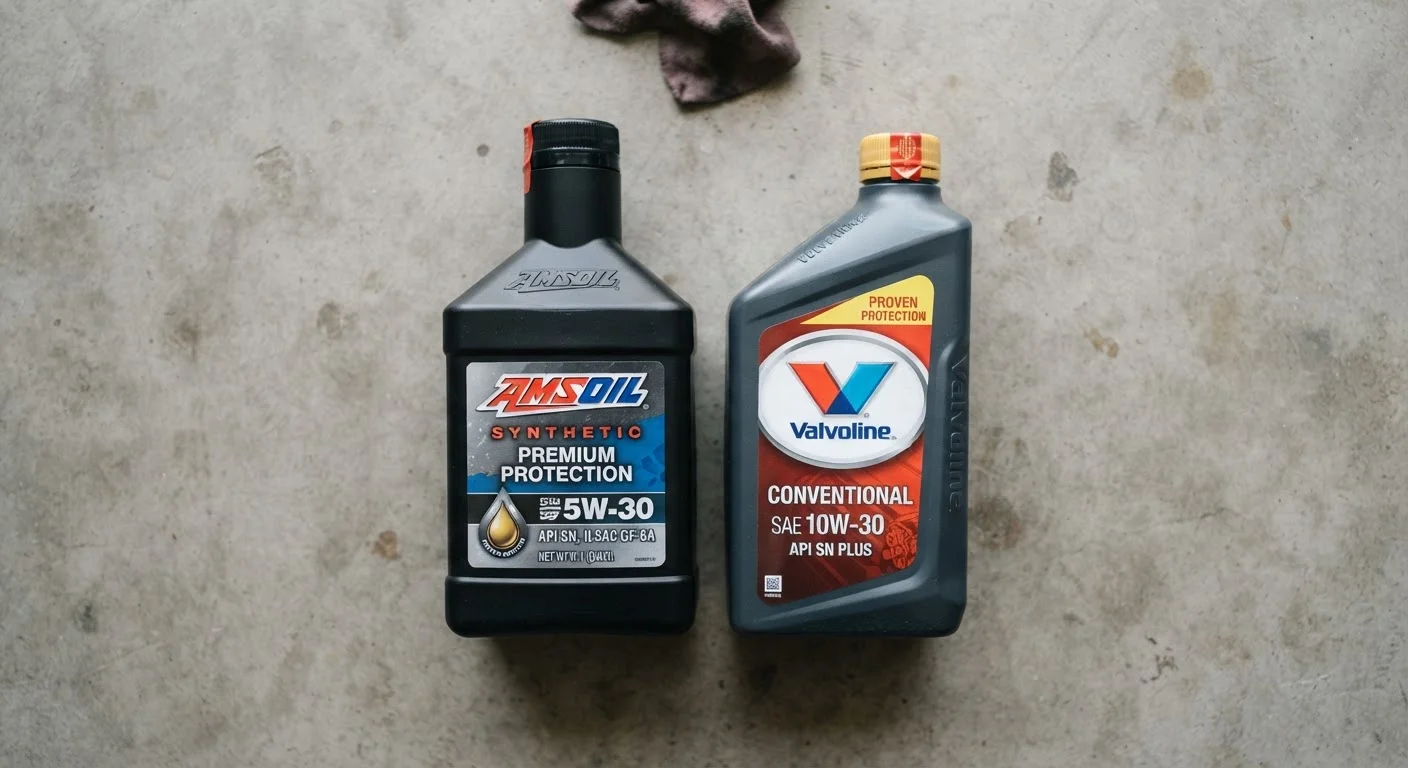
Option A
Synthetic Motor Oil
The engineered, high-performance formulation.
Best for: Best for modern vehicles, high-performance engines, extreme temperatures, and drivers who want longer intervals between oil changes.
Option B
Conventional Motor Oil
The time-tested, petroleum-based standard.
Best for: Best for older vehicles with simpler engine designs, low-mileage drivers, and situations where the manufacturer specifies conventional oil.
What Each Oil Actually Is
Motor oil performs one core job: reducing friction between moving metal parts inside your engine while helping carry away heat and contaminants. The difference between synthetic and conventional comes down to where the oil originates and how it's processed.
Conventional motor oil is derived from crude petroleum extracted from the ground. It's refined to remove impurities, but the refining process can't eliminate all irregularities - the resulting molecules vary in size and shape. Those inconsistencies affect how the oil performs under stress.
Synthetic motor oil is built in a laboratory. Chemical engineers start with base stocks (which may still originate from petroleum or other sources) and construct uniform, purpose-designed molecules. The result is an oil with more predictable behavior across a wider range of temperatures and operating conditions.
There's also a middle option - synthetic blend oil - which mixes conventional and synthetic base stocks. It offers some synthetic benefits at a lower price point, and some manufacturers recommend it as a practical compromise for certain engine types.
| Criterion | Synthetic Motor Oil | Conventional Motor Oil |
|---|---|---|
| Origin | Engineered base stocks, lab-built molecules | Refined crude petroleum |
| Molecular consistency | Highly uniform | Variable, less predictable |
| Cold-weather flow | Faster, better cold-start protection | Slower to flow in freezing temps |
| Heat resistance | High resistance to thermal breakdown | More prone to oxidation at high temps |
| Typical change interval | Often 7,500-10,000+ miles (per manufacturer) | Often 3,000-5,000 miles (per manufacturer) |
| Cost per quart | Higher upfront cost | Lower upfront cost |
| Sludge resistance | Superior | Moderate |
| Best engine fit | Modern, turbocharged, high-performance engines | Older engines, simple designs |
How Each Oil Performs Inside Your Engine
The molecular consistency of synthetic oil translates into measurable performance differences. At engine startup - especially in cold weather - oil must flow quickly to lubricate components before friction causes damage. Synthetic oil flows faster at low temperatures than conventional, which means critical engine parts get protection sooner after you turn the key.
At the other extreme, when engines run hot, conventional oil is more prone to oxidation and thermal breakdown. This degrades the oil's protective qualities faster, which is why conventional oil generally requires more frequent changes. Synthetic resists that breakdown, maintaining its protective film longer under high heat.
~20 seconds
Estimated time engine runs unlubricated at cold start with slow-flowing oil
Engine engineers note that the first moments after startup - before oil pressure builds - account for a disproportionate share of engine wear over a vehicle's lifetime.
0W-20
Viscosity grade required by many current model-year vehicles
Thinner, low-viscosity grades like 0W-20 are increasingly common in fuel-efficient engines and almost always require full synthetic to perform correctly.
Synthetic oil also handles engine deposits more effectively. Conventional oil can leave behind sludge - a thick, tar-like residue - especially in engines that run short trips frequently or that go too long between changes. Synthetic formulations are engineered to keep those byproducts suspended so they get filtered out rather than accumulating. For a deeper look at how oil-change intervals actually work, see our oil change myths guide.
Reading Your Owner's Manual - The Only Recommendation That Truly Counts
No article, mechanic, or marketing claim overrides what your vehicle manufacturer specifies. Your owner's manual lists both the required viscosity grade (such as 5W-30 or 0W-20) and whether the engine requires synthetic, conventional, or accepts either.
Viscosity refers to how thick or thin the oil is and how it flows at different temperatures. The first number (the one before the "W," which stands for winter) describes cold-weather performance; the second describes behavior at operating temperature. Using the wrong viscosity can stress your engine just as much as using the wrong oil type.
Key situations where the manual matters most:
- Turbocharged engines almost always require full synthetic because turbos run extremely hot and need an oil that won't break down under that heat.
- Vehicles under warranty may require a specific oil standard (such as an API or ILSAC certification) to preserve coverage.
- High-mileage vehicles sometimes benefit from high-mileage oil - a sub-category with additives designed to condition aging seals - regardless of synthetic vs. conventional.
The question of which oil type is "better" in a general sense is similar to broader conversations about manufacturer specifications versus aftermarket alternatives - context always determines the right answer. Our guide to OEM versus generic products explores that principle in a wider consumer context.
Can You Switch From Conventional to Synthetic?
For most modern vehicles, switching to synthetic is straightforward and poses no risk. The old idea that switching would cause leaks in engines accustomed to conventional oil is largely a myth for vehicles manufactured in the past few decades, though it can be a real concern for some high-mileage older engines with worn gaskets or seals. If your vehicle has over 75,000 miles and has only ever used conventional oil, consulting a qualified mechanic before switching is a reasonable precaution.
The content on this site is provided for informational purposes only and should not be considered a substitute for professional advice. While we strive to provide accurate and up-to-date information, we make no guarantees regarding its completeness or accuracy. Always consult a qualified professional for advice specific to your circumstances before making any decisions.