

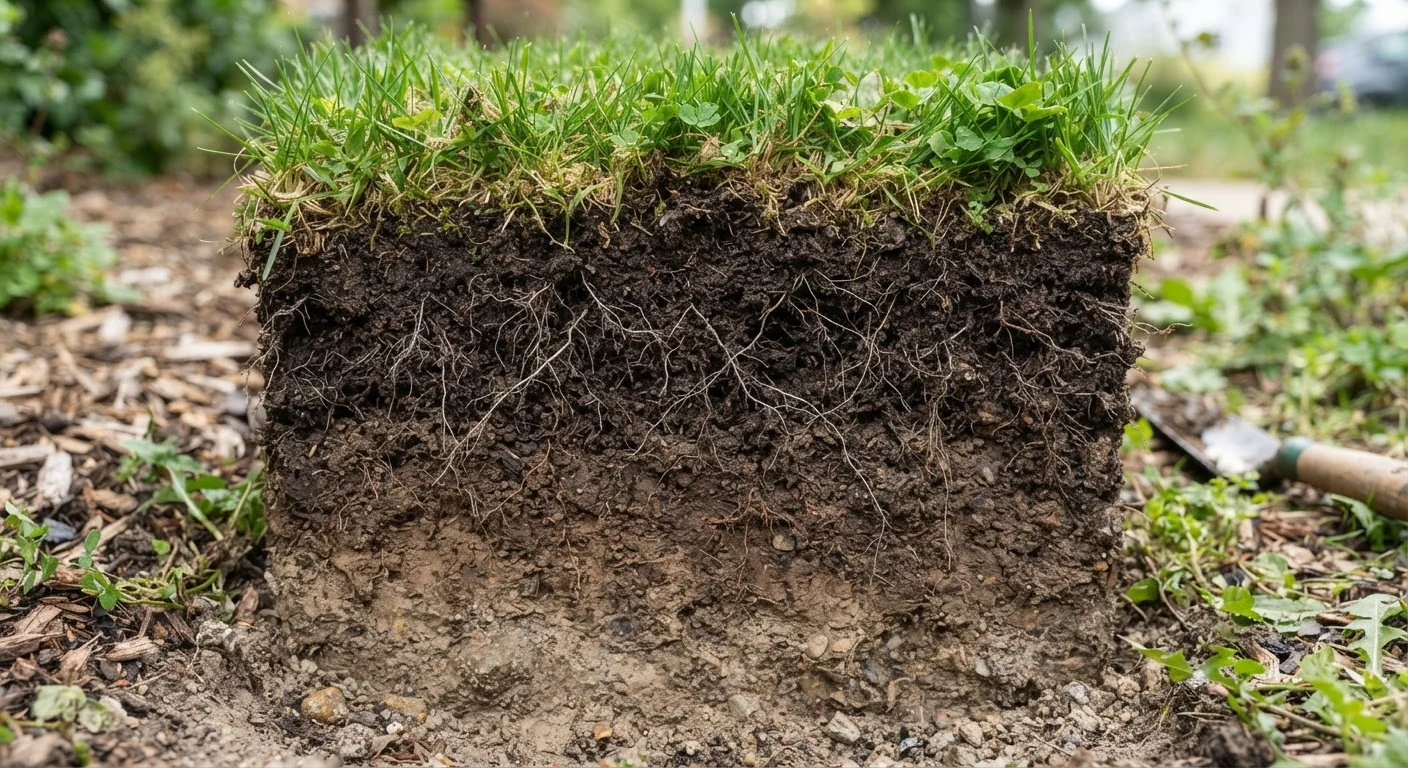
The Three Main Soil Types - and What Sets Them Apart
Every lawn sits on a mix of three mineral particles: sand, silt, and clay. The proportion of each one gives soil its character - its texture, drainage behavior, and ability to support plant life. Understanding these three types is the first step toward diagnosing why your grass looks the way it does.
Clay Soil
Clay particles are the smallest of the three and pack tightly together, leaving little space for air or water movement. Clay soil holds moisture well - sometimes too well. It drains slowly, stays waterlogged after heavy rain, and dries into a hard, cracked surface during dry spells. On the upside, clay is naturally rich in nutrients. The challenge is making those nutrients accessible to grass roots struggling through compacted ground.
Sandy Soil
Sand particles are much larger and irregularly shaped, creating wide gaps between them. Water moves through sandy soil quickly - which sounds helpful, but it means nutrients leach out before roots can absorb them. Sandy lawns dry out fast, require more frequent irrigation, and often need supplemental fertilizing to stay lush. However, they rarely suffer from compaction and offer excellent aeration for roots.
Loamy Soil
Loam is the balanced middle ground - a roughly equal blend of sand, silt, and clay. It drains well without drying out too quickly, holds nutrients effectively, and has a loose, crumbly texture that roots can penetrate easily. Most turf grasses perform best in loamy soil, which is why it's considered the standard to aim for when amending other soil types.
~25%
Air space in healthy loamy soil
Soil scientists generally consider roughly 25% air pore space essential for healthy root respiration in turfgrass systems.
6.0-7.0
Ideal soil pH range for most lawn grasses
According to university extension guidelines, most common turfgrass species absorb nutrients most efficiently within a slightly acidic to neutral pH range.
2x
Water retention advantage of loam over sand
Loamy soils can hold approximately twice as much plant-available water per unit volume compared to coarse sandy soils, according to soil science research.
How Soil Type Affects Grass Growth Day to Day
Soil type isn't just an abstract classification - it shapes the practical decisions you make every time you step into the yard. Watering schedules, fertilizer timing, and even grass variety selection all flow from your soil's composition.
In clay-heavy lawns, the biggest threats are compaction and poor aeration. Grass roots need oxygen as much as they need water, and compacted clay cuts off that supply. This is one reason bare patches often appear in high-traffic areas of clay lawns - the soil beneath simply becomes too dense for roots to survive.
In sandy lawns, the challenge is retention. Because water and nutrients move through so quickly, grass can appear thin or yellowed even when you're watering regularly. Your watering habits matter here: frequent shallow watering on sandy soil encourages surface roots that are vulnerable to drought, while deeper, less frequent sessions help roots chase moisture downward.
Soil type also determines how your lawn responds to fertilizer. Clay soil may hold applied nutrients well but deliver them unevenly due to poor root penetration. Sandy soil can't hold nutrients long at all. Understanding this connection makes fertilizing your lawn more strategic and less wasteful.
Try the At-Home Jar Test
Fill a clear jar about one-third with soil from your lawn, add water to near the top, shake vigorously, and let it settle for 24-48 hours. Sand settles first at the bottom, silt settles in the middle layer, and clay forms the top layer. The relative thickness of each layer gives you a visual read on your soil's composition - no lab required.
Improving Your Soil Over Time
The good news: soil type isn't a fixed sentence. While you can't swap out your underlying geology, you can meaningfully improve structure and performance through consistent amendments.
For clay soil: Core aeration - using a machine or tool to pull small plugs from the lawn - physically breaks up compaction and allows air, water, and organic matter to penetrate deeper. Topdressing with compost after aerating speeds up improvement. Over several seasons, this process transforms dense clay into a more workable growing medium.
For sandy soil: Organic matter is your primary tool. Compost introduces microorganisms and fine particles that help sandy soil retain moisture and nutrients longer. Adding a layer of organic mulch to garden beds adjacent to your lawn also helps build soil biology over time.
When starting a new lawn, soil type should factor into whether you lay sod or seed. See our overview of grass seed vs. sod to understand how each option performs under different soil conditions.
A professional soil test - available through many local university extension services - gives you a precise breakdown of your soil's texture, pH, and nutrient profile. This information removes the guesswork and lets you invest in amendments that will actually make a difference for your specific lawn.
Soil Type and pH Are Different Things
Soil texture (the sand/silt/clay ratio) and soil pH (how acidic or alkaline your soil is) are separate measurements that both affect lawn health. A soil test will typically report both. Clay soils often run alkaline, while sandy soils can trend acidic - but that relationship isn't universal. Addressing texture without checking pH can leave a key piece of the puzzle unsolved.
Frequently Asked Questions
The easiest at-home method is the squeeze test: take a handful of moist soil and squeeze it. Sandy soil crumbles apart immediately, clay soil holds a firm shape and feels sticky, and loamy soil holds together briefly then breaks apart cleanly. For a more precise reading, a soil test kit or a county extension service can analyze your soil's composition and pH.
You can't fully change your native soil type, but you can improve its structure significantly over time. Adding organic matter like compost to clay soil improves drainage and aeration. Mixing compost into sandy soil helps it retain water and nutrients longer. Consistent amendment over several seasons yields the most lasting results.
Yes, significantly. Sandy soil drains quickly and may need more frequent, shorter watering sessions. Clay soil retains moisture longer but is prone to waterlogging, so less frequent deep watering works better. Loamy soil strikes a balance, generally benefiting from deep, infrequent watering that encourages roots to grow downward.
Grasses that tolerate compaction and moderate drainage challenges include tall fescue, Kentucky bluegrass, and zoysia grass. These varieties develop deeper root systems that can navigate denser soil. Aerating clay soil annually also makes a considerable difference in how well any grass species performs.
Sandy soil isn't inherently bad, but it requires more active management. Because it drains so rapidly, nutrients wash away before grass roots can absorb them. Bermudagrass and centipedegrass are naturally adapted to sandy, low-nutrient conditions. Consistent topdressing with compost and careful fertilizing can make sandy lawns quite healthy.
The content on this site is provided for informational purposes only and should not be considered a substitute for professional advice. While we strive to provide accurate and up-to-date information, we make no guarantees regarding its completeness or accuracy. Always consult a qualified professional for advice specific to your circumstances before making any decisions.