

Our Verdict
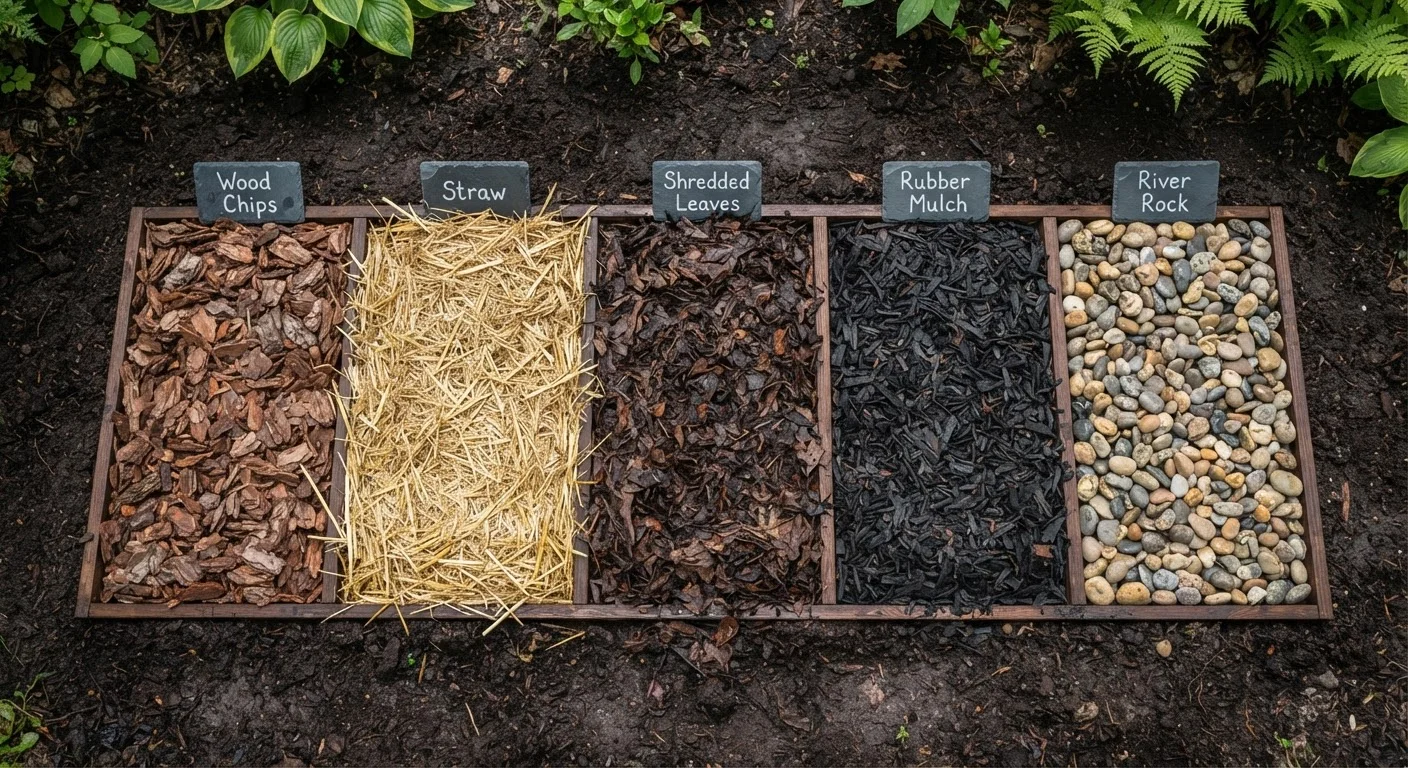
No single mulch is universally best - the right choice depends on where you're gardening and what you want to achieve. Organic mulches like wood chips and straw are the workhorses of most home gardens because they suppress weeds, retain moisture, and steadily improve soil. Inorganic options like rock and rubber shine in specific, permanent applications where longevity and low maintenance matter more than soil enrichment.
| Best for | Recommended |
|---|---|
| Vegetable and annual flower beds | Straw or shredded leaves |
| Trees, shrubs, and perennial borders | Wood chips or bark mulch |
| Drought-tolerant and xeriscape gardens | Gravel or river rock |
| High-traffic pathways and play areas | Rubber mulch |
Why Mulch Choice Matters More Than Most Gardeners Realize
Mulch does far more than tidy up a garden bed. It insulates soil against temperature swings, slows moisture evaporation, suppresses weed germination, and - in the case of organic types - gradually breaks down to feed soil biology. Choosing the wrong type can mean stunted plants, soggy roots, or beds that need constant re-mulching.
Understanding your soil type is a useful first step, because the way mulch interacts with clay, sandy, or loamy soil differs meaningfully. From there, the question becomes: what are you growing, and what do you need the mulch to do?
| Wood Chips | Straw | Shredded Leaves | Gravel/Rock | Rubber Mulch | |
|---|---|---|---|---|---|
| Soil enrichment | High (slow) | Moderate | High (fast) | None | None |
| Weed suppression | Strong | Moderate | Moderate | Strong | Strong |
| Moisture retention | Excellent | Very good | Good | Low | Moderate |
| Longevity | 1-3 years | 1 season | 1 season | Permanent | 5-10 years |
| Best use | Trees, shrubs | Vegetable beds | All garden beds | Xeriscape, paths | Play areas, paths |
| Relative cost | Low-moderate | Low | Free | Moderate-high | High upfront |
Organic Mulches: Feeding the Soil While Protecting It
Organic mulches decompose over time, adding carbon, nutrients, and structure to the soil beneath. They are the preferred choice for most planting beds.
Wood Chips and Bark Mulch
Coarse wood chips are excellent around trees, shrubs, and established perennials. They break down slowly, suppress weeds effectively, and moderate soil temperature well. Shredded bark is finer and stays in place on slopes. One caveat: fresh wood chips temporarily tie up nitrogen as they decompose, so avoid digging them directly into soil around nitrogen-hungry vegetables.
Straw
Straw (not hay - hay carries weed seeds) is a go-to for vegetable gardens. It's lightweight, cheap, easy to move at season's end, and allows water to pass through freely. It also pairs naturally with drip irrigation systems, letting emitters do their work without interference.
Shredded Leaves
Free and abundant in autumn, shredded leaves are among the most soil-beneficial mulches available. Run dry leaves through a mower or leaf shredder before applying - whole leaves can mat together and block water. They break down within a single growing season, so plan to replenish annually.
Compost
A 1-2 inch layer of finished compost used as mulch adds nutrients directly while suppressing light weed growth. It works especially well blended beneath a coarser mulch layer for a two-tier approach.
The Two-Layer Mulch Method
For maximum benefit in planting beds, apply a 1-inch base layer of finished compost directly on the soil, then top it with 2-3 inches of wood chips or shredded bark. The compost feeds soil biology while the coarser top layer suppresses weeds and holds moisture. This approach is especially effective in beds that receive infrequent irrigation.
Inorganic Mulches: Long-Lasting but Soil-Neutral
Inorganic mulches don't decompose, so they require little replenishment - but they also contribute nothing to soil health. They suit specific situations well.
Gravel and River Rock
Stone mulch excels in xeriscaped areas, Mediterranean-style plantings, and around drought-tolerant natives. It retains heat, which helps warm-season plants but can stress cool-season ones. For gardeners exploring native plants, stone mulch often pairs well with the dry, well-drained conditions many native species prefer. Learn more about those plants in our piece on why ecologists recommend native plants.
Rubber Mulch
Made from recycled tires, rubber mulch lasts many years and stays in place well. It's commonly used in play areas and pathways. However, it does not improve soil, can get very hot in direct sun, and is difficult to remove once installed - making it a poor choice for active planting beds.
Landscape Fabric
Often used beneath stone, landscape fabric blocks weeds but degrades over time and can interfere with natural soil aeration. Most experienced gardeners treat it as a limited-use tool rather than a general solution.
Application Tips That Apply to Every Mulch Type
Regardless of the mulch you choose, a few universal principles will make it far more effective.
- Depth: Apply 2-4 inches for most mulches. Too thin and weeds push through; too thick and you risk smothering roots and inviting fungal problems.
- Keep it off stems: Always leave a 2-3 inch gap between mulch and the base of plant stems or tree trunks. Mulch piled against trunks - sometimes called a "mulch volcano" - traps moisture and encourages rot and pest damage.
- Timing: In most regions, spring application (after soil warms) and fall application (before hard frosts) are the most impactful moments. For vegetable beds, mulch after seedlings are established, not before.
- Refresh as needed: Organic mulches break down and should be topped up annually. Check depth each spring and add material where it has thinned below 2 inches.
If you're building a raised garden bed, organic mulch is almost always the right match - it complements the controlled soil environment raised beds are designed to provide.
25-50%
Reduction in soil moisture loss with mulch
University cooperative extension programs consistently cite this range for properly applied organic mulch in home garden beds.
2-4 inches
Recommended mulch depth for most applications
This depth range is the standard guidance from most state extension horticulture programs across the U.S.
The content on this site is provided for informational purposes only and should not be considered a substitute for professional advice. While we strive to provide accurate and up-to-date information, we make no guarantees regarding its completeness or accuracy. Always consult a qualified professional for advice specific to your circumstances before making any decisions.