

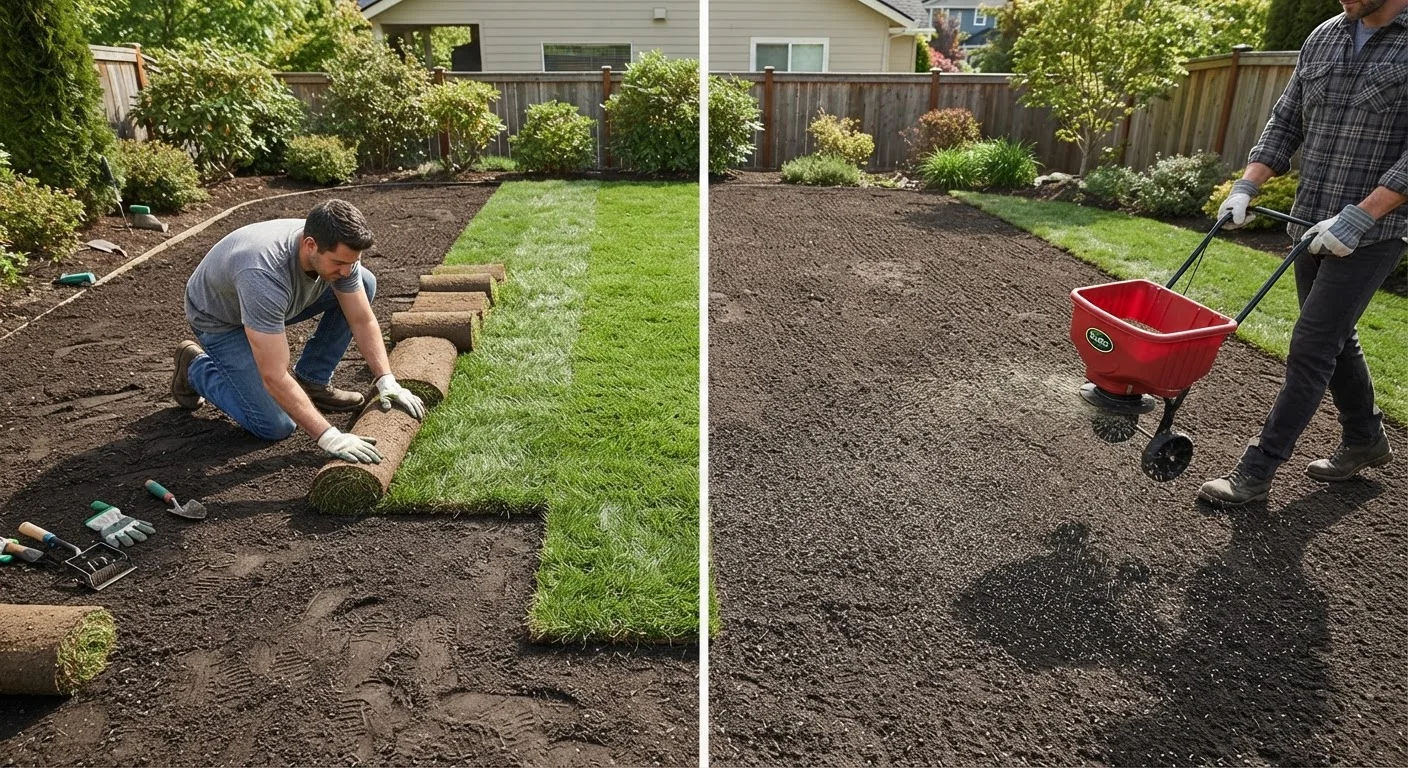
Option A
Grass Seed
The patient, budget-friendly route to a full lawn.
Best for: Homeowners with flexible timelines who want lower upfront costs and more variety in grass species.
Option B
Sod
The fast-track option for an instant, established lawn.
Best for: Homeowners who need a usable lawn quickly, are dealing with erosion, or want minimal germination risk.
The Core Difference: How Each Method Establishes Grass
Grass seed and sod both result in a lawn, but they get there through very different paths. Grass seed starts the process from scratch - you're planting individual seeds that must germinate, develop roots, and grow into turf over several weeks. Sod, by contrast, is pre-grown grass that arrives as rolled or cut sections of turf with an existing root system already embedded in a thin layer of soil.
That foundational difference cascades into everything else: cost, timeline, effort, and what your yard looks like six months after installation. Neither method is universally superior - the right call depends on your specific situation.
Regardless of which method you choose, the soil beneath your lawn is the single biggest factor in long-term success. Before buying seed or ordering sod, it's worth understanding what you're working with. See our guide to lawn soil types to learn how clay, sandy, or loamy soil affects establishment and growth.
Cost, Timeline, and Effort Compared
Cost is usually the most decisive factor. Grass seed is significantly cheaper per square foot - often by a factor of three to five - making it the go-to for large areas or tight budgets. Sod carries higher material costs, plus it typically requires either professional installation or substantial physical labor to lay correctly.
| Criterion | Grass Seed | Sod |
|---|---|---|
| Upfront cost | Low (cents per sq. ft.) | High (3-5x seed cost) |
| Time to usable lawn | 8-12 weeks | 2-3 weeks |
| Erosion control | Poor until established | Immediate stabilization |
| Species variety | Very wide selection | Limited pre-selected types |
| Labor intensity | Moderate (spreading, watering) | High (lifting, laying, cutting) |
| Best planting window | Fall (cool) / Late spring (warm) | Fall (cool) / Late spring (warm) |
| Germination/rooting risk | Higher - weather dependent | Lower - pre-grown turf |
The timeline gap is equally important. With seed, expect visible germination in seven to twenty-one days depending on species, but a lawn that can withstand regular foot traffic generally takes eight to twelve weeks. Sod knits into the soil within two to three weeks under good conditions, giving you a functional lawn far faster.
Labor shouldn't be underestimated. Both methods demand thorough soil preparation - tilling, leveling, and amending as needed - before anything goes down. Laying sod is physically demanding work, and seeding large areas requires a calibrated spreader and careful watering discipline until germination is complete.
2-3 weeks
Time for sod to begin rooting
Under adequate moisture and proper soil contact, sod typically knits to the underlying soil within two to three weeks of installation.
3-5x
Higher cost of sod vs. seed
Sod generally costs three to five times more per square foot than grass seed for comparable coverage, not including installation labor.
8-12 weeks
Time for seeded lawn to handle traffic
Most cool-season and warm-season grasses seeded under good conditions take eight to twelve weeks before the turf is durable enough for regular use.
When Conditions Favor One Over the Other
Your yard's specific conditions often make the decision clearer than cost alone.
Choose Sod When:
- Erosion is a concern. On slopes or areas prone to runoff, sod's intact root mat anchors the soil immediately. Seed on a slope risks washing away before it ever germinates.
- You're on a tight schedule. Hosting a backyard event, selling a home, or dealing with a landscaping deadline all favor sod's faster payoff.
- You're working through a dry season. While both methods require consistent watering, established sod has more resilience during brief dry spells than fragile seedlings.
Choose Seed When:
- You're covering a large area. The cost difference at scale is significant, and seed allows you to cover acreage that would be prohibitively expensive to sod.
- You want a specific grass type. Sod is typically available in a limited number of pre-selected varieties. Seed opens up a much wider range of species and cultivars suited to your specific climate and use case.
- You're patching, not replacing. For isolated bare patches - often caused by compaction, shade, or disease - seed integrates more naturally with surrounding turf. Our article on what causes bare patches can help you diagnose the underlying issue before you replant.
Timing also plays a role. Cool-season grasses like fescue and bluegrass establish best when seeded or sodded in early fall. Warm-season grasses like Bermuda and zoysia favor late spring installation. Planting outside these windows stresses new turf and raises the risk of failure.
After Installation: What Both Methods Need
The work doesn't stop once seed is spread or sod is laid. Both approaches require consistent moisture during the critical establishment window - typically daily light watering for seed until germination, and deep but less frequent watering for sod once it begins rooting in.
For irrigation planning, knowing whether your setup delivers water efficiently can make a real difference in establishment success. Our comparison of drip systems vs. sprinklers walks through which approach suits different yard setups.
Once your lawn is established - whether from seed or sod - fertilizing at the right time and rate becomes the next lever for a healthy, resilient turf. Applying fertilizer too early on new growth can burn tender roots; waiting too long delays the density you're after. See our guide to fertilizing your lawn the right way for timing and application principles that hold up across lawn types.
Finally, don't let misconceptions guide your post-installation care. Practices like mowing too short or watering too frequently can undermine a lawn that was well-established to begin with - something our article on common lawn care myths addresses in detail.
The content on this site is provided for informational purposes only and should not be considered a substitute for professional advice. While we strive to provide accurate and up-to-date information, we make no guarantees regarding its completeness or accuracy. Always consult a qualified professional for advice specific to your circumstances before making any decisions.