

Why Ecologists Keep Coming Back to Native Plants
If you've followed gardening conversations over the past decade, you've noticed a consistent theme from ecologists, landscape designers, and conservation groups: plant natives. But the recommendation isn't just a trend - it's grounded in how ecosystems actually function.
Every region's wildlife evolved alongside specific plants. Native bees, for example, often depend on particular flower shapes, bloom times, and pollen chemistry found only in local plant species. A garden full of exotic ornamentals may look beautiful but offer little to the insects, birds, and other organisms that keep a local ecosystem running. Ecologist Doug Tallamy has written extensively about this dynamic, noting that the relationship between native caterpillars and native oaks alone supports hundreds of bird species during nesting season.
“Restoring native plants to our landscapes is the single most powerful thing that ordinary people can do for local ecosystems. Native plants support the food webs that birds and other wildlife depend on - exotic ornamentals largely cannot do this.”
— Doug Tallamy, Professor of Entomology and Wildlife Ecology, University of Delaware
The ecological argument is simple: native plants are infrastructure. They're the foundation on which local food webs are built, and replacing them with non-native species removes critical links in that chain.
The Practical Benefits for Everyday Gardeners
Beyond ecology, native plants offer real, tangible advantages for homeowners - especially those who want attractive outdoor spaces without intensive upkeep.
70%
Less water needed by established native plants
Native plant advocates and extension services widely cite significant irrigation reductions compared to conventional lawns, often citing figures in the range of 50-70% less water once plants are established.
4x
More native bee species supported vs. exotic plants
Research published in ecological journals has found that native plant gardens can support substantially more native bee diversity than gardens planted predominantly with non-native ornamentals.
35%
Of U.S. land covered by conventional lawns
Turfgrass covers an estimated 40 million acres in the United States, making lawn conversion to native plantings one of the most impactful changes individual homeowners can make for local biodiversity.
Lower water demand. Native plants are calibrated to regional rainfall. Once their root systems are established - typically within the first growing season or two - most require little to no supplemental irrigation. This stands in contrast to conventional lawns and many popular ornamentals, which need consistent watering to survive. For tips on efficient watering during the establishment phase, see our guide to drip systems vs. sprinklers to compare your options.
Reduced fertilizer and pesticide use. Because native plants evolved in local soils, they rarely need added nutrients to perform well. They also tend to have natural defenses against regional pests, reducing the need for chemical interventions.
Less ongoing maintenance. A well-planned native garden, once established, largely takes care of itself. Pairing native plants with appropriate mulch helps conserve soil moisture and suppress weeds - see our overview of mulch types for guidance on the best options for garden beds.
Choosing the Right Native Plants for Your Space
The most important thing to understand about native plants is that 'native' is not a monolithic category. A plant native to the Pacific Northwest may be completely unsuited to a Texas garden - and vice versa. Regional specificity matters.
Start by identifying your ecoregion - a geographic area defined by shared ecological features like soil type, precipitation, and vegetation. Your local cooperative extension service, state native plant society, or botanical garden can provide regionally accurate plant lists. These are far more reliable than generic 'native plant' labels found at big-box retailers, which sometimes use the term loosely.
Consider the conditions in your specific yard before selecting plants. Factors to evaluate include:
- Sun exposure - full sun, partial shade, or deep shade. If your yard is heavily shaded, many native woodland species thrive in low-light conditions. Our guide to shade gardening covers options suited to those environments.
- Soil drainage - some natives prefer dry, well-drained soils while others tolerate or even require wet conditions.
- Space available - match the mature size of a plant to your space; some native shrubs and grasses spread broadly over time.
Plan for Year-Round Blooms
When selecting native plants, look at bloom times across species rather than choosing only summer-flowering varieties. Mixing early-spring bloomers like wild columbine with late-season species like native asters ensures continuous food sources for pollinators throughout the growing season.
Mixing plants with different bloom times ensures your garden supports pollinators from early spring through late fall - not just in midsummer when most ornamentals peak.
Getting Started Without Overhauling Your Entire Yard
Transitioning to a native-focused garden doesn't mean tearing out everything at once. Most gardeners find success by starting small: replacing one section of lawn or one existing bed with native species, observing how those plants perform over a season or two, and expanding from there.
A few practical starting points:
- Contact your local cooperative extension office or native plant society for a free or low-cost plant list tailored to your county or ecoregion.
- Prioritize plants that serve multiple functions - species that provide nectar, seeds, and shelter attract the widest range of wildlife.
- Prepare planting areas by removing invasive species first. Introducing natives into a bed dominated by aggressive non-natives often leads to the natives being outcompeted before they establish.
- Water consistently during the first growing season; don't interpret 'low maintenance' as 'no maintenance' during establishment.
If you're working with limited ground space, some native species can also be grown in raised beds or containers - though their ecological contribution is greatest when planted directly in the ground. Our guide to raised garden beds can help you think through whether that approach fits your situation.
Frequently Asked Questions
A native plant is one that occurred naturally in your specific region before European settlement. This is typically defined by ecoregion, not just state or climate zone. Your local cooperative extension service or a native plant society can help you identify which species are truly local to your area.
Once established - usually after one to two growing seasons - most native plants are adapted to the natural rainfall of their region and need little to no supplemental watering. During the establishment period, regular watering is still important to help roots develop.
Yes. Many native species - especially smaller wildflowers, sedges, and ferns - are well-suited to compact spaces. Some can even grow in containers, though they tend to perform best when planted in the ground where roots can access natural soil communities.
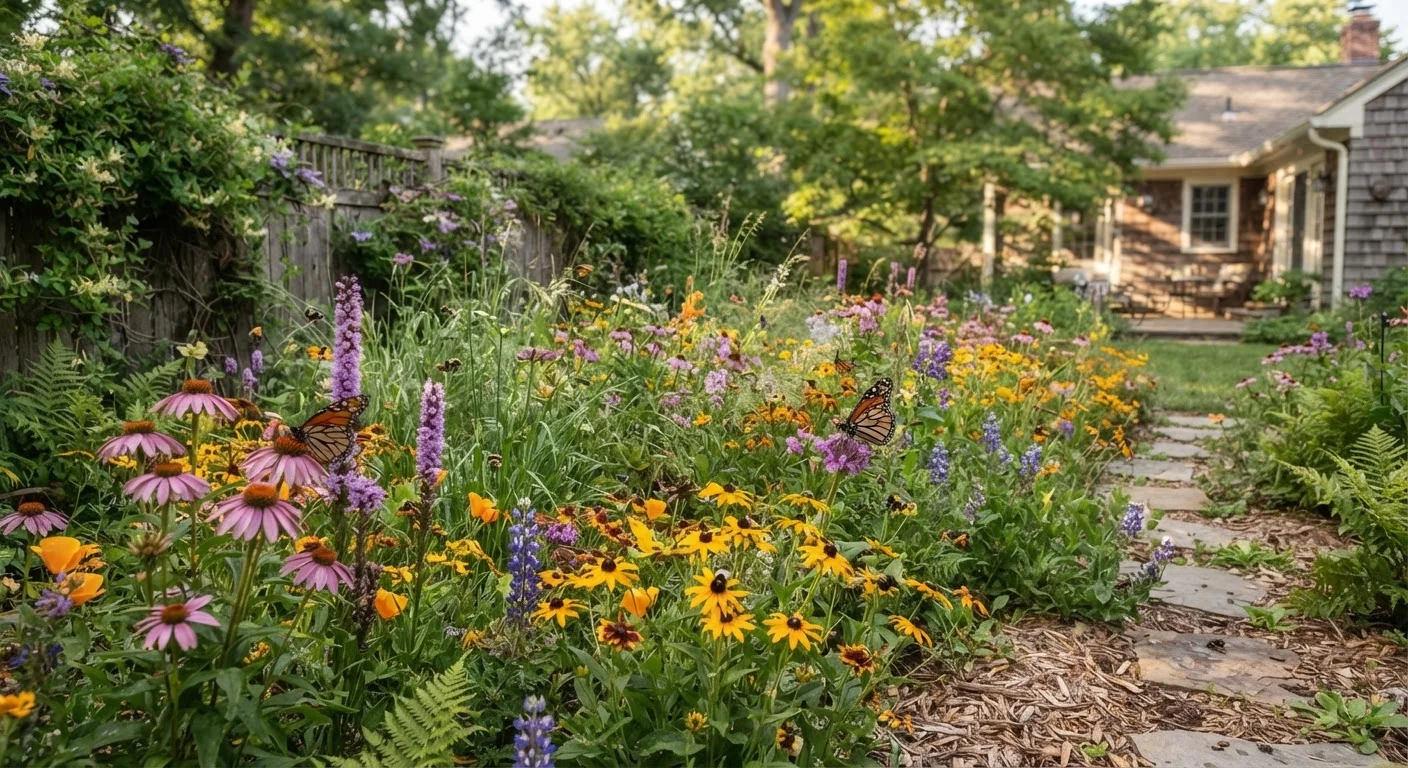
Not at all. Native plants include stunning flowering species like coneflowers, black-eyed Susans, wild columbine, and blazing star. Many landscape designers use native plants to create visually striking, low-maintenance gardens that look intentional rather than wild.
Some native species spread vigorously and should be planted with that in mind, but this varies widely by species. Researching the growth habits of any plant before planting - native or not - helps you avoid surprises. Mulching and edging can help manage spread.
Native plant nurseries, local botanical gardens, and plant sales hosted by native plant societies are good starting points. Your state's cooperative extension service often publishes regionally specific plant lists and can recommend reputable local sources.
The content on this site is provided for informational purposes only and should not be considered a substitute for professional advice. While we strive to provide accurate and up-to-date information, we make no guarantees regarding its completeness or accuracy. Always consult a qualified professional for advice specific to your circumstances before making any decisions.