

Our Verdict
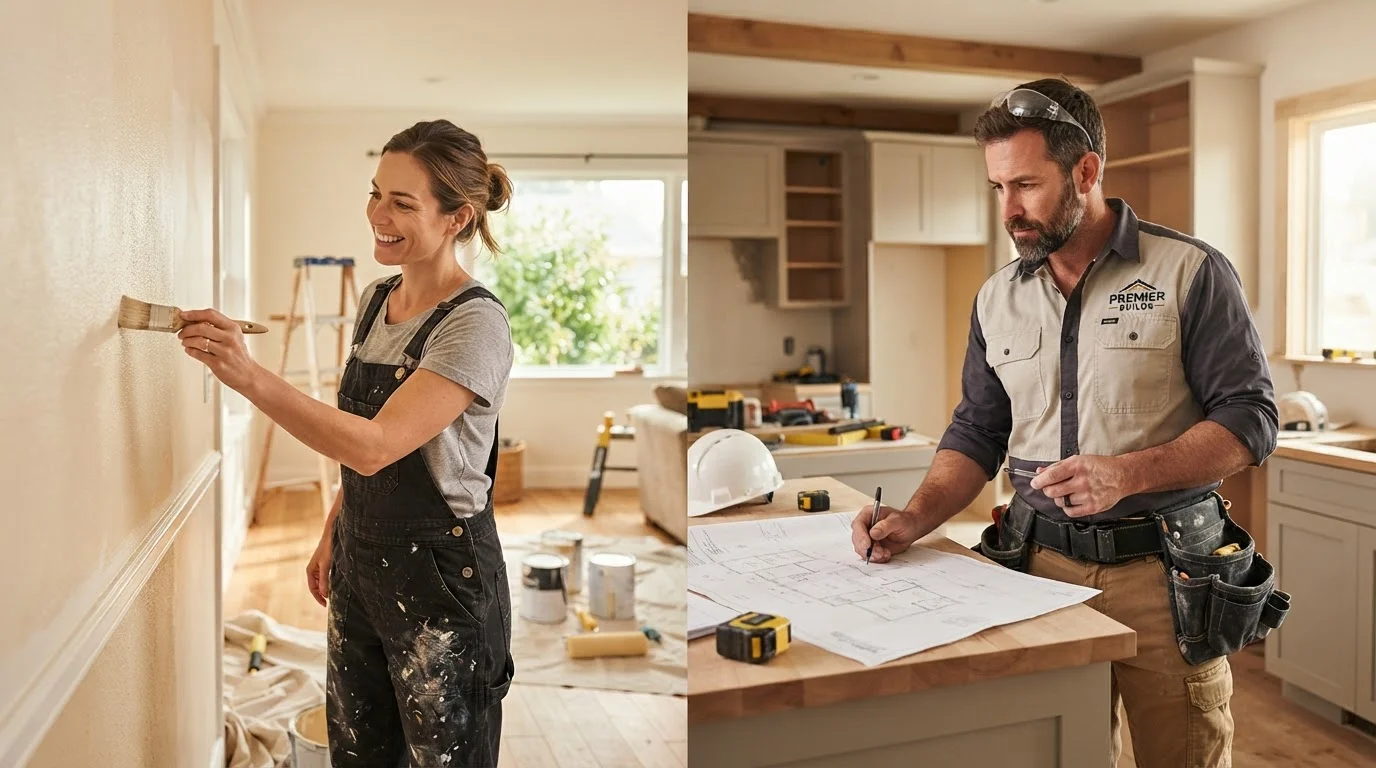
Neither DIY nor hiring a contractor is universally better-the right choice depends on the specific project's complexity, safety stakes, and your honest skill level. DIY shines for cosmetic, low-risk tasks where mistakes are recoverable. Contractors earn their fees on projects involving safety systems, structural changes, or work that requires permits and inspections.
| Best for | Recommended |
|---|---|
| Cosmetic or low-risk improvements (painting, caulking, landscaping) | DIY |
| Electrical, gas, plumbing-to-mains, or structural projects | Licensed Contractor |
| Projects requiring permits or passing inspections | Licensed Contractor |
| Medium-complexity projects where budget is tight | Hybrid Approach |
The Core Question: What Are You Actually Deciding?
Every home improvement decision involves an invisible triad: cost, risk, and quality. DIY reduces labor costs but transfers risk directly to you. Hiring a contractor shifts that risk and responsibility to a professional-at a price. Before framing it purely as a money question, homeowners need to honestly evaluate all three dimensions.
A useful first filter is asking: If I get this wrong, what happens? A poorly painted bedroom is a weekend inconvenience. A poorly wired outlet can cause a house fire. That gap in consequence should drive your first instinct on any project.
If you're new to home ownership and still building your baseline of knowledge, our guide for first-time homeowners covers how to prioritize repairs and build a practical toolkit before diving into projects.
Projects That Favor DIY
Cosmetic and maintenance-level tasks are where DIY consistently makes sense. These share a common trait: mistakes are visible, recoverable, and don't jeopardize safety or structural integrity.
- Interior painting - requires patience and prep, but errors are fully correctable.
- Caulking and weatherstripping - low cost, low stakes, and high return on energy efficiency. See our caulk type reference guide to choose the right product for each application.
- Basic landscaping and garden work - planting, mulching, edging, and lawn care are excellent weekend projects with minimal downside risk. Explore our Lawn & Garden hub for seasonal guidance.
- Minor drywall patching - small holes from nails or anchors are beginner-friendly repairs.
- Fixture swaps - replacing a faucet or light fixture (with power off at the breaker) is manageable for most homeowners who follow manufacturer instructions carefully.
Prep Before You Start Saves Hours Later
Successful DIY projects almost always begin with thorough preparation: reading instructions fully, gathering every tool and material in advance, and watching technique demonstrations before touching the project. Skipping prep is the most common reason manageable projects turn into expensive mistakes. A little patience at the start pays dividends throughout.
The key to successful DIY is honest preparation: watch instructional videos, gather the right tools before starting, and don't underestimate drying or curing times. Rushing is how recoverable projects become costly ones.
Projects That Require a Licensed Professional
Certain categories of home work carry safety, legal, or structural consequences significant enough that DIY is genuinely inadvisable for most homeowners-regardless of enthusiasm or YouTube tutorials watched.
Don't Underestimate Permit Requirements
Many homeowners attempt to skip permits on significant projects to save time or money-a decision that can backfire seriously. Unpermitted work may have to be torn out and redone to pass inspection when you sell the home, and it can also affect your homeowner's insurance coverage. Always verify local permit requirements before starting any project beyond basic cosmetic work.
- Electrical panel work and new circuit installation - requires a licensed electrician in most jurisdictions and must pass inspection. Improper wiring is a leading cause of house fires.
- Gas line installation or repair - always requires a licensed professional. Gas leaks are life-threatening.
- Structural modifications - removing or altering walls (especially load-bearing ones) demands engineering knowledge. Our article on load-bearing walls explains why this work can't be improvised.
- Roofing - falls are a top cause of serious home-improvement injuries, and improper installation voids most roofing warranties.
- Permitted renovations - if your project requires a building permit (additions, basement finishing, major plumbing changes), unpermitted work can complicate home sales and insurance claims. Our permit guide clarifies when you need one.
The Comparison at a Glance
Use this framework to quickly assess where a given project typically lands:
| Factor | DIY | Hiring a Contractor | |
|---|---|---|---|
| Upfront cost | Lower (labor is your time) | Higher (includes professional labor) | |
| Safety risk | Varies; higher on complex tasks | Managed by licensed professional | |
| Quality assurance | Depends on your skill level | Accountable via licensing and warranty | |
| Permit handling | Your responsibility to research | Contractor typically manages | |
| Time investment | High - you do all the work | Low - mostly scheduling and oversight | |
| Error consequences | You bear the cost of mistakes | Often covered by contractor liability |
Keep in mind that these are general patterns, not universal rules. A skilled and experienced homeowner may safely handle tasks that would be risky for a beginner. When in doubt, a consultation with a licensed contractor-even if you ultimately do the work yourself-is a worthwhile investment.
The Hybrid Approach: Getting the Best of Both
Many projects don't have to be all-or-nothing. A practical middle path is to handle preparation and finishing work yourself while hiring a pro for the technical core. Examples include:
- Demoing old tile yourself before a plumber reroutes pipes.
- Priming and painting after an electrician installs recessed lighting.
- Doing your own landscaping grading after a contractor pours a new patio.
This hybrid strategy can meaningfully reduce labor costs without exposing you to the high-risk phases of a project. It also gives you better visibility into the work being done, which helps when asking questions and verifying quality.
Before any project-DIY, contracted, or hybrid-review our pre-renovation checklist to ensure permits, timelines, and utility shutoffs are handled before a single tool is picked up. And if budget is a central concern, strategies for stretching your renovation budget can help you plan smarter from the start.
The content on this site is provided for informational purposes only and should not be considered a substitute for professional advice. While we strive to provide accurate and up-to-date information, we make no guarantees regarding its completeness or accuracy. Always consult a qualified professional for advice specific to your circumstances before making any decisions.