

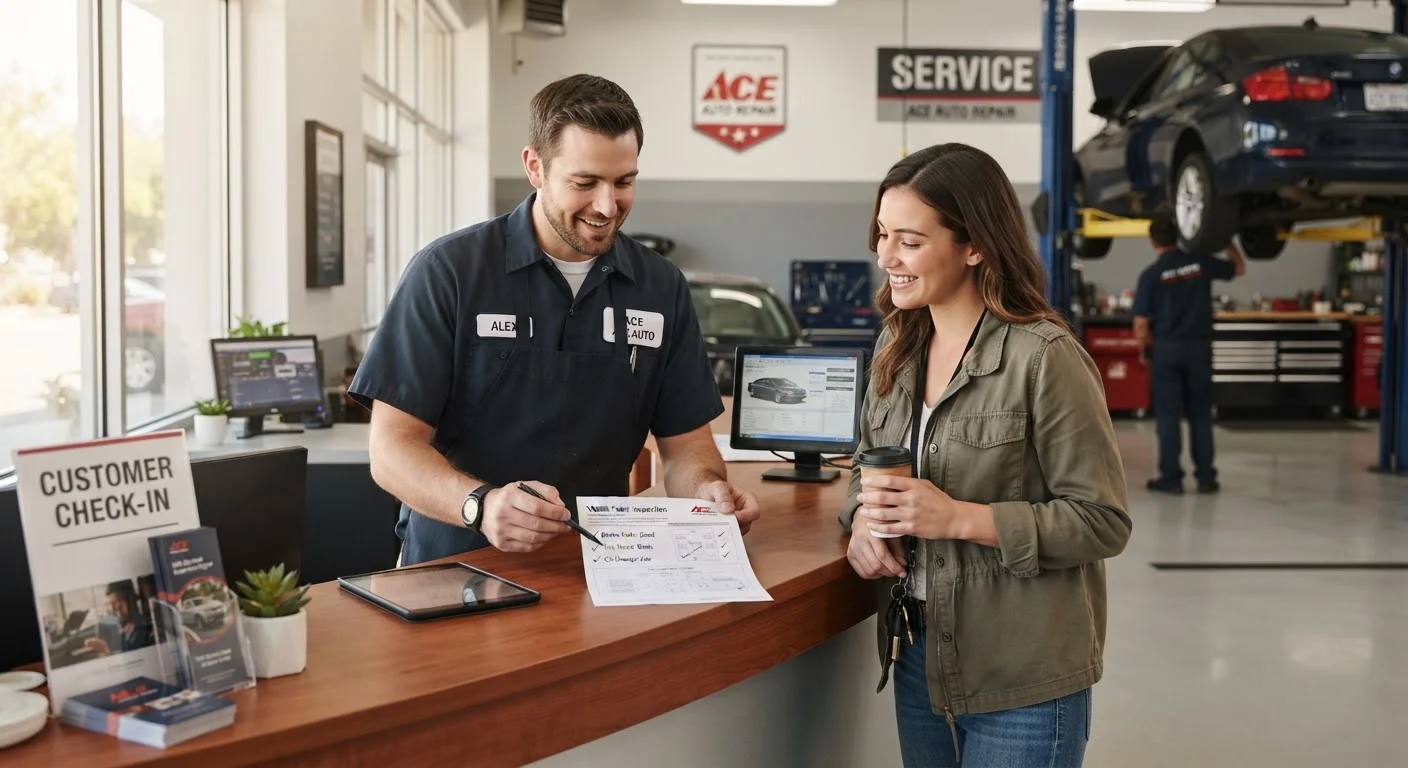
Why the Language Gap Matters
Walking into a repair shop without any automotive vocabulary puts you at a real disadvantage - not because mechanics are trying to deceive you, but because miscommunication slows everything down and can lead to mismatched expectations about cost and timeline. When a service advisor mentions a "CV axle," "throttle body cleaning," or "serpentine belt," the conversation can drift past you quickly if those terms mean nothing.
The good news: you don't need a mechanic's certification to hold an informed conversation. A working knowledge of a dozen or so common terms, combined with a few practical habits, is enough to follow most diagnoses, spot a vague explanation, and ask the questions that matter. If you're still early in your ownership journey, our guide for new car owners covers the foundational maintenance knowledge that pairs well with these communication skills.
Terms Worth Knowing Before You Walk In
You don't need to memorize a textbook - focus on the terms that come up most often at routine service visits and common repairs.
A Note on OBD-II Codes and Free Scans
Many auto parts retailers offer free OBD-II code scans. While this can give you a starting point, a raw fault code is not a repair prescription - it identifies a system or circuit that has reported an issue, not necessarily the exact failed part. A proper diagnosis by a trained technician involves additional testing beyond reading the code. Use free scans as context, not as a substitute for professional diagnosis.
- Diagnostic fee: The charge a shop applies to connect test equipment to your vehicle or inspect a problem. This is separate from the repair cost and is sometimes applied toward the final bill if you authorize the work.
- OBD-II code (or fault code): A standardized code your car's onboard computer stores when it detects a problem. Codes point toward a system - they don't always name the exact failed part.
- Labor rate: The hourly cost the shop charges for a technician's time, separate from parts costs. Shops estimate labor by referencing standard time guides for each job type.
- OEM vs. aftermarket parts: OEM (OEM) parts come from the vehicle's original manufacturer or an approved supplier. Aftermarket parts are made by third parties and vary widely in quality. Ask which type is being used.
- Preventive maintenance: Scheduled service - oil changes, fluid flushes, filter replacements - done on a time or mileage basis to prevent breakdowns rather than fix them.
- Seized/corroded: A fastener, component, or fitting that has fused due to rust or age and requires extra labor to remove. This can legitimately increase repair time.
Best Practices for Every Service Visit
Describe symptoms in plain terms before using any mechanical vocabulary.
Mechanics are trained to translate symptom descriptions into diagnostic possibilities. Saying "there's a grinding noise when I brake at highway speeds" gives them more useful information than guessing at a part name. Accurate symptom description reduces unnecessary diagnostic time and the risk of chasing the wrong problem.
Always request a written estimate before authorizing any repair.
Verbal estimates are hard to verify and easy to misremember. A written estimate itemizes parts and labor separately, giving you a clear basis for comparison and a reference point if the final bill differs significantly. Most states have consumer protection rules requiring written authorization for repairs above a certain dollar threshold.
Ask what the diagnostic code means - not just what part will be replaced.
An OBD-II fault code points toward a system or sensor, not always a single failed component. Knowing what the code indicates helps you understand why a specific repair is being recommended and whether alternatives exist. It also guards against parts being replaced speculatively without confirming the root cause.
Clarify whether recommended work is urgent, preventive, or optional.
Not every item flagged during an inspection requires immediate attention. Understanding the timeline - 'this needs to be fixed today' versus 'we'd suggest addressing this within the next 6,000 miles' - lets you plan financially and prioritize safety-critical repairs. Lumping all recommendations together creates unnecessary pressure.
Know that you are always entitled to take your car elsewhere for a second opinion.
A diagnosis is not a commitment. If a quoted repair cost seems unusually high, or the explanation doesn't fully make sense, getting a second assessment from another licensed shop is entirely reasonable and often worthwhile on larger jobs. Reputable shops understand this and will not pressure you to authorize work on the spot.
Putting these habits into practice consistently makes every interaction with a shop smoother - and makes it far easier to catch a misunderstanding before it becomes an expensive one. For a closer look at which maintenance items are worth prioritizing, see our article on commonly skipped maintenance tasks that often lead to costly repairs.
Getting the Most Out of the Conversation
Even drivers who have owned vehicles for years sometimes leave the service counter unsure what was actually done to their car. Building a simple habit of asking for written documentation - a copy of the repair order, the parts invoice, and the technician's notes - creates a record that's useful for resale, warranty claims, and future visits. If you're navigating the broader costs of car ownership, understanding repair invoices is one of the most practical financial skills you can develop.
“The most effective thing a vehicle owner can do is describe what they experience - the sounds, the smells, the conditions - rather than arrive with a self-diagnosis. That information is genuinely useful; an amateur parts guess often isn't.”
— ASE Education Foundation, National automotive technician credentialing and education organization
The content on this site is provided for informational purposes only and should not be considered a substitute for professional advice. While we strive to provide accurate and up-to-date information, we make no guarantees regarding its completeness or accuracy. Always consult a qualified professional for advice specific to your circumstances before making any decisions.