

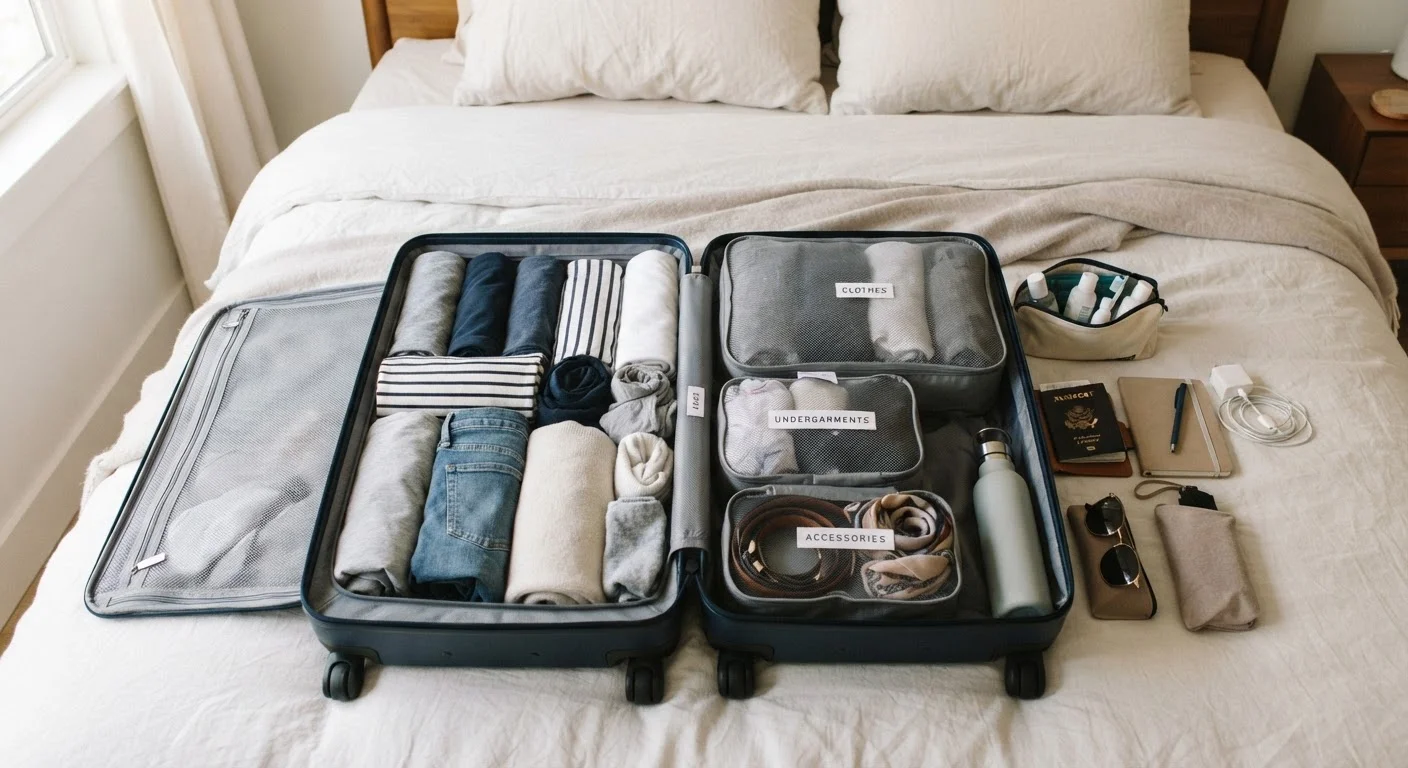
Start With the Right Bag for the Job
One of the most consequential packing decisions happens before you fold a single item: choosing the right bag. Frequent travelers tend to match their luggage to the trip type rather than defaulting to the same bag every time. A weekend domestic trip rarely needs a full-size checked bag. A two-week international itinerary with formal events is a different story.
A carry-on or personal item combination works well for trips up to seven to ten days if you pack efficiently. For longer trips or those requiring specialized gear - hiking equipment, formal wear, medical supplies - a checked bag may be unavoidable. The key is making that call deliberately, not by habit. For a deeper look at what fits in a carry-on, see our carry-on packing guide from seasoned flyers.
Build Your Packing System Around Outfits, Not Items
Most overpacking stems from thinking in individual items rather than complete outfits. Experienced travelers plan each day's outfit end-to-end - including shoes and layers - then look for overlap. A pair of versatile chinos can anchor three different looks. A jacket that works for both a cool evening walk and a casual dinner earns its weight.
Plan complete outfits before packing a single item
Thinking in outfits rather than individual items reveals true redundancy and prevents bringing three shirts that all serve the same function. It also ensures you won't arrive missing a key piece - like a belt that works with the dress pants you brought.
Stick to a two- or three-shoe maximum on any trip
Shoes are heavy, bulky, and hard to compress. Each pair you bring should serve at least two distinct occasions. Defaulting to versatile footwear reduces total bag weight and frees space for essentials.
Use packing cubes to assign categories, not just compress items
Category-based cubes mean you can locate any item without unpacking everything, and dirty clothes stay separated from clean ones without needing a separate bag. This structure also makes repacking mid-trip faster.
Leave a deliberate gap of 15-20% empty space in your bag
Extra space accommodates items acquired during the trip - souvenirs, extra layers purchased on location - and prevents the bag from being overstuffed and hard to close. A bag packed to absolute capacity is also harder to navigate at security.
Pack electronics and chargers in a single designated pouch
Scattered chargers and cables are among the most commonly forgotten items. A single electronics pouch keeps everything together, makes bag screening easier, and eliminates the frantic search before checkout.
Anchoring your wardrobe to two or three neutral base colors makes mixing and matching effortless and cuts the total item count. Shoes are typically the heaviest variable: limit yourself to two or three pairs maximum, and ensure each serves multiple purposes.
For families navigating this system with children's clothing and gear, our family trip planning framework covers packing logistics specific to that context.
Use Structure Inside Your Bag
Packing cubes and compression pouches aren't just organizational tools - they speed up airport security, keep dirty clothes separated, and let you find items without unpacking everything. Most frequent travelers assign categories to each cube: tops in one, bottoms in another, undergarments and socks in a third.
53%
Travelers who report overpacking regularly
A 2023 OnePoll survey of American travelers found that more than half consistently bring more than they need on trips.
2-3 lbs
Average weight saved by switching to packing cubes
Travel gear reviewers and packing efficiency experts commonly cite this range when comparing structured packing to unorganized bag filling.
Rolling clothes instead of folding them reduces wrinkles in most fabrics and compresses volume. Heavy items like shoes and toiletry bags belong near the bag's frame, closest to your back in a backpack or at the wheel base in a roller. Lighter items fill in around them.
Keep a Pre-Stocked Toiletry Kit
One underrated habit among frequent travelers: a toiletry bag that lives packed between trips. Rather than assembling it fresh every time, these travelers maintain a dedicated kit with travel-size essentials - toothbrush, floss, pain reliever, antacids, a small sewing kit - and simply check and refill it before departure.
If you're carrying prescription medications, documentation and TSA rules deserve careful attention before you pack. Our guide on traveling with prescriptions covers what to know and how to prepare.
A pre-stocked kit also helps you stay within TSA's 3-1-1 liquids rule for carry-on bags without repacking at the airport. Keep containers at 3.4 oz or under and store them in a clear quart-size bag that's easy to pull out at security.
Finish With a Consistent Departure Checklist
Even experienced packers forget things. A reliable pre-departure checklist - one you reuse rather than recreate - closes the gaps. It should cover documents, electronics and chargers, medications, and any destination-specific items like adapters or sun protection. Running it the night before, not the morning of, gives you time to act on anything missing.
For a full pre-trip review covering documents, bookings, and home prep alongside packing, see our complete pre-trip checklist. And if your travel stress tends to come from an overloaded itinerary rather than your bag, our piece on why overpacking your schedule backfires is worth a read before you plan your next trip.
The content on this site is provided for informational purposes only and should not be considered a substitute for professional advice. While we strive to provide accurate and up-to-date information, we make no guarantees regarding its completeness or accuracy. Always consult a qualified professional for advice specific to your circumstances before making any decisions.