

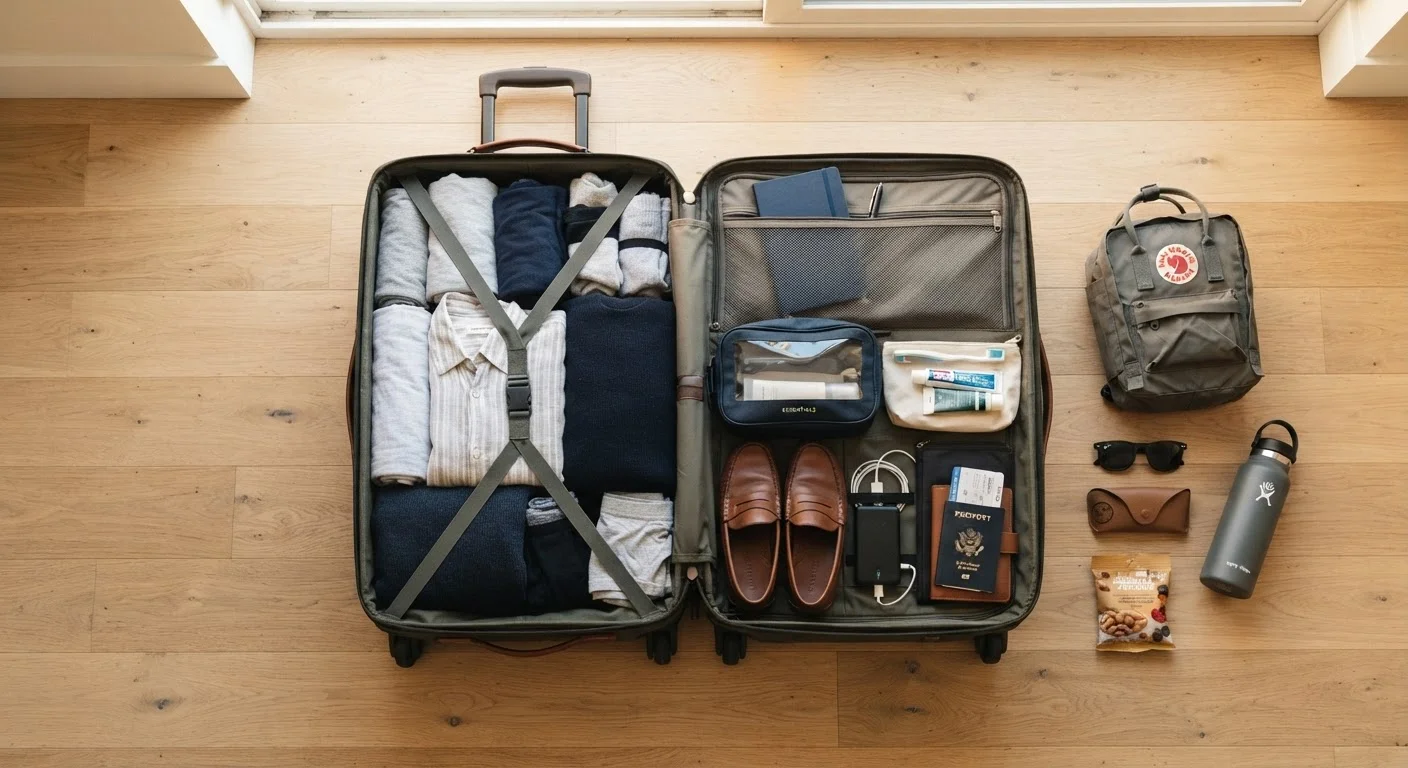
The Carry-On Mindset Shift
Seasoned travelers don't just pack lighter - they think differently about what a bag is for. A carry-on isn't a compressed version of a checked bag. It's a curated selection of items that earn their place through versatility, weight, and necessity. Once you internalize that distinction, overpacking becomes harder to justify.
The habits below reflect what frequent flyers have actually tested across dozens of trips - what stayed, what got left behind for good, and why. For a broader look at organizing your gear before departure, see packing strategies frequent travelers rely on.
Three to five neutral, mix-and-match clothing pieces
Frequent flyers don't pack outfits - they pack pieces. A typical carry-on wardrobe for a five-to-seven day trip might include two pairs of pants (one casual, one polished), three tops, and a single versatile layer like a merino wool cardigan or a light jacket. Neutral colors - navy, gray, black, olive - are standard because they combine without planning. This approach routinely supports a week of travel from a half-full bag.
Pack pieces, not outfits - neutrals make every combination work without planning.
Solid or sheet toiletries instead of liquids
The TSA's 3-1-1 liquids rule (containers of 3.4 oz or less, in a single quart-sized bag) is the fastest way a carry-on plan falls apart. Experienced travelers sidestep it with solid shampoo bars, conditioner bars, sheet soap, and toothpaste tablets. These take up a fraction of the space, weigh almost nothing, and completely eliminate the quart-bag scramble at security. Always verify current TSA rules directly with the TSA website before travel, as policies can be updated.
Solid toiletries eliminate the 3-1-1 scramble and free up meaningful bag space.
Packing cubes for compression and fast access
Packing cubes don't just organize - they compress. A compression cube can reduce a pile of rolled clothes by 30-40% in volume, and they make repacking mid-trip dramatically faster. Most frequent carry-on travelers use two or three: one for clothing, one for underwear and socks, and sometimes a slim one for tech cables and accessories. The real benefit isn't neatness - it's being able to find anything in under ten seconds without unpacking the whole bag.
Packing cubes compress clothing and mean you can find anything in under ten seconds.
A personal item bag that functions as a day bag
Most airlines allow both a carry-on and a personal item (typically a backpack or tote that fits under the seat). Frequent flyers treat this second bag as a working day bag - something they can pull off the overhead and take into the city without checking into their accommodations first. A slim daypack or structured tote works well. This separation also means your carry-on stays stowed while you access what you actually need mid-flight. Verify your specific airline's size requirements before travel, as personal item dimensions vary by carrier.
Your personal item should double as a functional day bag from the moment you land.
One universal power adapter and a slim power bank
Tech duplication is one of the most common ways carry-on bags gain unnecessary weight. Experienced travelers consolidate: one universal adapter with multiple USB ports replaces country-specific adapters and multiple chargers. A slim power bank handles phone and earbuds charging on long travel days. Laptop chargers are often the heaviest tech item - some travelers use hotel or lounge charging stations for short trips and leave the charger home entirely. Check whether your devices support universal voltage before skipping country-specific converters.
One universal adapter with USB ports replaces a tangle of country-specific chargers.
Planning to do laundry once mid-trip
This is the carry-on traveler's most underused strategy. Building one laundry session into a trip - at a laundromat, hotel laundry service, or even hand-washing in a sink with a travel soap bar - effectively doubles your wardrobe capacity. It means four days of clothing comfortably covers a ten-day trip. The mental shift required is simply accepting that laundry is part of the trip logistics, not an inconvenience. Many experienced travelers schedule it on a slower day or an evening in transit.
One mid-trip laundry session means four days of clothing can cover ten days of travel.
Digital or compact physical copies of key documents
Paper documents take up space and create anxiety when lost. Frequent flyers carry a compact travel wallet with only essential physical documents - passport, a backup credit card, travel insurance card - and keep digital scans of everything else in secure cloud storage or an encrypted phone folder. This reduces what's at risk if a bag is lost or stolen. For a full breakdown of which documents to carry and how to organize them, see managing travel documents.
Carry only essential physical documents and keep secure digital backups of everything else.
What Gets Left at Home for Good
Beyond specific items, experienced carry-on travelers tend to share a broader rule: if it's available at your destination, leave it. Travel-sized shampoo, basic sunscreen, umbrellas, towels - most hotels and short-term rentals provide these or they're cheap to buy locally. Packing them every time wastes space you'll wish you had.
Weigh Your Bag Before You Go
Even carry-on bags have weight limits on many international and budget carriers - sometimes as low as 15 lbs (7 kg). Invest in a small luggage scale and weigh your packed bag before leaving for the airport. It takes thirty seconds and prevents gate-check fees or forced bag swaps that undo your entire packing plan.
Before your next trip, run through your full pre-trip checklist to confirm documents, bookings, and bag essentials are all accounted for before you leave home.
The content on this site is provided for informational purposes only and should not be considered a substitute for professional advice. While we strive to provide accurate and up-to-date information, we make no guarantees regarding its completeness or accuracy. Always consult a qualified professional for advice specific to your circumstances before making any decisions.