

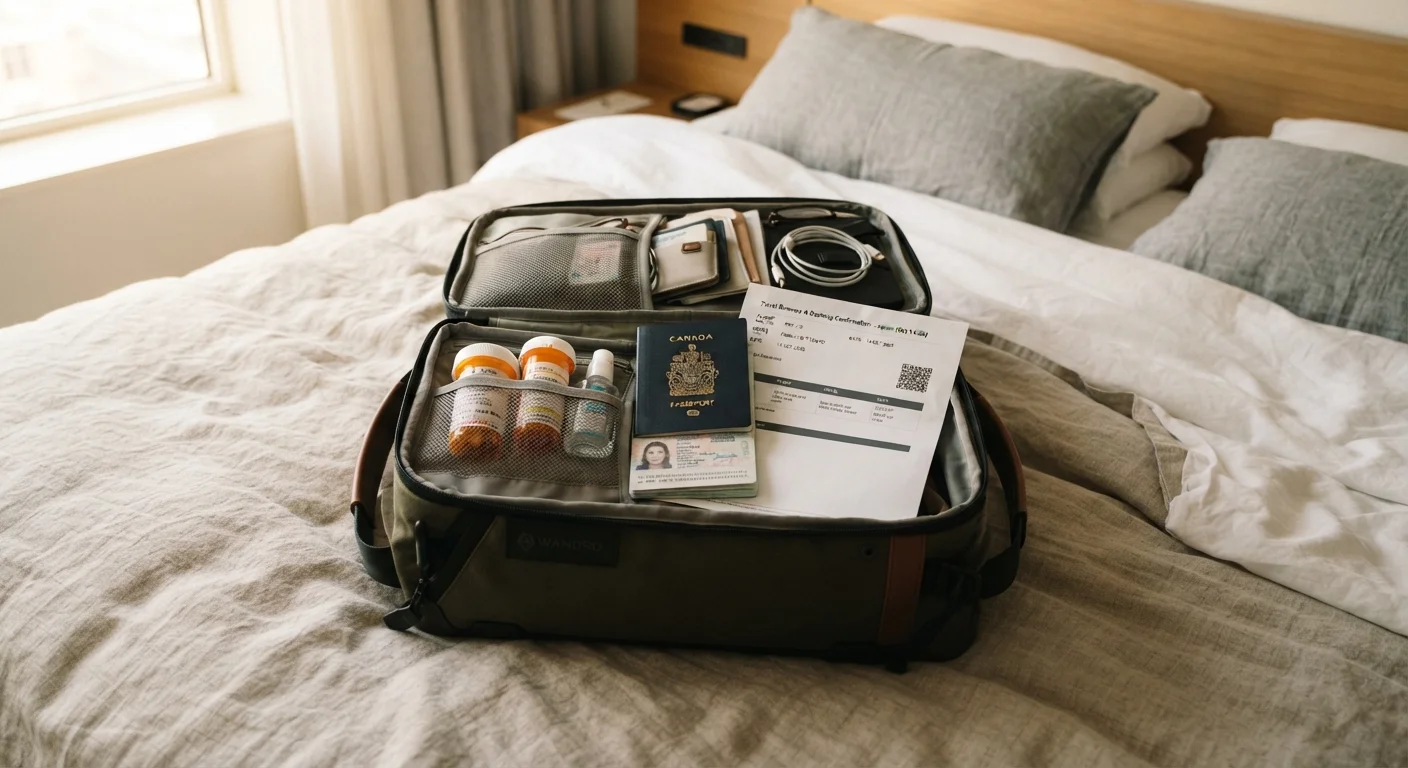
Why Medication Prep Deserves Its Own Planning Step
Most travelers think carefully about passports, bookings, and what to wear - but medication logistics often get handled as an afterthought. That's a mistake. Carrying prescriptions across state lines or international borders involves rules that, if ignored, can result in confiscation, delays, or legal trouble. Building medication management into your pre-trip checklist is the single most effective way to avoid last-minute scrambling.
This matters even for routine domestic travel. A TSA officer who can't identify a substance may pull you aside for additional screening. Internationally, customs agents follow their country's laws - not yours. Understanding the basics before you pack protects both your health and your trip.
Keep medications in original pharmacy-labeled containers throughout your trip.
Original labels confirm the medication's identity, your name, and the prescribing physician - all of which security officers and customs agents look for. Unlabeled pills or repackaged medications invite scrutiny and can be confiscated even if legally prescribed.
Carry a signed physician's letter for any controlled or injectable medication.
A doctor's letter on official letterhead provides independent verification that the medication is medically necessary. This is especially important for controlled substances, injectable medications, and any drug that requires a syringe or medical device.
Research destination-country rules for every medication you plan to bring at least six weeks before travel.
Legal status of medications varies widely by country and is not intuitive. Some antihistamines, opioids, and stimulants face strict import limits or outright bans in certain countries. Discovering this at the airport is too late to resolve.
Pack all critical medications exclusively in your carry-on bag.
Checked luggage is outside your control once handed to an airline. Bags get delayed, rerouted, and occasionally lost. If your medication is in checked luggage when that happens, you may face a gap in treatment that's difficult or impossible to resolve quickly at your destination.
Pack more supply than you think you'll need - plan for delays.
Flights get cancelled, trips get extended, and not every pharmacy abroad carries your specific medication or brand. Extra supply is straightforward insurance against situations that are common enough to plan for.
TSA Rules and Domestic Air Travel
The Transportation Security Administration (TSA) permits travelers to bring prescription medications - in solid or liquid form - through security checkpoints. Liquid medications are exempt from the standard 3.4-ounce carry-on limit, but you should declare them to officers and separate them from other liquids for screening.
While TSA does not require medications to be in their original pharmacy containers, having them labeled makes the process faster and reduces the chance of questions. Controlled substances - such as opioid pain medications or certain anxiety medications - are more likely to draw scrutiny, and a prescription label or documentation from your doctor adds a clear layer of legitimacy.
Over 50%
Americans who take at least one prescription drug
According to the U.S. Centers for Disease Control and Prevention (CDC), more than half of American adults use at least one prescription medication regularly, making medication travel planning a widespread concern.
100+
Countries with strict controlled substance import rules
The International Narcotics Control Board reports that over 100 countries maintain specific regulations on importing controlled substances, including some medications commonly prescribed in the U.S.
One consistent rule: keep essential medications in your carry-on bag. Checked luggage can be delayed, misrouted, or lost. If you're also traveling with children who have prescriptions, the same logic applies - see our guidance on traveling with kids for additional logistics tips.
International Travel: Documentation and Legal Risks
International travel introduces a more complex layer of rules. Some medications that are routine in the United States - certain ADHD stimulants, sleep aids, or even common pain relievers - are classified as controlled or prohibited substances in other countries. Japan, the UAE, and several other nations have strict drug import laws that apply regardless of your prescription status at home.
Before any international trip, contact the embassy or consulate of your destination country to verify what documentation is required and whether your medication is permitted. The U.S. State Department's country-specific pages are a useful starting point, but official confirmation from the destination country's authorities is what counts at the border.
For international travel, carry a letter from your prescribing physician on letterhead that includes your diagnosis (as general as needed for privacy), the medication name and dosage, and confirmation that it is medically necessary. For controlled substances, some countries require an import permit - this can take weeks to arrange, so start early. Pair this documentation review with your travel documents review to keep everything in one organized step.
Packing and Supply Strategy
Running out of a critical medication mid-trip is a serious problem. Most travel health experts suggest packing enough supply to cover your full trip plus several extra days as a buffer - delays happen, and not every destination has access to your specific medication or equivalent formulation. Check with your insurance provider about early refill policies, which vary significantly.
When organizing your bag, keep medications together in a clear pouch or dedicated compartment. This makes both security screening and mid-trip access faster. If you take medications that require refrigeration - such as certain biologics or insulin - research your accommodations in advance for refrigerator access, and consider an insulated travel case for transport. For a broader look at how to organize your carry-on efficiently, packing strategies from frequent travelers offer useful frameworks that apply to medical supplies as well.
This article provides general travel information only and is not medical or legal advice. Always consult your healthcare provider and verify current entry rules with official government sources before traveling with prescription medications.
The content on this site is provided for informational purposes only and should not be considered a substitute for professional advice. While we strive to provide accurate and up-to-date information, we make no guarantees regarding its completeness or accuracy. Always consult a qualified professional for advice specific to your circumstances before making any decisions.