

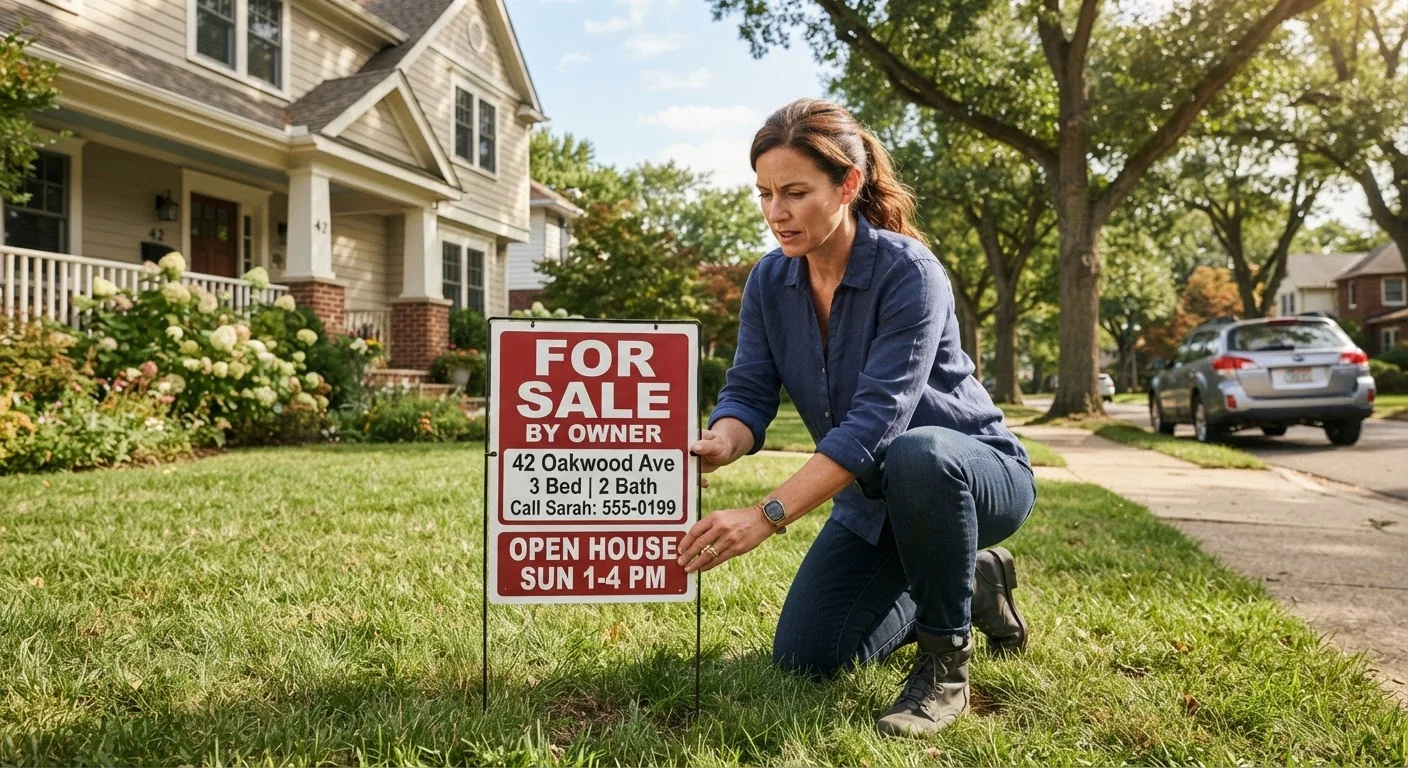
What FSBO Actually Means in Practice
Selling your home without an agent sounds straightforward: skip the middleman, save the commission, sell directly to a buyer. In practice, FSBO transfers a significant workload from a licensed professional to you - the seller. Everything an agent normally handles becomes your responsibility.
That includes determining an accurate asking price, preparing and staging the property, writing a compelling listing, photographing the home, marketing across platforms, fielding inquiries, coordinating showings, evaluating offers, negotiating terms, managing inspections, completing legal disclosures, and shepherding the transaction to closing. For a thorough picture of what that arc looks like, see the full arc of selling a home.
None of these steps is impossible for a motivated seller - but each one carries real consequences if handled poorly.
The Commission Math: What You Save and What You Still Owe
The primary financial motivation for FSBO is avoiding the listing agent's commission, which historically runs roughly 2.5-3% of the sale price. On a $400,000 home, that's $10,000-$12,000 - a meaningful sum.
However, most FSBO transactions involve a buyer who is represented by their own agent. Sellers who refuse to offer a buyer's agent commission may find their home passed over by agent-represented buyers, who make up the large majority of the market. In practical terms, many FSBO sellers still pay a buyer-side commission, cutting the savings roughly in half.
6-7%
Typical total agent commission on a home sale
Traditional commission structures split this between listing and buyer's agents, though commission practices vary by market and have evolved following recent industry changes.
~7%
Share of U.S. home sales that are FSBO
According to the National Association of Realtors, FSBO transactions have represented roughly 7% of home sales in recent years, down from higher levels in previous decades.
$300-$600
Typical cost of an independent home appraisal
A professional appraisal is one of the most cost-effective tools available to FSBO sellers trying to establish an accurate asking price.
It's also worth noting that FSBO homes have historically sold for less than agent-listed homes on average, though the data is debated and varies by market and seller skill. This is a general informational observation, not a guarantee - outcomes depend heavily on pricing accuracy, marketing quality, and negotiation.
Pricing: The Most Consequential Decision You'll Make
Without an agent's comparative market analysis, setting the right price is the FSBO seller's hardest challenge. Overprice, and the home sits - accumulating days on market that make buyers suspicious. Underprice, and you leave money on the table.
FSBO sellers can research recent comparable sales (often called "comps") through public records, county assessor websites, and real estate platforms. Paying for a professional appraisal - typically $300-$600 - is one of the most cost-effective steps an FSBO seller can take. It provides a defensible, independent valuation that can also support buyer negotiations.
Get a Professional Appraisal Before You List
Paying $300-$600 for an independent appraisal before listing is one of the smartest investments an FSBO seller can make. It gives you a credible, defensible price anchor backed by a licensed professional's analysis - not just your own estimate. It can also speed up negotiations, since buyers and their agents can see the price is grounded in data.
Legal Disclosures and Paperwork
Disclosure obligations don't disappear because you're selling without an agent. State law requires sellers to inform buyers of known material defects - structural issues, water damage, HVAC problems, past repairs, and more. Federal law requires disclosure of lead-based paint hazards for homes built before 1978.
Beyond disclosures, the transaction requires a legally binding purchase agreement, addenda, inspection response documents, title work, and a settlement statement. The paperwork behind selling a house breaks down every document sellers typically encounter at closing.
Errors or omissions in disclosure documents can create legal liability long after the sale closes. This is why most real estate attorneys and consumer advocates recommend that FSBO sellers retain a real estate attorney to review contracts and manage the closing process.
Buyer's Agent Involvement Still Happens in Most FSBO Sales
Even when you sell without a listing agent, the buyer who purchases your home will often be represented by their own agent. That agent's job is to advocate for their client - not to help you. Understanding this dynamic is important when reviewing offers and negotiating terms. See buyer's agent vs. listing agent for a fuller explanation of how agent representation works.
Marketing and Showing Your Home
Agents list homes on the Multiple Listing Service (MLS), the central database used by buyer's agents and major real estate platforms. FSBO sellers are not automatically included. To gain MLS exposure, sellers can use flat-fee MLS listing services - paying a one-time fee to appear in the database without full-service representation.
Beyond the MLS, effective FSBO marketing typically includes professional photography, a detailed online listing, yard signage, and social media promotion. Open houses are another common tool; though their direct selling power is often overstated, they do generate visibility. For a grounded look at what open houses realistically accomplish, see common myths about open houses.
Sellers must also be available to schedule and conduct showings, respond to inquiries promptly, and screen potential buyers - including verifying that interested parties have mortgage pre-approval or proof of funds before investing time in negotiations.
Negotiating and Getting to Closing
When an offer arrives, the seller evaluates price, contingencies, financing, requested closing date, and any seller concessions. Without an agent as a buffer, negotiations are direct - which can feel uncomfortable, particularly when a buyer's agent on the other side is an experienced negotiator.
Understanding what buyers go through helps sellers anticipate the process. The home buying process from offer to closing explains the buyer's perspective at each stage, which can make FSBO sellers more effective at the table.
After contract execution, the transaction moves through inspections, appraisal, title search, and final closing. A title company or closing attorney typically handles the closing mechanics regardless of whether an agent is involved.
This article is for general informational purposes only and does not constitute legal, financial, or real estate advice. Consult a licensed real estate attorney and qualified professionals before making decisions about your home sale.
Frequently Asked Questions
Often, yes. If the buyer is represented by an agent, the seller may agree to pay that agent's commission - typically 2.5-3% of the sale price. The seller avoids paying a listing agent commission, but a buyer-side commission is frequently part of the deal.
Yes, FSBO is legal in all 50 states. However, sellers must still comply with state disclosure laws, fair housing rules, and all standard closing requirements. A real estate attorney can help ensure nothing is missed.
Sellers can pay a flat-fee MLS service to list their home on the Multiple Listing Service without hiring a full-service agent. Fees vary by service and market, and terms differ - read the fine print carefully.
Disclosure requirements vary by state but typically include known material defects, lead-based paint (for homes built before 1978), and local environmental hazards. Skipping required disclosures can result in legal liability after closing.
The most frequent pitfalls are overpricing or underpricing the home, inadequate marketing reach, poorly prepared contracts, and missing required disclosures. Each of these can delay a sale or reduce proceeds significantly.
Most real estate professionals and legal experts recommend it. An attorney reviews contracts, ensures disclosures are properly made, and oversees closing - protecting you from costly errors that could create post-closing liability.
The content on this site is provided for informational purposes only and should not be considered a substitute for professional advice. While we strive to provide accurate and up-to-date information, we make no guarantees regarding its completeness or accuracy. Always consult a qualified professional for advice specific to your circumstances before making any decisions.