

Why the Paperwork Matters
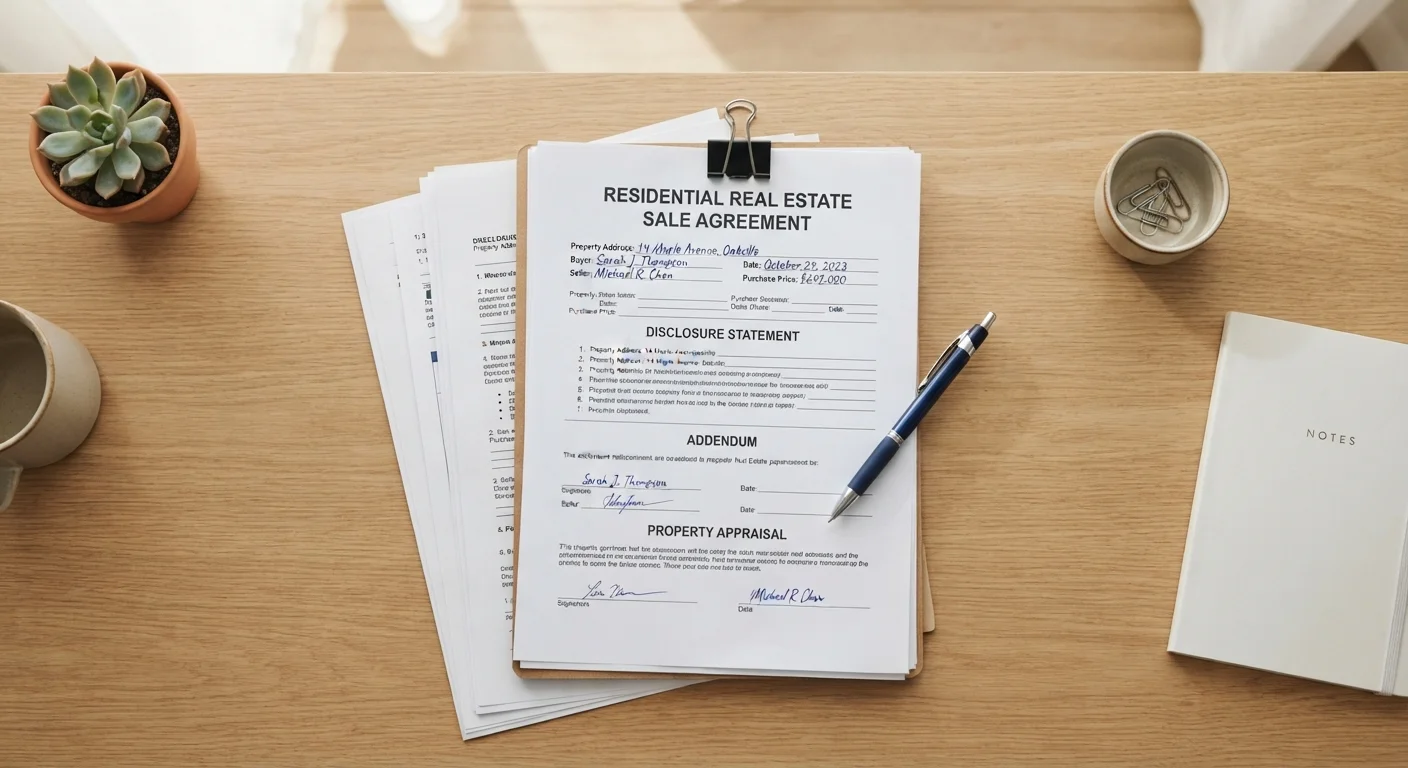
Selling a home is a legal transaction, and the documents involved aren't just formalities - they protect you, the buyer, and the chain of ownership long after closing day. Missing or incorrect paperwork can delay settlement, expose you to liability, or even unwind a sale. Understanding what each document does puts you in a stronger position throughout the process.
For a broader view of the entire selling journey, see The Full Arc of Selling a Home. If you're selling without an agent, document management becomes especially critical - Selling Your Home Without an Agent: What FSBO Really Involves covers what that responsibility looks like in practice.
| Typical documents signed at closing | 10-20+ (Varies by state, transaction complexity, and loan type) |
| Seller's Disclosure requirement | Required in most U.S. states (State law governs specific content and form) |
| Settlement statement deadline (ALTA/HUD-1) | Available 1 business day before closing (Federal RESPA guidelines) |
| Title search typical timeframe | 3-10 business days (General industry estimate) |
| Capital gains exclusion (single filer) | Up to $250,000 (IRS Section 121; consult a tax professional) |
| Deed recording | Completed by county recorder at closing (Standard U.S. real estate practice) |
Pre-Listing and Listing Documents
Before your home hits the market, several documents are typically prepared or gathered:
- Listing agreement - A contract between you and your real estate agent (if you use one) defining the listing price, agent commission, and duration of the agreement. Read it carefully before signing.
- Seller's Disclosure Statement - This form requires you to disclose known material defects and conditions affecting the property: past flooding, foundation issues, roof age, presence of lead paint (required for homes built before 1978 under federal law), and more. Honest, thorough disclosure protects you legally.
- HOA documents - If your home belongs to a homeowners association, buyers will need the CC&Rs (covenants, conditions, and restrictions), HOA financial statements, and meeting minutes. Sellers often pay a fee to obtain these.
State Laws Vary on Disclosure Requirements
Every state sets its own mandatory disclosure rules. Some require detailed written forms covering dozens of conditions; others have narrower requirements. Always verify what is legally required in your state before listing - your real estate attorney or agent can point you to the current state-specific forms.
Under-Contract Documents
Once a buyer submits an offer you accept, a new set of documents comes into play:
- Purchase and sale agreement - The binding contract specifying price, contingencies (inspection, financing, appraisal), closing date, and what personal property stays with the home. Every term you agree to here shapes the rest of the transaction.
- Addenda and counteroffers - Written amendments that modify the original offer. Each change requires signatures from both parties to be binding.
- Inspection repair requests - After the buyer's home inspection, they may submit a written request for repairs or credits. Your written response - accept, decline, or counter - becomes part of the contract record.
- Contingency removal notices - When buyers formally waive contingencies (such as financing or inspection), they typically submit a written notice. Track these deadlines carefully.
Title and Ownership Documents
Clear title is essential for the sale to close. The title process generates its own paper trail:
- Title search report - A title company examines public records to confirm you have the legal right to sell the property and identifies any encumbrances: liens, judgments, easements, or boundary disputes.
- Title commitment (preliminary report) - The title company's commitment to issue title insurance, subject to conditions you must satisfy before closing (such as paying off existing liens).
- Deed - The legal document transferring ownership from you to the buyer. Common types include the warranty deed (you guarantee clear title) and the quitclaim deed (you convey only the interest you hold, with no guarantee). Your attorney or title company will prepare this.
- Lien release or payoff letter - If you have a mortgage, your lender issues a payoff statement confirming the exact amount needed to satisfy the loan at closing. This document drives the math on your net proceeds.
Closing Documents
The closing table - whether in person or via remote notary - is where the bulk of signatures happen:
- ALTA Settlement Statement (or HUD-1) - A detailed accounting of every dollar changing hands: purchase price, prorated taxes, agent commissions, title fees, and your net proceeds. Federal rules generally require this be available to sellers at least one business day before closing. Review every line.
- Transfer tax forms - Most states and some counties impose a real estate transfer tax. The seller typically completes and files these forms, though who pays varies by location and negotiation.
- Bill of sale - If personal property (appliances, a riding mower) was included in the sale, a bill of sale documents that transfer separately from the deed.
- IRS Form 1099-S - The closing agent may file this with the IRS to report the gross proceeds of the sale. Consult a tax professional about your potential capital gains liability; many sellers qualify for an exclusion under IRS Section 121, but eligibility depends on your specific situation.
Understanding the buyer's side of the same transaction can help sellers anticipate what their counterpart is reviewing. See The Home Buying Process, From Offer to Closing for that perspective.
This article is for general informational purposes only and does not constitute legal, tax, or financial advice. Real estate laws and document requirements vary by state and locality. Consult a licensed real estate attorney or qualified professional for guidance specific to your transaction.
The content on this site is provided for informational purposes only and should not be considered a substitute for professional advice. While we strive to provide accurate and up-to-date information, we make no guarantees regarding its completeness or accuracy. Always consult a qualified professional for advice specific to your circumstances before making any decisions.