

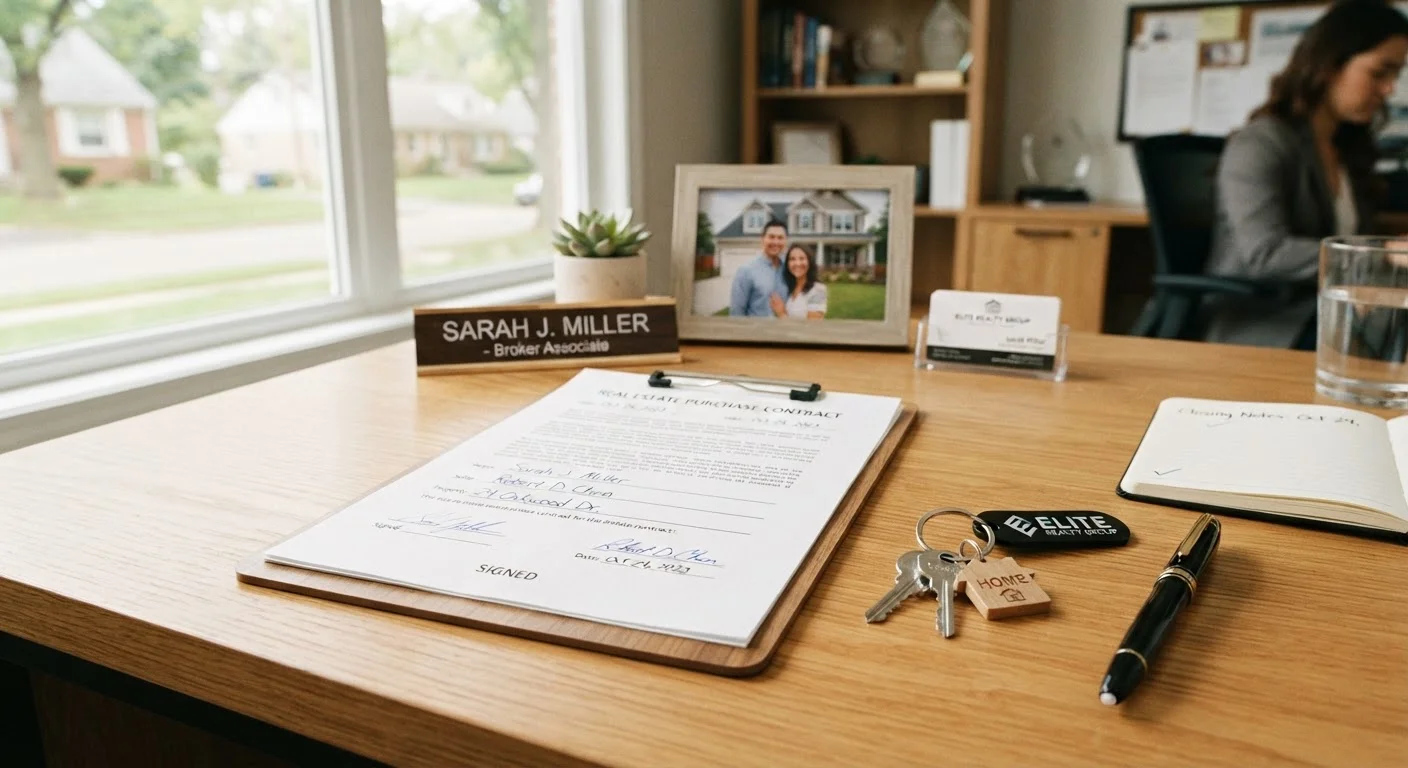
From Accepted Offer to Under Contract
When a seller accepts your offer, the home officially moves to under contract status - meaning both parties are bound by a legally enforceable purchase agreement. This document spells out the sale price, the earnest money deposit (typically 1-3% of the purchase price held in escrow), contingencies, and the target closing date.
Contingencies are conditions that must be met for the sale to proceed. The most common are a financing contingency (protecting you if your mortgage falls through), an inspection contingency, and sometimes an appraisal contingency. Understanding which contingencies are in your contract - and what waiving any of them means - is critical before you sign. For a parallel look at what happens on the seller's side of this agreement, see the full arc of selling a home.
Read Every Line of Your Purchase Agreement
Purchase agreements vary by state and are often prepared on standardized forms - but the details that matter most to you (contingency deadlines, what stays with the home, who pays which closing costs) are found in the fine print. Ask your real estate agent or a real estate attorney to walk you through any language you don't fully understand before signing.
The Inspection Period
The inspection period typically runs 7 to 14 days after mutual acceptance. You hire a licensed home inspector - at your own expense, usually $300-$600 - to assess the property's structural and mechanical condition. The inspector examines the roof, foundation, electrical panels, plumbing, HVAC systems, and more.
After the inspection, you have options: accept the home as-is, request specific repairs, ask for a price reduction, or in serious cases, walk away under your contingency. Our detailed guide on what happens during a home inspection explains how to interpret findings and when walking away is the right call.
Ask the inspector to walk through the property with you in person, not just hand you the report afterward. Hearing their live commentary helps you understand which findings are minor and which genuinely warrant concern.
A written inspection report lists every defect, which can feel alarming out of context. Real-time explanation from the inspector helps buyers distinguish between cosmetic issues and material defects that affect safety or habitability.
Respond to your lender's documentation requests within 24 hours whenever possible. Underwriting delays caused by missing paperwork are one of the most common reasons closings get pushed back.
Lenders operate on strict timelines tied to rate lock expiration and seller contract deadlines. Slow document submissions create a ripple effect that can cost buyers money in rate lock extension fees or jeopardize the deal.
Mortgage Underwriting and Appraisal
While inspections are underway, your lender begins the underwriting process - a thorough review of your finances, employment, credit, and debt-to-income ratio. Be prepared to supply pay stubs, bank statements, tax returns, and other documentation promptly; delays in responding can push your closing date back.
Your lender will also order an independent appraisal to confirm the home's market value supports the loan amount. If the appraisal comes in lower than the purchase price, you may need to renegotiate with the seller, cover the gap in cash, or invoke an appraisal contingency to exit the contract. For a step-by-step breakdown of the mortgage side of this process, see the mortgage application walkthrough.
43 days
Average time from contract to close
According to ICE Mortgage Technology's Origination Insight Report, the average time to close a purchase loan in the United States has typically ranged from 40 to 50 days.
2-5%
Typical closing costs as share of loan
The Consumer Financial Protection Bureau (CFPB) notes that closing costs generally range from 2% to 5% of the loan amount, covering lender fees, title, escrow, and prepaid items.
Title Search and Title Insurance
Before closing, a title company or real estate attorney conducts a title search - a review of public records to confirm the seller has the legal right to transfer ownership and that no undisclosed liens, unpaid taxes, or ownership disputes exist on the property.
Even a thorough title search can miss certain issues, which is why lenders require a lender's title insurance policy and buyers are strongly encouraged to purchase an owner's title insurance policy separately. Owner's title insurance is typically a one-time premium paid at closing and protects you from claims that arise after the sale. For more on the documents exchanged at this stage, the paperwork behind selling a house offers a plain-language breakdown from the seller's perspective.
The Final Walk-Through
Usually scheduled 24 hours before closing, the final walk-through is your opportunity to verify that the home is in the agreed-upon condition. Confirm that any negotiated repairs have been completed, that appliances and fixtures included in the sale are still present and functioning, and that the home is free of the seller's belongings.
This is not a second inspection - it's a condition check. If you find problems (a repair left undone, damage during the seller's move-out), you can request a closing credit or delay signing until the issue is resolved. Don't skip this step even if everything seemed fine during the inspection.
Never Skip the Final Walk-Through
Buyers who waive the final walk-through have arrived at closing only to discover missing appliances, unreplaced fixtures, or damage caused during move-out. Once the deed is recorded, recovering costs from the seller becomes a legal matter. Take the walk-through seriously - it's one of your last protections before ownership transfers.
Closing Day: What to Expect
Closing typically takes place at a title company, escrow office, or attorney's office, depending on your state. You'll sign a large stack of documents - the promissory note, the deed of trust, the Closing Disclosure (which itemizes every cost), and more. Review your Closing Disclosure carefully at least three business days before closing; your lender is required to provide it by then.
You'll also bring a cashier's check or wire the funds for your down payment and closing costs, which commonly total 2-5% of the loan amount beyond the down payment itself. Once everything is signed and funds are disbursed, the deed is recorded with the county and you receive your keys. Congratulations - you're a homeowner. If this purchase eventually leads you to think about refinancing, how mortgage refinancing works is a useful next read.
This article provides general educational information about the home buying process and is not legal, financial, or real estate advice tailored to your specific situation. Consult a licensed real estate professional, attorney, or financial adviser for guidance on your individual circumstances.
The content on this site is provided for informational purposes only and should not be considered a substitute for professional advice. While we strive to provide accurate and up-to-date information, we make no guarantees regarding its completeness or accuracy. Always consult a qualified professional for advice specific to your circumstances before making any decisions.