

Our Verdict
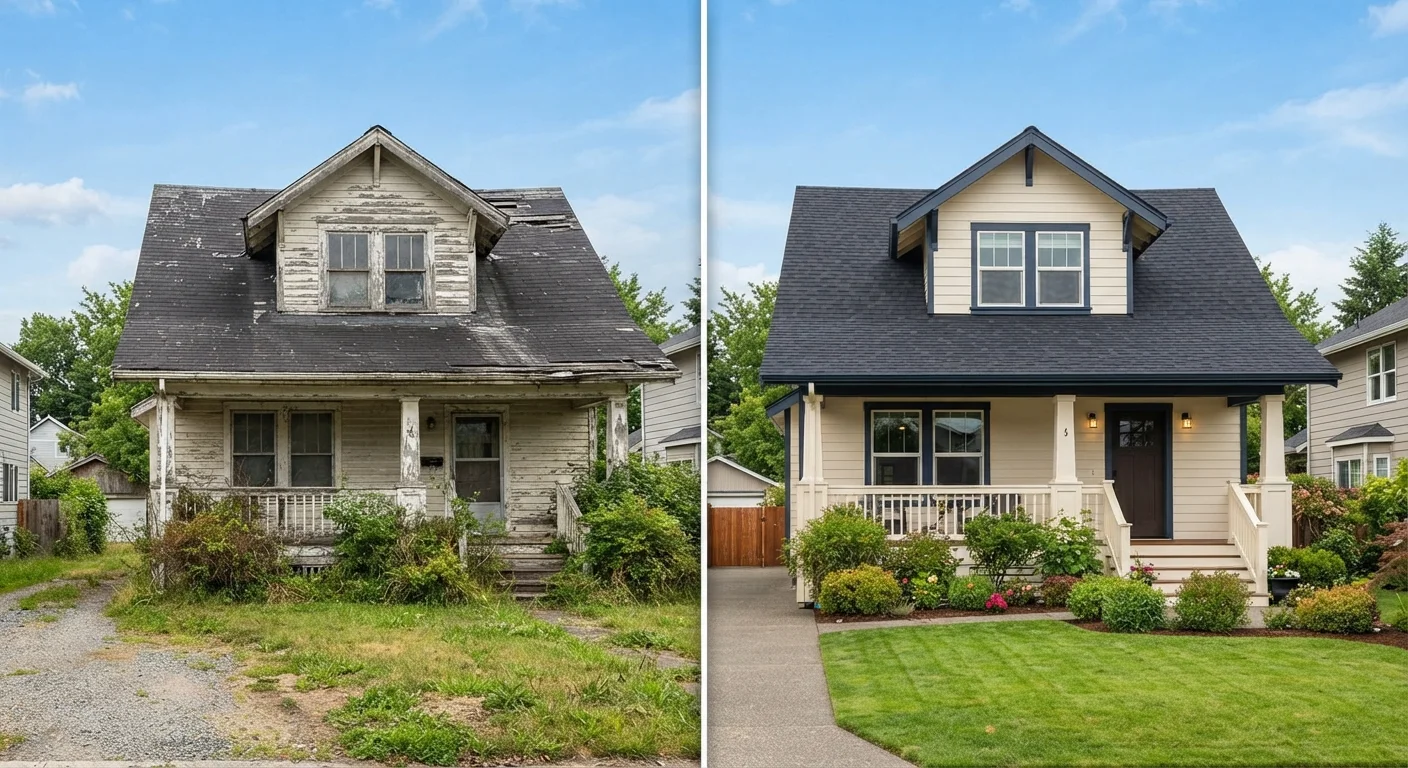
Neither path is universally right. Selling as-is suits sellers who need speed, face cash constraints, or own properties in investor-heavy markets. Making targeted repairs is the better play for sellers in competitive retail markets where move-in-ready homes command meaningfully higher prices. The smartest decision comes from getting a clear-eyed estimate of your home's as-is value, the realistic cost of repairs, and the likely price lift those repairs would generate - then letting the math guide you.
Sellers who have a firm timeline, limited renovation budget, or a property with extensive deferred maintenance will generally find the as-is route more practical, while those with flexible timelines and access to capital stand to gain more from strategic pre-sale repairs.
What 'Selling As-Is' Actually Means
When a seller lists a home as-is, they are signaling that the property will be sold in its current condition and that they will not make repairs or offer concessions based on inspection findings. It does not exempt sellers from disclosure requirements - in most U.S. states, sellers are still legally obligated to disclose known material defects, regardless of how the property is listed.
As-is listings attract a different buyer profile than turnkey homes. Investors, house-flippers, and experienced buyers willing to take on renovation risk make up a large portion of as-is purchasers. That narrower pool typically translates to lower offers. Buyers factor in both the repair costs and a risk premium, so the discount on an as-is sale is often steeper than the actual cost of the defects themselves.
Understanding what you're working with financially is the essential starting point. Ask a listing agent for a comparative market analysis (CMA) that estimates both your as-is value and your post-repair value. That gap - and the cost to close it - is the core equation you need to solve. See also: why pricing strategy matters when setting expectations.
Pros and Cons of Selling As-Is
Selling without making repairs offers real advantages in certain situations, but those advantages come with meaningful trade-offs.
No upfront repair costs or contractor management
Sellers avoid spending thousands before closing and sidestep the stress of coordinating tradespeople, managing timelines, and dealing with unexpected cost overruns mid-project.
Faster path to closing
Without a repair phase, a home can be listed and under contract significantly sooner - a real advantage when divorce, relocation, estate settlement, or financial pressure demands speed.
Attracts cash buyers who close quickly
Investors and cash buyers often prefer as-is properties and can close in as few as 10-14 days, eliminating financing contingencies that can delay or kill a deal.
Eliminates risk of over-improving
Sellers who renovate before listing sometimes spend more than the market will reward; selling as-is removes the temptation to invest in upgrades that won't be recouped.
Lower sale price in most markets
Buyers discount as-is offers to account for both the estimated repair cost and the uncertainty of what they might find once work begins. The effective discount often exceeds actual repair costs.
Smaller, more specialized buyer pool
Many retail buyers using conventional or FHA financing cannot purchase a home that fails minimum property condition standards, so as-is listings often exclude the largest segment of active buyers.
Inspections still happen - and still affect offers
Buyers may waive repair requests, but they rarely waive inspections. Findings will simply be priced into their offer rather than negotiated afterward, often resulting in more aggressive discounts.
Disclosure obligations remain fully in force
Listing as-is does not relieve sellers of state-mandated disclosure duties. Failure to disclose known defects can expose sellers to legal liability even after the sale closes.
The as-is route works best in markets where investor demand is strong, where the home's primary value is the land or location rather than the structure, or where the scope of needed work is extensive enough that partial repairs would not move the needle on buyer perception.
The Case for Making Repairs Before Listing
Pre-sale repairs are not about renovating to your own taste - they are about removing buyer objections. The highest-return improvements are generally those that address safety, functionality, and first impressions: a sound roof, working HVAC, updated electrical panels, fresh neutral paint, and clean, functional kitchens and bathrooms.
~70%
Sellers who make at least one pre-sale repair
According to the National Association of Realtors' Profile of Home Staging, the large majority of sellers complete some form of improvement before listing.
Top ROI
Repairs with highest buyer impact
Remodeling Magazine's Cost vs. Value reports consistently find that minor kitchen updates, fresh paint, and garage door replacements recoup the highest percentages of cost at resale.
The key discipline is avoiding over-improvement. Spending $40,000 on a kitchen remodel in a neighborhood where comparable homes sell for $280,000 is unlikely to yield a dollar-for-dollar return. Focus on repairs that eliminate red flags rather than upgrades that personalize the space. If you're newer to evaluating what work is worth doing, this guide to home improvement priorities can help you think through contractor decisions and project scope.
One practical middle path: obtain a pre-listing inspection, share it with your agent, and address only the items most likely to derail financing or trigger large buyer credits. This targeted approach limits your outlay while meaningfully expanding your buyer pool. You can also use the inspection report to set an informed asking price - a strategy explored further in our article on negotiating after an inspection.
How to Make the Decision
Several practical factors should drive your choice:
- Your timeline: Repairs take time. If you need to close in 30-45 days, extensive pre-sale work may not be realistic.
- Available capital: Renovation costs must be paid before you receive sale proceeds. If cash is tight, the as-is path may be the only viable one.
- Local market conditions: In a low-inventory seller's market, buyers are more willing to accept imperfect homes. In a balanced or buyer's market, move-in-ready homes have a sharper competitive edge.
- Scope of needed work: Minor cosmetic issues rarely justify an as-is listing. Major structural or systems problems shift the calculation toward as-is, since buyers will price in the uncertainty regardless.
FHA and VA Loans Have Property Condition Requirements
Buyers using FHA or VA financing must purchase homes that meet minimum property condition standards set by those agencies. Homes with significant structural issues, roof damage, or inoperative systems may not qualify for these loan types. If you sell as-is, you may effectively be limiting your buyer pool to cash or conventional buyers - a factor worth discussing with your listing agent before setting your strategy.
Whatever you decide, presentation still matters. Even an as-is home benefits from decluttering, cleaning, and clear-eyed photography. And if you proceed with repairs and a traditional listing, consider how staging can complement your investment - budget-friendly staging techniques can make a repaired home feel genuinely move-in ready without adding significant cost.
This article is for general informational purposes and does not constitute legal, financial, or real estate advice specific to your situation. Consult a licensed real estate professional and, where appropriate, a tax or legal adviser before making decisions about your property.
The content on this site is provided for informational purposes only and should not be considered a substitute for professional advice. While we strive to provide accurate and up-to-date information, we make no guarantees regarding its completeness or accuracy. Always consult a qualified professional for advice specific to your circumstances before making any decisions.