

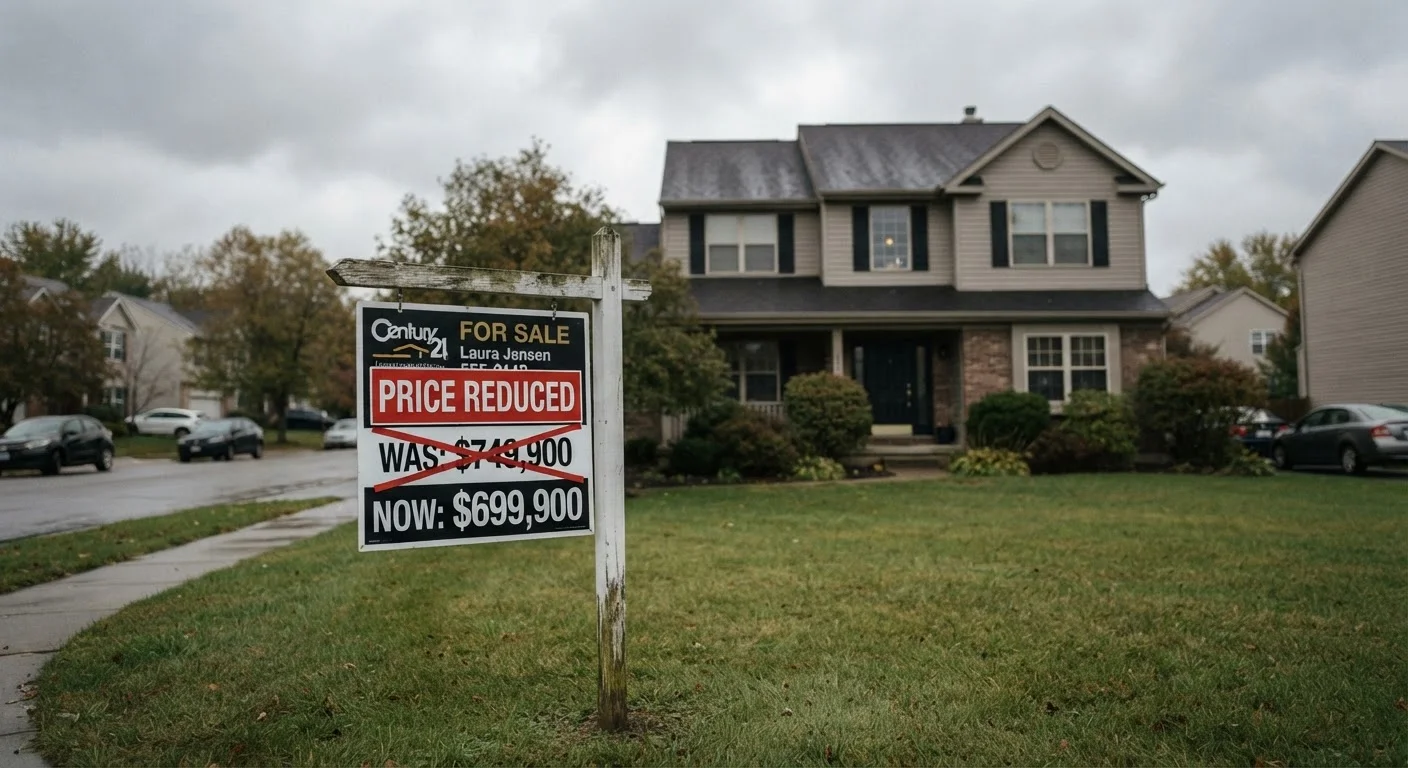
Why Overpricing Feels Safe - But Isn't
It's a common instinct: price your home a little high to leave room for negotiation. If buyers push back, you can always come down. And besides, shouldn't you at least try to get the most for one of your largest assets?
The problem is that this logic runs counter to how real estate markets actually work. Buyers today - especially those working with experienced agents - have access to the same sold-price data your agent does. They can spot an overpriced home quickly, and many simply won't bother making an offer. Instead, they move on to homes that are priced to reflect reality.
What sellers often don't anticipate is that overpricing doesn't just delay a sale - it can actively reduce the final price. When a home sits unsold for weeks, the listing accumulates days on market (DOM), a metric that's visible to every buyer searching online. A high DOM creates doubt. Buyers start wondering what's wrong with the property, even if the answer is simply that it was priced too high. When offers finally do come in, they tend to come in low - lower, in many cases, than what a well-priced listing would have commanded from the start.
The First Two Weeks Are Everything
A new listing generates the most buyer interest in its first 10-14 days on market. Buyers who have been searching actively will see it immediately. Overpricing during this critical window means losing the most motivated, qualified buyers at the moment of peak visibility - a missed opportunity that is very difficult to recover from later.
The Most Common Overpricing Mistakes - and How to Avoid Them
Overpricing rarely happens because sellers are uninformed. More often, it happens because of understandable but avoidable reasoning errors. The mistakes below are among the most frequently observed by real estate professionals working with home sellers.
Setting the list price based on what you need financially rather than what the market supports.
Why it happens: Sellers often have a mortgage payoff amount, renovation costs, or a down payment goal for their next home in mind, and work backward from that number to set a price.
Anchoring the price to an outdated appraisal or a neighbor's listing rather than closed sales.
Why it happens: Sellers sometimes rely on what a nearby home is asking - not what it actually sold for - or use an older appraisal that doesn't reflect current conditions.
Overestimating how much renovations added to market value.
Why it happens: After spending money on a kitchen remodel or new roof, it feels logical to add that full cost to the sale price - but buyers and appraisers don't work that way.
Assuming you can always lower the price later if the home doesn't sell.
Why it happens: Sellers treat a high list price as a negotiating position, expecting to meet buyers somewhere in the middle after some back-and-forth.
Ignoring buyer psychology around round numbers and online search filters.
Why it happens: Sellers often set prices in round numbers that feel significant to them - $525,000 - without considering how buyers actually search online.
Price Reductions Can Backfire
Reducing your list price after weeks of inactivity can attract attention, but it often signals desperation to experienced buyers. Many will interpret repeated reductions as evidence that something is wrong with the property, and they may submit offers well below even the reduced price. Strategic, accurate initial pricing avoids this cycle entirely.
Understanding these patterns can help you approach pricing more strategically. If you're also weighing questions about your home's condition before listing, the trade-offs are explored in our guide on selling as-is vs. making repairs before listing.
Pricing Accurately From the Start: What That Actually Looks Like
Accurate pricing is not the same as pricing low. The goal is to align your list price with what qualified buyers in your local market are currently paying for comparable homes - no more, no less. Here's what that process generally involves:
- Comparative market analysis (CMA): A detailed review of recently sold homes similar in size, condition, location, and features. Your agent should present this to you before any price is set.
- Adjustments for differences: No two homes are identical. A good CMA adjusts for factors like an extra bathroom, a larger lot, or an updated kitchen to arrive at a realistic value range.
- Current market context: A seller's market - where demand exceeds supply - may support pricing at or slightly above the midpoint of your range. A buyer's market typically calls for pricing at or below the midpoint to stay competitive.
Once your home is listed, monitor feedback from showings closely. If you're getting tours but no offers after the first two weeks, pricing is usually the first variable worth examining. The full picture of how your asking price relates to what you ultimately pocket is worth understanding - see our explanation of the gap between listing price and sale price.
And remember: price is just one lever. Contingencies, closing timelines, and included items all affect the value of an offer. What sellers can negotiate beyond price is worth reviewing before you respond to your first offer.
~5-10%
Typical discount on stale listings
Industry practitioners widely observe that homes with extended market time tend to sell at a discount compared to similarly priced homes that sold quickly, though exact figures vary by market.
2 weeks
Peak buyer interest window for new listings
Real estate professionals consistently note that new listings receive the highest volume of showings and inquiries in the first one to two weeks after going live.
This article is for general informational purposes only and does not constitute financial, legal, or real estate advice. Consult a licensed real estate professional for guidance specific to your situation and local market.
The content on this site is provided for informational purposes only and should not be considered a substitute for professional advice. While we strive to provide accurate and up-to-date information, we make no guarantees regarding its completeness or accuracy. Always consult a qualified professional for advice specific to your circumstances before making any decisions.