

Why We Forget to Look Up
When a room starts to feel cramped, the instinct is to look for floor-level fixes - rearranging furniture, adding bins, or wishing for a bigger home. Yet the space directly above your head is almost always underutilized. In a standard room with 8-foot ceilings, there are often 3-4 feet of wall space above the top of most furniture that sits completely bare.
This habit makes sense in part because we interact with our homes at eye level and below. Storage psychology - the way people intuitively categorize space - tends to anchor us to horizontal thinking. We fill counters, stack floors, and ignore the vertical dimension almost entirely.
Breaking that habit is one of the simplest, lowest-cost ways to transform how a room functions. And as common organization myths suggest, the real obstacle is often not a lack of storage - it's using the storage you already have incorrectly.
~30%
Wall space typically left unused above furniture
Interior design practitioners commonly estimate that the wall zone above standard furniture height (roughly 54-60 inches) represents around a third of a room's total wall surface, yet it is rarely incorporated into storage planning.
8 ft
Standard U.S. residential ceiling height
Most American homes built after 1980 have at least 8-foot ceilings, leaving meaningful overhead wall space that tall furniture or ceiling-mounted shelving can put to use.
2x
Storage capacity increase with floor-to-ceiling shelving
Replacing a standard 5-foot bookcase with a floor-to-ceiling unit of equal width can roughly double usable shelf space without changing the room's footprint.
How Vertical Storage Actually Works
Vertical storage is not just about adding more shelves. It is about deliberately assigning different heights to different categories of items based on how often you use them. Think of your room's wall space as a gradient:
- Below waist level: Heavy, awkward, or frequently used items that benefit from easy access without bending.
- Waist to eye level: Daily-use objects, décor, and anything you want visible and reachable.
- Above eye level to ceiling: Infrequent-use storage - seasonal items, backup supplies, archival files, or rarely-used equipment.
This tiered approach - often called zone stacking - prevents the common mistake of storing things randomly at height, which just creates hard-to-access clutter. When every zone has a purpose, vertical space becomes genuinely functional rather than decorative.
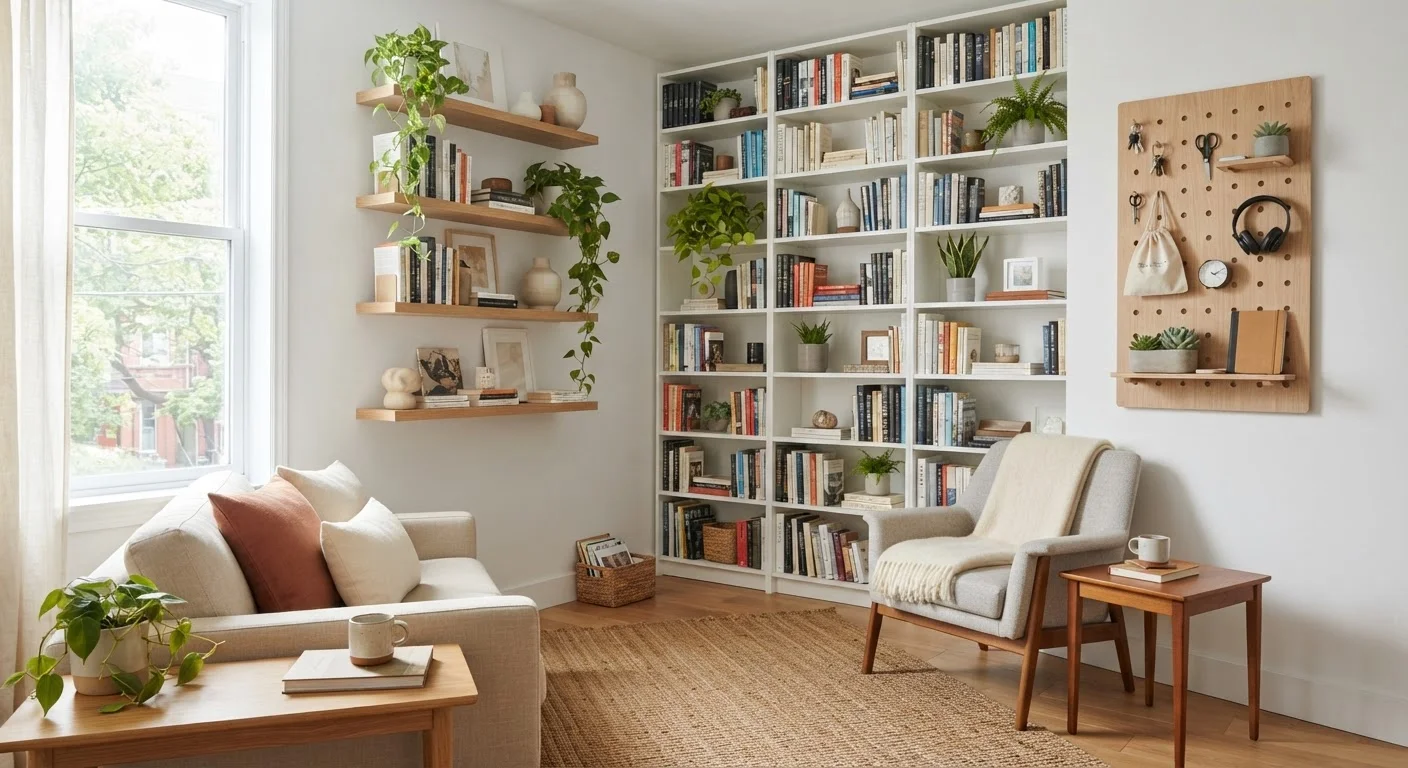
Tall bookshelves that run from floor to ceiling, wall-mounted pegboards in kitchens or garages, and stacked cabinet systems all put this principle into practice. The key is that upper zones hold items you plan for and schedule retrieval of - not things you toss up there and forget.
Room-by-Room Applications
Vertical strategies adapt well to nearly every room in a home:
Kitchen
Cabinet space above the refrigerator and along soffits is commonly wasted. Open shelving near the ceiling can hold serving platters, large mixing bowls, or seasonal entertaining items. Wall-mounted magnetic knife strips and hanging pot racks also free up cabinet and drawer space at lower levels.
Living Room
A bookcase that reaches the ceiling is dramatically more functional than one that stops at 5 feet. The visual effect of tall shelving also draws the eye upward, making rooms feel more spacious - a useful counter to the concern that vertical storage will feel claustrophobic. This pairs well with choosing between open shelving and bins depending on your household's habits.
Bedroom and Closet
Closet systems that extend to the ceiling, with a high rod or shelf for out-of-season clothing, dramatically increase capacity. Floating nightstands with shelves above them serve double duty in tight bedrooms.
Entryway
Vertical hooks, stacked cubbies, and wall-mounted organizers transform a narrow entryway into a proper drop zone. See how this fits into a broader mudroom drop zone setup for full-family function.
What to Watch Out For
Vertical storage is effective, but a few missteps can undermine it:
- Overloading walls without stud anchoring: Always locate wall studs before mounting heavy shelving. Drywall anchors alone are insufficient for shelves that will hold significant weight. When in doubt, consult a professional installer.
- Storing heavy items too high: Upper shelves should hold lightweight items. Heavy objects stored at height create a falling hazard, especially in homes with children or during earthquakes.
- Forgetting visual breathing room: Upper shelves loaded floor-to-ceiling with mismatched items create visual noise. Leave some space open or style upper shelves with a few curated pieces to keep the room from feeling chaotic.
Renters: Check Before You Mount
If you rent your home, check your lease agreement before drilling into walls for shelving anchors. Many landlords restrict permanent modifications. Freestanding tall bookcases, tension-mounted shelving systems, and over-door organizers are excellent alternatives that provide significant vertical storage without permanent changes.
If your goal is a deeper transformation on a limited budget, vertical storage pairs naturally with budget-conscious home improvement strategies - many vertical solutions are among the most affordable upgrades available. And for spaces where floor area truly can't be reclaimed, hidden storage solutions provide a complementary layer of organization.
Frequently Asked Questions
When done thoughtfully, vertical shelving can actually make a room feel taller and more expansive. Keeping shelves consistent in depth, color, or finish and avoiding clutter on upper levels maintains a sense of openness rather than closeness.
High shelves are best for items you access infrequently - seasonal décor, rarely used appliances, archived documents, or backup supplies. Reserve lower and mid-level storage for everyday essentials to keep daily routines efficient and safe.
Many basic floating shelf installations are DIY-friendly, provided you locate wall studs and use appropriate anchors for the weight you plan to store. For heavier custom built-ins or anything involving electrical or structural walls, consult a licensed professional.
Yes, with some adaptation. Freestanding tall bookcases, over-door organizers, and tension-rod shelf systems typically don't require wall damage. Always review your lease for restrictions on wall anchors before installing anything permanent.
A sturdy step stool rated for your weight is the right tool - avoid standing on chairs or counters. If high-access items are needed regularly, consider a library-style rolling ladder rail system for tall shelves.
The content on this site is provided for informational purposes only and should not be considered a substitute for professional advice. While we strive to provide accurate and up-to-date information, we make no guarantees regarding its completeness or accuracy. Always consult a qualified professional for advice specific to your circumstances before making any decisions.