

Why Entryways Break Down - and What to Do About It
Entryways fail not because families are disorganized, but because the space was never designed with a clear system in mind. When there's no obvious place to put a coat, it lands on the nearest chair. When backpacks have nowhere to go, they end up on the kitchen counter. The result is a cascade of small decisions made under time pressure that slowly overwhelm the entire home.
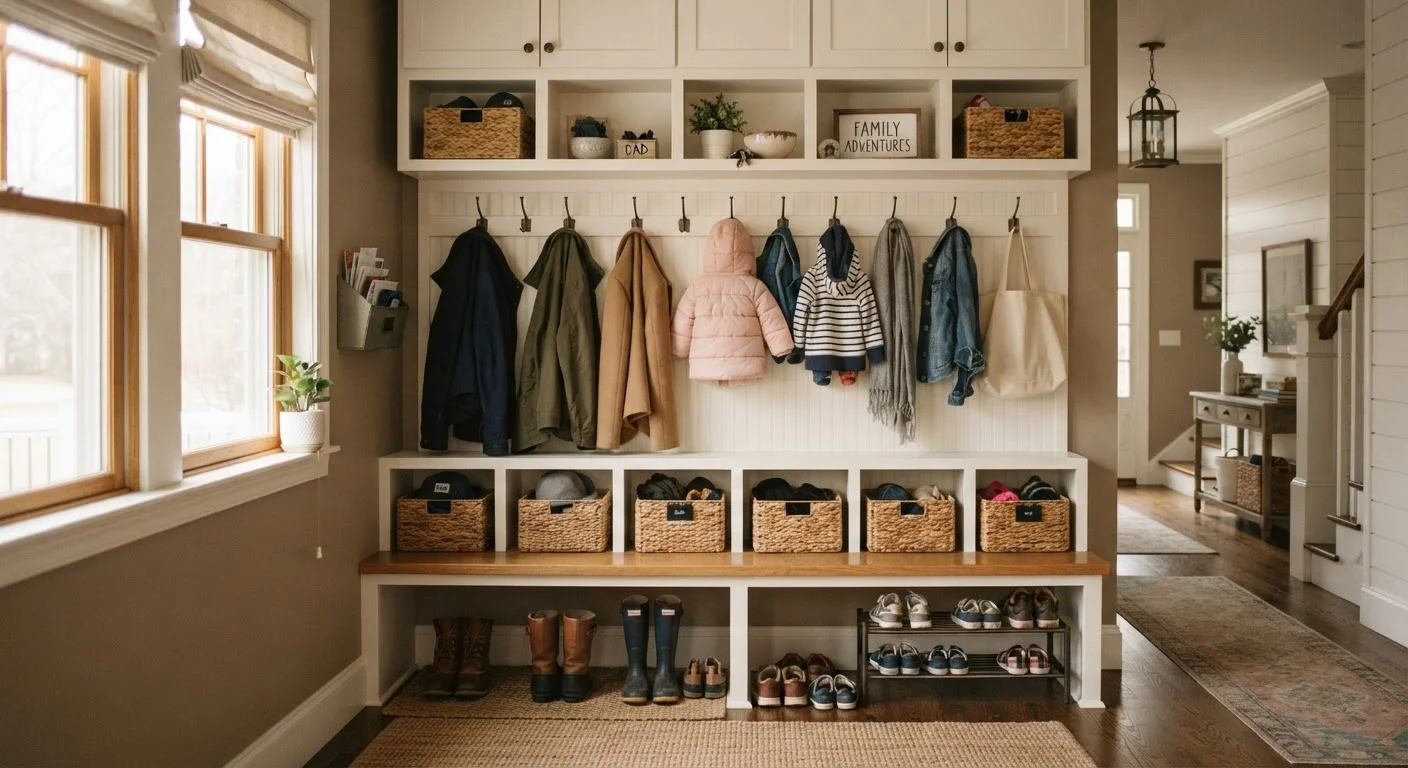
A mudroom drop zone solves this by making the right behavior the easiest behavior. Instead of requiring effort to stay tidy, a well-structured entryway makes it more convenient to put things away than to leave them out. This is the core principle behind any room-by-room organization strategy that actually holds.
The good news: you don't need a dedicated mudroom with built-in cabinetry. A single wall beside a door, a small corner, or even a narrow hallway can be transformed into a fully functional drop zone with the right approach.
Simple Systems Beat Perfect Systems
The most common reason drop zones fail is over-engineering. Lids on bins, multi-step folding processes, or too many categories all add friction that family members quietly abandon. Open hooks, open bins, and clearly labeled spots win every time. As our broader home organization myths guide notes, more storage containers are rarely the answer - easier systems are.
What You'll Need Before You Start
Gather your materials and tools before beginning. Having everything on hand prevents mid-project trips that stall momentum.
What you will need
Wall hooks or a hook rail
Provides a quick, low-effort home for coats, bags, and backpacks so they never end up on the floor.
Entryway bench or low shelf
Gives family members a place to sit while removing shoes and stores footwear underneath.
Labeled bins or baskets
Creates a dedicated container for each person's items, reducing the search-and-blame cycle.
Small tray or bowl
Corrals keys, sunglasses, and small daily-carry items in one predictable location.
Command strips or wall anchors
Secures hooks and shelving without permanent damage, useful for renters or drywall installations.
Chalkboard or whiteboard panel
Serves as a family message board for reminders, permission slips, or schedule notes.
Step-by-Step: Building Your Drop Zone
Follow these steps in order. Each one builds on the last, and skipping ahead - especially past the declutter and planning stages - is the most common reason drop zones don't hold long-term.
Declutter the entryway before adding any storage
Pull everything out of the entryway - shoes, coats, mystery items that have collected for months. Sort into three piles: keep, relocate (items that belong in other rooms), and donate or discard. This step is non-negotiable. As our guide on decluttering before you organize explains, adding storage on top of clutter simply hides the problem rather than solving it.
Measure your space and map out zones
Use a tape measure to note the width, height, and depth of your available wall space. Sketch a rough layout on paper assigning three functional zones: an upper zone for coats and bags (hung items), a mid zone for a bench and cubbies, and a lower zone for shoes. If you have a narrow hallway, going vertical with tall hook rails or stacked shelving maximizes capacity without eating floor space.
Install hooks at the right heights for every user
Mount a hook rail or individual hooks in the upper zone. A standard adult coat hook sits between 60 and 66 inches from the floor; a child's hook works well at 42 to 48 inches. Space hooks at least 4 to 6 inches apart so coats hang without bunching. If you're renting or prefer a no-drill option, heavy-duty adhesive strips rated for several pounds are a practical alternative for lighter items like bags and light jackets.
Add a bench and assign personal cubbies or bins
A bench serves two purposes: it's a seat for shoe removal and a visual anchor for the whole system. Below or beside it, assign one cubby, basket, or bin per family member and label each clearly - use names for young children who cannot yet read symbols. Personal ownership is the single biggest factor in whether a drop zone system holds. When everyone has a clearly marked home base, blame for misplaced items drops and the habit of returning things to that spot forms faster.
Create a landing spot for small daily essentials
Keys, wallets, sunglasses, and transit cards are small enough to disappear - and their absence causes the most morning chaos. Place a small tray, bowl, or wall-mounted key organizer at adult eye level near the entry door. Keeping this spot singular and defined (not a general shelf) trains the habit quickly. Consider a small whiteboard or chalkboard panel nearby for permission slips, reminders, or the next day's schedule notes.
Do a five-minute evening reset and build the habit
Even the best-designed drop zone will revert to chaos without a light daily maintenance habit. Spend five minutes each evening returning stray items to their assigned spots, removing anything that doesn't belong in the entryway, and checking that the small-essentials tray is stocked for the next morning. Involve the whole family - even young children can place their own shoes in a cubby. For more strategies on keeping organization systems running in a busy household, see our guide on keeping a tidy home when you have kids.
Don't Skip the Declutter Step
Installing shelves and hooks before removing items that shouldn't be in the entryway is the most common setup mistake. You'll run out of storage space quickly and the system will look chaotic within days. A 30-minute clear-out before you mount anything pays dividends for months afterward.
Keeping the System Working for the Long Haul
A drop zone isn't a one-time project - it's a living system that needs minor adjustments as your family changes. Revisit the setup at the start of each season: swap out heavy winter coats for lighter spring layers, retire shoes that no longer fit children, and check whether the current bin assignments still make sense. A quick seasonal refresh takes under 20 minutes and prevents the gradual drift that turns a tidy entryway back into a dumping ground.
For broader guidance on maintaining order throughout your home - not just the entryway - the room-by-room home organization walkthrough covers each space with the same practical, system-first approach.
The content on this site is provided for informational purposes only and should not be considered a substitute for professional advice. While we strive to provide accurate and up-to-date information, we make no guarantees regarding its completeness or accuracy. Always consult a qualified professional for advice specific to your circumstances before making any decisions.