

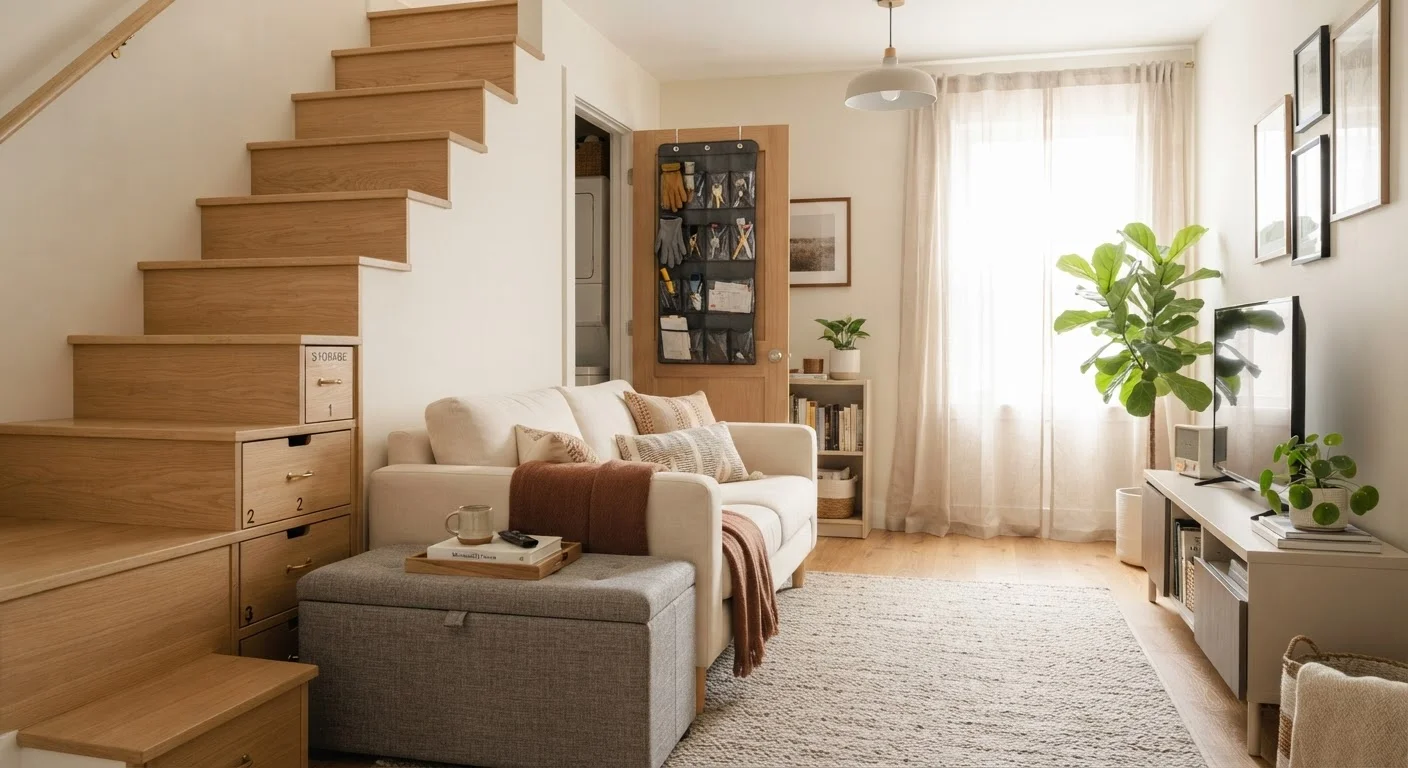
The Storage You Already Have (and Never Use)
Most homeowners looking to reduce clutter immediately think about buying more: more shelves, more bins, more furniture. But the most effective storage improvements often come from recognizing the usable space you're already walking past every day.
From the hollow base of your sofa to the unused back of every interior door, hidden storage opportunities exist in nearly every room. The challenge isn't finding space - it's learning to see it. This list walks you through some of the most consistently overlooked spots and explains how to put them to practical use. For a broader look at how room layout can free up space, see our guide on using vertical space in small rooms.
A note on structural modifications
Some hidden storage ideas - like under-stair drawers or in-wall niches - involve cutting into existing structures. These projects may require building permits and should be assessed by a licensed contractor before work begins. Always verify local code requirements, particularly for any work that touches load-bearing walls, electrical systems, or plumbing. The non-structural ideas on this list (ottomans, door backs, risers) can typically be done without professional help.
Hidden Storage Ideas Worth Trying
Ottoman bases and storage benches
A standard upholstered ottoman takes up floor space in most living rooms and entryways without contributing a single inch of storage - unless you swap it for a lidded version. Storage ottomans and benches with hinged tops can hold throws, board games, seasonal décor, kids' toys, or extra bedding. In entryways, a storage bench serves double duty: seating while putting on shoes, plus a hidden compartment for scarves, gloves, and dog leashes.
The key is treating the interior like a designated zone rather than a catch-all. Divide the space with a collapsible organizer insert if needed to prevent it from becoming a buried pile.
A lidded ottoman replaces wasted floor space with genuinely useful, hidden storage.
The backs of cabinet and closet doors
The interior surface of most cabinet doors - in kitchens, bathrooms, pantries, and closets - goes completely unused. Over-door organizers, adhesive hooks, or shallow mounted racks can transform these surfaces into storage for spices, cleaning supplies, jewelry, hair tools, or shoe-care products.
Measure the clearance between the door and any shelving before installing anything, since a rack that's too deep will prevent the door from closing properly. Stick to shallow profiles (under two inches) in most standard cabinets. This is one of the quickest, most affordable storage wins available in any home.
The back of a cabinet door is prime, unused real estate in almost every home.
Stair risers and under-stair drawers
In homes with a staircase, the triangular cavity beneath the stairs is often enclosed and inaccessible - but it doesn't have to be. Carpenters can convert this space into pull-out drawers, built-in shelving, or even a small closet, depending on the available depth. Homes that already have an under-stair closet often underuse the awkward angled sections at the back.
Even without a full renovation, individual stair risers can be hollowed out and fitted with shallow pull-out drawers - a good place for books, charging cables, or cleaning supplies. This type of work typically requires a contractor and may need a building permit depending on your local codes; always verify requirements before starting structural modifications.
The space beneath a staircase can become one of the most functional storage zones in the house.
Toe-kick drawers in the kitchen
The recessed strip at the base of kitchen cabinets - called the toe kick - is almost always wasted space. In many cabinet configurations, shallow drawers can be fitted into this area to store flat items like baking sheets, cutting boards, or placemats. Some kitchen cabinet manufacturers offer toe-kick drawer kits designed to fit standard cabinet dimensions.
These drawers sit low to the ground, so they work best for items you don't reach for daily. They're especially useful in kitchens where cabinet and drawer space feels genuinely maxed out. A cabinetmaker or experienced DIYer can often install these without altering the existing cabinet structure.
Toe-kick drawers turn the forgotten floor-level gap beneath cabinets into practical storage.
Furniture with built-in storage legs or risers
Raising furniture on risers - beds, sofas, or dressers - creates usable under-furniture storage without replacing anything you own. Bed risers are widely available and can elevate a bed frame enough to slide flat storage bins, luggage, or seasonal clothing underneath. The space under a bed is often the single largest unused storage zone in a bedroom.
For this to work long-term, use lidded bins or vacuum-seal bags rather than open piles. Dust accumulates quickly beneath furniture, so sealed containers keep contents clean and make retrieval easier. Label each bin clearly so you don't need to pull everything out to find what you want.
Raising a bed by just a few inches can unlock an entire room's worth of flat storage space.
Walls between studs - built-in niche shelving
Standard interior walls in wood-frame homes typically have cavities between studs that are three to four inches deep. These can be opened up and fitted with shelving to create recessed niches - functional display or storage space that doesn't protrude into the room at all. Bathroom walls are a common location for this, creating a tiled recessed shelf in a shower or above a toilet without adding any visual bulk.
This type of modification involves cutting into drywall and requires verifying that no electrical wiring or plumbing runs through the target wall. Always consult a licensed contractor before opening any wall cavity, and check local permit requirements. Done correctly, niche shelving is one of the most space-efficient storage upgrades possible.
Recessed niche shelves fit entirely inside existing walls, adding storage without stealing floor space.
Start with one room, one spot
Tackling hidden storage across your entire home at once often leads to abandoned projects. Instead, identify one underused spot - a single cabinet door or the space under your bed - and make it functional before moving on. Small wins build momentum and make the habit stick. This approach also helps you figure out which solutions genuinely suit your household before committing to larger changes.
Building Habits Around What You've Created
Installing a pull-out drawer under the stairs or adding an over-door organizer is only half the work. The other half is building the habit of actually using it - and keeping it from quietly refilling with randomness. Assign specific categories to each new storage spot before you start loading it. A toe-kick drawer in the kitchen, for example, works best when it holds one thing consistently: baking sheets, or cleaning rags, or pet supplies.
If you're curious about how different organizational approaches compare day-to-day, our article on labeled bins vs. open shelving covers practical tradeoffs between visibility and containment. And if budget is a consideration while you make these improvements, the strategies in home improvement on a budget can help you prioritize where to spend. Small changes, made thoughtfully, create homes that actually stay organized.
The content on this site is provided for informational purposes only and should not be considered a substitute for professional advice. While we strive to provide accurate and up-to-date information, we make no guarantees regarding its completeness or accuracy. Always consult a qualified professional for advice specific to your circumstances before making any decisions.