

Our Verdict
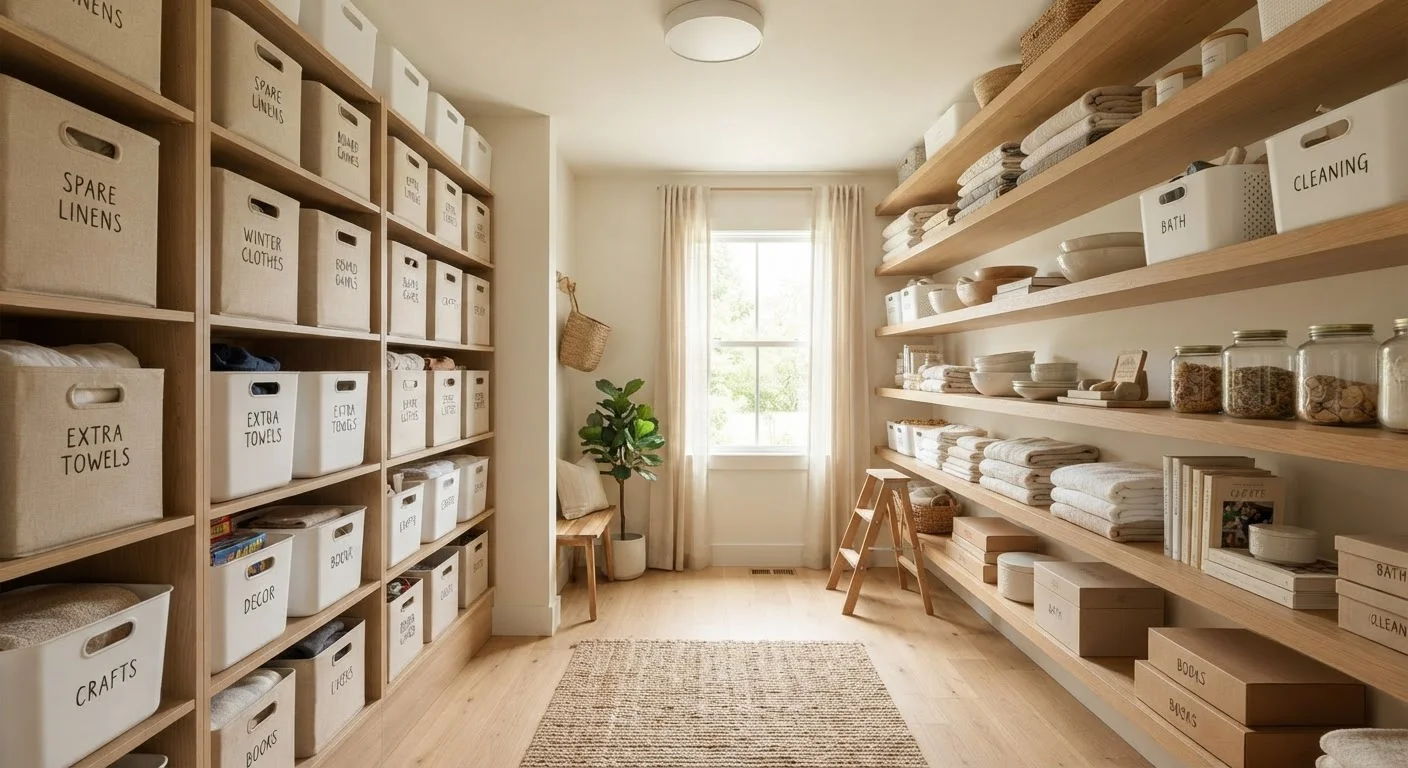
Neither labeled bins nor open shelving is universally superior - each has a distinct strength depending on the category of items being stored, who is accessing them, and how much maintenance effort a household can sustain. Labeled bins reduce visual clutter and enforce organization with minimal daily effort; open shelving rewards households that are naturally tidy and value speed and visibility. The most effective approach for most homes is a deliberate combination of both.
| Best for | Recommended |
|---|---|
| Households with children or multiple users who need clear guidance | Labeled Bins |
| Frequently accessed items and display-worthy collections | Open Shelving |
| Pantries, closets, and utility areas prone to disorder | Labeled Bins |
| Readers who naturally return items to the same spot without reminders | Open Shelving |
Why Storage Style Is a Habit Question, Not Just a Design Choice
Walk into a well-organized home and you'll probably notice one of two dominant systems: tidy containers with clear labels, or open shelves where everything is visible at a glance. Both look appealing in photos. But which one actually holds up once real life resumes?
The honest answer is that storage style is less about aesthetics and more about matching a system to how you and your household actually behave. A labeling system you won't maintain is no better than a pile on the floor. Open shelves that become catch-alls for miscellaneous items defeat their own purpose. Understanding the strengths and trade-offs of each approach - before you buy a single container - is the smarter starting point.
As we explore in our guide on common organization myths, more storage bins don't automatically mean more order. The system behind how you use them is what counts.
The Case for Labeled Bins
Labeled bins - whether fabric cubes, stackable plastic containers, or woven baskets with tags - work by giving every category of item a clearly defined home. The label removes the decision-making burden: when someone picks up an item, they know exactly where it belongs.
This makes labeled bins particularly effective in shared spaces where multiple people need to follow the same system. Children's playrooms, pantries, laundry rooms, and garage storage areas are environments where this approach shines. Labels create an implicit rule that even young children can follow once they learn to read, and they reduce the friction of maintaining order over time.
Start With Categories, Not Containers
Before purchasing any bins or labeling supplies, sort your belongings into logical groups first. This prevents the common mistake of buying containers that don't match your actual storage needs. Once categories are clear, choose bin sizes that fit those groups comfortably - with a little room to grow, but not so much that items rattle around and lose their designated feel.
The main limitation is upfront investment. Setting up a well-labeled bin system takes time - you need to categorize your belongings, choose appropriately sized containers, and create labels that are durable and readable. If categories shift over time (and they will), relabeling is necessary. The system also hides contents, which can lead to "out of sight, out of mind" problems if categories are defined too broadly.
The Case for Open Shelving
Open shelving keeps items fully visible without the step of opening a container. This visibility is its core advantage: you scan rather than search. For items you reach for daily - coffee mugs, cookbooks, frequently worn shoes - open shelves offer a speed advantage that closed bins simply can't match.
Open shelving also tends to be more flexible. A shelf can accommodate differently sized items without needing a container that fits just right, and reorganizing is as simple as moving things around. It also creates an opportunity to display items that have visual appeal, turning functional storage into part of a room's character.
| Labeled Bins | Open Shelving | |
|---|---|---|
| Visual clutter | Hidden - neat appearance with lids or fronts | Fully visible - requires consistent tidiness |
| Ease of retrieval | Requires opening or moving containers | Instant - scan and grab directly |
| Suitability for shared households | High - labels guide multiple users | Moderate - relies on shared habits |
| Setup effort | Higher - categorizing and labeling required | Lower - place items and done |
| Flexibility over time | Moderate - relabeling needed as needs change | High - easy to reorganize anytime |
| Dust and maintenance | Low - items protected inside containers | Higher - exposed items collect dust |
| Best environments | Pantries, closets, playrooms, garages | Kitchens, offices, living rooms, studios |
The trade-off is that open shelves require consistent tidiness from every person using them. Dust accumulates on exposed items, and without the structure a bin provides, items can migrate and create visual clutter quickly. If you're drawn to open shelving throughout your home, consider reading about the real trade-offs of open, visible design - many of the same principles apply.
How to Decide: Matching the System to the Space
The practical framework for choosing between labeled bins and open shelving comes down to three questions:
- How often is this item accessed? Daily-use items favor open shelving; weekly or occasional items suit labeled bins.
- Who is accessing it? Multiple users or children benefit from the explicit guidance of labels; solo or disciplined users may thrive with open systems.
- How visually sensitive is the space? In living areas and kitchens, open shelving needs curated, aesthetically consistent items. In utility rooms, bins hide the inevitable messiness of real-life storage.
Most functional homes don't choose one system exclusively - they use open shelving for high-frequency items and labeled bins for everything that needs containment. A pantry shelf might use bins for snack categories while leaving a few open shelves for everyday staples. A home office might use labeled file boxes for archived documents while keeping current projects visible on an open shelf.
For homes where floor space is limited, combining these strategies vertically is especially powerful - see our guide on using vertical space effectively to think beyond the floor.
If you find yourself uncertain whether any physical system is the right solution at all, it's worth considering when digital organization methods outperform physical ones.
The content on this site is provided for informational purposes only and should not be considered a substitute for professional advice. While we strive to provide accurate and up-to-date information, we make no guarantees regarding its completeness or accuracy. Always consult a qualified professional for advice specific to your circumstances before making any decisions.