

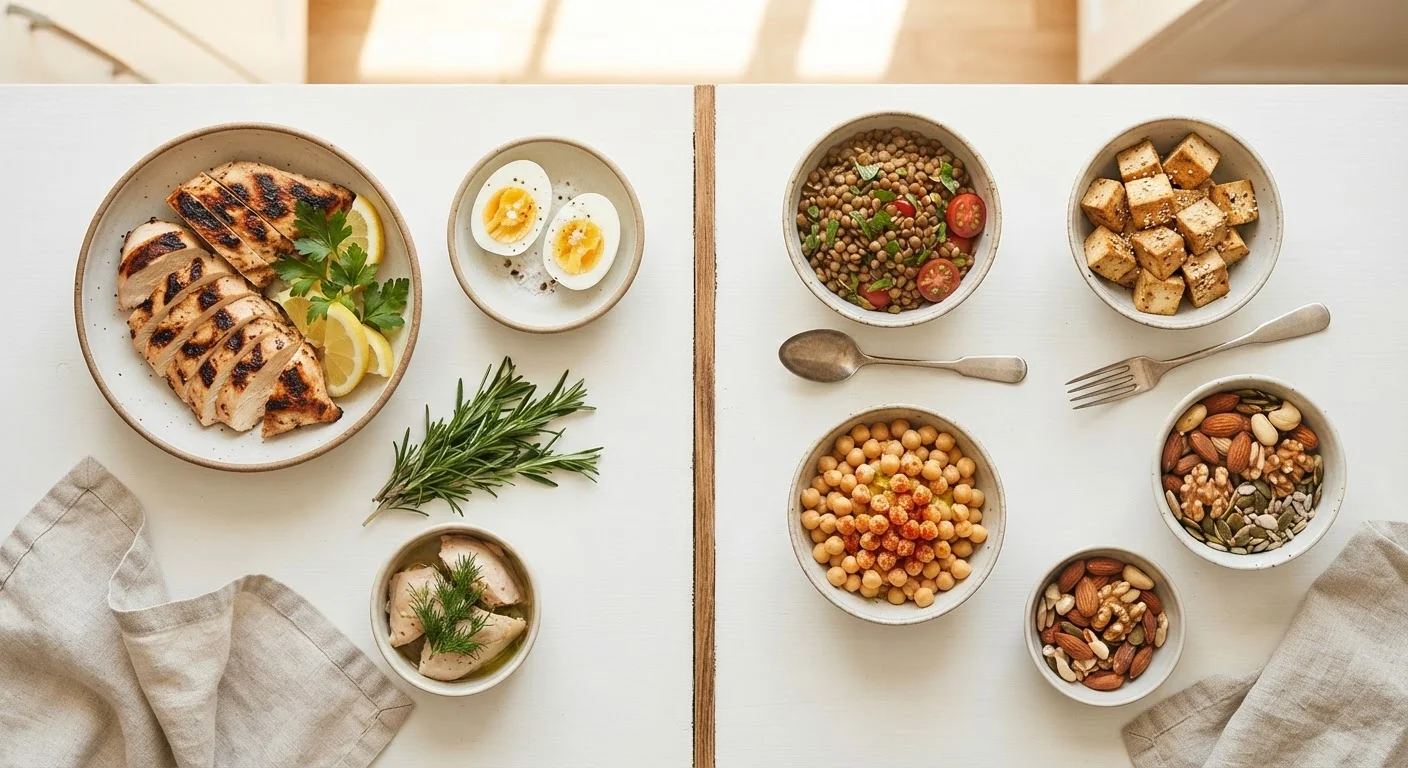
Our Verdict
Neither animal nor plant protein is universally superior - both can anchor a nutritious diet when chosen thoughtfully. Animal proteins offer unmatched completeness and bioavailability, while plant proteins bring fiber and phytonutrients alongside their amino acids. Most people benefit from a varied approach that draws on strengths from both categories.
| Best for | Recommended |
|---|---|
| Those who want maximum protein efficiency with minimal meal planning | Animal Protein |
| Those prioritizing fiber intake, heart health, and environmental considerations | Plant-Based Protein |
| Those seeking flexibility, variety, and the benefits of both | Mixed (Animal + Plant) Approach |
Why Protein Quality Matters Beyond the Gram Count
When most people think about protein, they focus on quantity - hitting a daily gram target. But protein quality is equally important. Quality is determined by two things: the amino acid profile (which building blocks are present) and bioavailability (how well your body can actually absorb and use those amino acids).
Proteins are made of 20 amino acids. Nine of these are called essential - your body cannot make them, so you must get them from food. A protein source that contains all nine in sufficient quantities is called a complete protein. One that's missing or low in one or more is called incomplete. This distinction drives much of the animal-vs.-plant conversation.
Understanding these basics helps you make smarter choices at every meal. For a broader look at structuring those meals, see our practical framework for building a balanced plate.
Animal Proteins: Strengths and Considerations
Animal-based proteins - including meat, poultry, fish, eggs, and dairy - are complete proteins. They also score high on measures like the Protein Digestibility Corrected Amino Acid Score (PDCAAS) and the newer Digestible Indispensable Amino Acid Score (DIAAS), both of which assess how usable a protein is for the human body.
Eggs and dairy consistently rank among the highest-quality protein sources by these measures. Fatty fish adds omega-3 fatty acids, which support heart and brain health. Red and processed meats, while protein-rich, are associated in research with higher cardiovascular risk when consumed in large amounts - a consideration worth discussing with your doctor or dietitian.
Animal proteins are also reliable sources of nutrients that can be harder to obtain from plants, including vitamin B12, heme iron (more easily absorbed than plant iron), zinc, and complete forms of vitamin D in fatty fish.
Diversify Within Animal Proteins Too
If you eat animal products, varying your sources - fish a few times a week, eggs, dairy, and poultry - can help you get a wider range of nutrients while managing saturated fat intake. Limiting processed meats like sausage and deli cuts is generally recommended by major nutrition organizations. Small swaps over time add up to meaningful dietary improvements.
Plant Proteins: Strengths and Considerations
Legumes (lentils, chickpeas, black beans), tofu, tempeh, edamame, whole grains, nuts, and seeds are the pillars of plant-based protein. Most are incomplete proteins individually - but this matters less than it once seemed. Research now confirms that eating a variety of plant foods throughout the day reliably supplies all essential amino acids without needing to carefully combine proteins at every single meal.
Soybeans and quinoa are notable exceptions: they are complete plant proteins. Tempeh and edamame - both soy products - are particularly protein-dense and versatile.
Plant proteins arrive packaged with benefits animal foods don't offer: dietary fiber, phytonutrients, and antioxidants that are linked to reduced chronic disease risk. The trade-off is lower bioavailability - antinutrients like phytates in legumes can reduce mineral absorption. Soaking, cooking, and fermenting these foods meaningfully reduces that effect.
Plant-protein diets require more attention to vitamin B12 (not found in plant foods), iron, calcium, and zinc. Fortified foods and, when appropriate, supplementation can fill those gaps - a topic to explore with a healthcare provider.
| Animal Protein | Plant Protein | |
|---|---|---|
| Amino acid completeness | Complete (all 9 essential amino acids) | Often incomplete; soy and quinoa are exceptions |
| Bioavailability | High (easily absorbed and used) | Moderate; improved by cooking and fermenting |
| Fiber content | None | High in legumes, grains, nuts, seeds |
| Key micronutrients provided | B12, heme iron, zinc, omega-3s (fish) | Fiber, antioxidants, phytonutrients, folate |
| Nutrients requiring attention | Saturated fat (red/processed meats) | B12, iron, calcium, zinc, vitamin D |
| Environmental footprint | Generally higher (especially red meat) | Generally lower |
| Meal planning complexity | Lower - single source covers all amino acids | Moderate - variety across the day is key |
Choosing What Works for You
There's no single right answer - your ideal protein mix depends on your health goals, any existing medical conditions, activity level, cultural food traditions, and personal preferences. What the evidence supports is this: protein diversity is protective. Diets heavy in a single source - whether red meat or an unvaried vegan pattern - tend to carry more nutritional risk than flexible, varied approaches.
For populations with higher protein needs - older adults, pregnant individuals, people recovering from illness - quality and bioavailability become especially important considerations. Our article on how nutritional needs shift across the lifespan explores how those priorities evolve.
Pairing your protein choices with nutrient-dense foods across the rest of your plate maximizes the overall quality of your diet. And if you're navigating questions about whole versus minimally processed protein sources, our look at whole foods vs. processed foods offers helpful context.
This article is for general informational and educational purposes only and is not a substitute for personalized medical or nutrition advice. Please consult a qualified healthcare professional or registered dietitian for guidance specific to your health needs.
The content on this site is provided for informational purposes only and should not be considered a substitute for professional advice. While we strive to provide accurate and up-to-date information, we make no guarantees regarding its completeness or accuracy. Always consult a qualified professional for advice specific to your circumstances before making any decisions.