

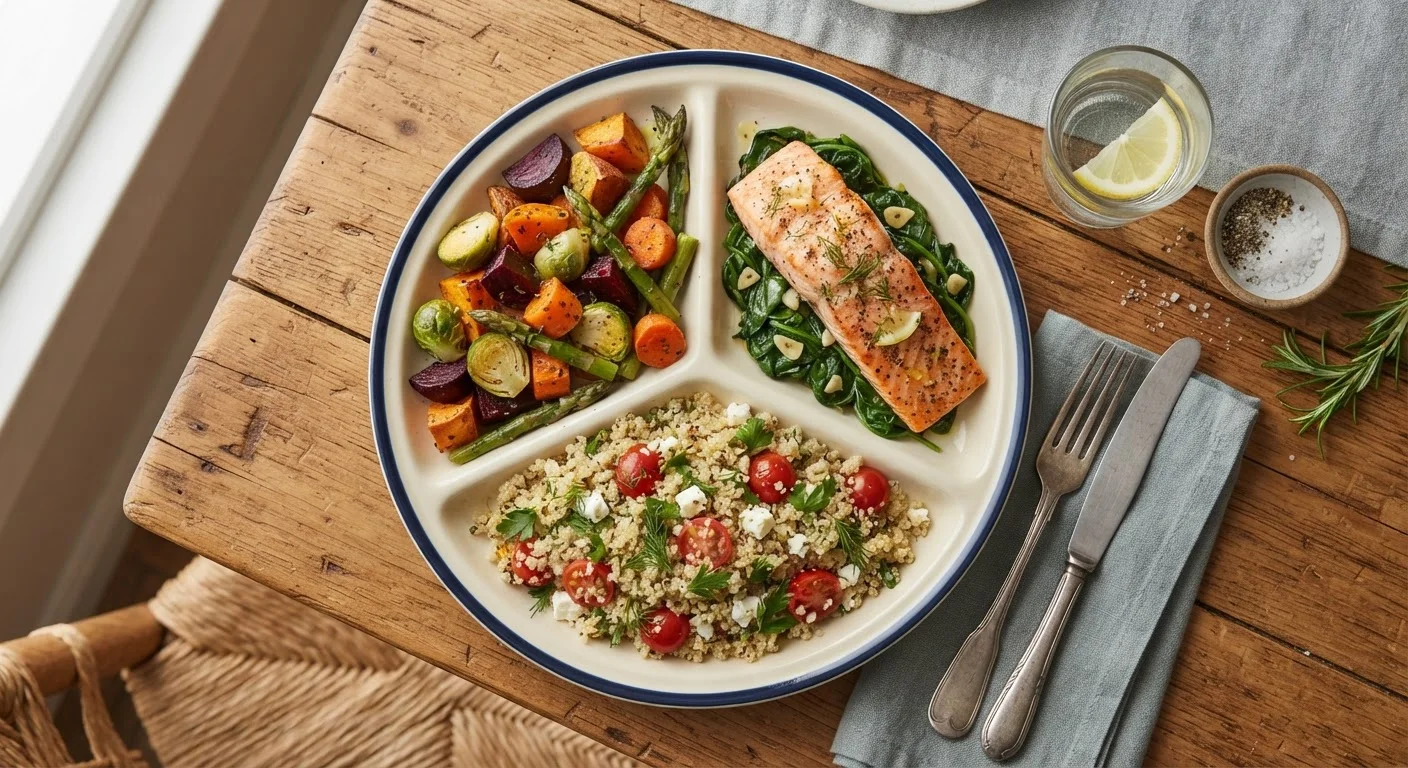
Why Plate Structure Matters More Than Calorie Counting
Most people don't struggle with nutrition because they lack willpower - they struggle because the decisions feel abstract and overwhelming. Counting every calorie or tracking every macro requires consistent effort that's hard to sustain in a real, busy life. A plate-based framework sidesteps that complexity by anchoring nutrition to something concrete: visual proportions at mealtime.
Research consistently shows that the overall composition of what people eat - the balance of food groups across meals - is one of the strongest predictors of diet quality. The plate model has been endorsed in various forms by registered dietitians, public health researchers, and nutrition educators because it translates complex science into an action anyone can take at the next meal.
This approach also reflects a key insight: you don't need to eat perfectly to eat well. Understanding what a balanced plate looks like gives you a reliable default to return to, meal after meal. It's a framework, not a prescription.
What you will need
If you're also thinking about the role of individual foods within this structure, our piece on nutrient density explains how to get more vitamins and minerals from every portion of your plate.
Tools and Resources That Make Plate-Building Easier
You don't need a kitchen full of gadgets to build a balanced plate - but a few simple resources can smooth the learning curve.
Standard dinner plate (9-10 inches)
Provides a physical boundary that naturally guides portion proportions without measuring.
Measuring cups and spoons
Useful when learning portion sizes before eyeballing becomes second nature.
Registered dietitian
Offers personalized meal planning advice tailored to your specific health needs and goals.
Once you've internalized the proportions, the plate itself becomes your primary tool. The goal is to reach a point where balance feels intuitive rather than effortful - something that happens over weeks of practice, not overnight.
Use Your Hand as a Portion Guide
When a measuring cup isn't handy, your hand offers a surprisingly practical reference. A cupped palm approximates a serving of grains or legumes; a flat palm suits a protein portion; and a fist is a rough guide for a vegetable serving. This isn't perfect, but it builds portion awareness without obsessive measuring.
As you develop stronger meal habits, you may find it worthwhile to think about how nutrition intersects with movement. Our hub on fitness and movement covers how physical activity complements a well-structured diet for everyday health.
How to Build Your Plate: Step-by-Step
The following steps walk you through each section of a balanced plate, explaining not just what to include but why it matters. Treat these as a flexible guide you can adapt to your own food preferences, cultural background, and budget - not a rigid rulebook.
This Is General Information, Not Medical Advice
The guidance here reflects broadly recognized nutrition principles for generally healthy adults. It is not a substitute for personalized advice from a registered dietitian or your healthcare provider. If you have a chronic condition, food allergy, or specific health concern, please speak with a qualified professional before making significant changes to your diet.
Divide Your Plate in Half - and Fill It With Produce
The most evidence-supported shift you can make is dedicating half your plate to vegetables and fruit. This proportion aligns with guidance from nutrition researchers and public health organizations worldwide. Vegetables should form the larger portion of that half; fruit can complement without dominating.
Variety is more important than any single vegetable. Aim for a mix of colors - leafy greens, orange and red vegetables, cruciferous options like broccoli and cauliflower - since different pigments correspond to different phytonutrients and antioxidants.
Allocate One Quarter to Whole Grains or Starchy Vegetables
Reserve roughly one quarter of your plate for complex carbohydrates. Whole grains - such as brown rice, quinoa, farro, oats, or whole-grain bread - provide fiber, B vitamins, and sustained energy. Starchy vegetables like sweet potatoes, corn, or legumes can fill this role equally well.
Choosing whole over refined grains (e.g., white rice or white bread) preserves fiber and slows glucose absorption, which supports steadier energy levels throughout the day. This isn't about eliminating refined carbohydrates entirely - it's about making whole versions the default.
Fill the Remaining Quarter With a Quality Protein Source
The final quarter of your plate is reserved for protein. Protein supports muscle maintenance, satiety, and countless metabolic functions. Good sources include fish, poultry, eggs, legumes, tofu, tempeh, or lean cuts of meat.
Both animal and plant proteins can meet your needs - what matters is variety and preparation. Grilling, baking, or steaming are generally preferable to frying. For a deeper look at how these options compare, see our guide to animal vs. plant-based proteins.
Add a Small Amount of Healthy Fat
Fats are not the enemy - they are essential for absorbing fat-soluble vitamins (A, D, E, and K) and supporting brain health. The goal is to include a modest amount of unsaturated fat rather than avoiding fat altogether.
This might look like a drizzle of olive oil used in cooking, a small portion of avocado, a handful of nuts or seeds, or fatty fish like salmon as your protein source. Keeping the amount modest - rather than treating this as a free-for-all - allows healthy fats to complement rather than crowd out other food groups.
Choose a Beverage That Supports, Not Undermines, Your Meal
What you drink alongside a meal is part of the nutritional picture. Water is the default best choice - it hydrates without adding sugar, calories, or sodium. Unsweetened sparkling water, plain herbal teas, or a small glass of low-fat milk are reasonable alternatives.
Sugar-sweetened beverages - sodas, sweetened juices, energy drinks - add caloric load without meaningful nutrients. This doesn't mean an occasional drink is harmful, but it's worth being intentional. Making water the habitual choice is one of the lower-effort, higher-impact habits you can build.
Apply This Framework Consistently, Not Perfectly
A single meal rarely makes or breaks a dietary pattern. What shapes long-term health is the average of what you eat across many meals. If one meal skews heavy on grains or light on vegetables, the next meal is an opportunity to rebalance - not a cause for concern.
Building this framework into your grocery habits is a natural next step. Our article on how grocery habits affect your nutrition goals explores how shopping patterns can quietly support or derail balanced eating. For a broader audit of your daily habits, the foundational nutrition checklist is a practical companion resource.
For context on how nutritional needs evolve throughout life - including for children, older adults, and those with specific health conditions - see our overview on how nutrition needs shift across the lifespan.
Portion Frameworks Aren't One-Size-Fits-All
Caloric and nutrient needs differ based on age, activity level, body size, and health status. The proportions described here are a starting framework, not a rigid prescription. Pregnant individuals, children, older adults, and people managing chronic conditions should seek tailored guidance from a healthcare professional.
This article is for general informational and educational purposes only and does not constitute medical or nutritional advice. Always consult a qualified healthcare provider or registered dietitian for guidance specific to your health situation.
The content on this site is provided for informational purposes only and should not be considered a substitute for professional advice. While we strive to provide accurate and up-to-date information, we make no guarantees regarding its completeness or accuracy. Always consult a qualified professional for advice specific to your circumstances before making any decisions.