

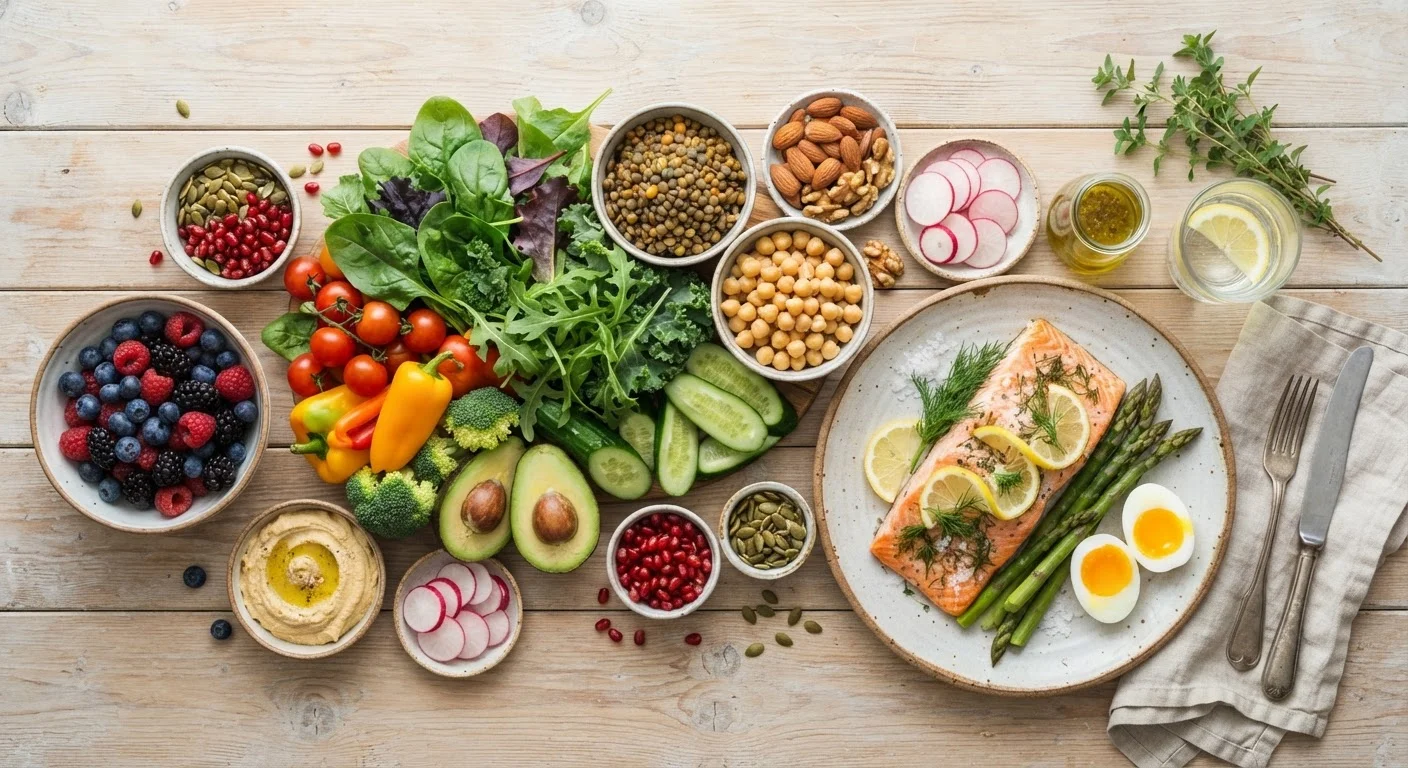
Why Nutrient Density Matters for Everyday Eating
Most of us have heard that we should "eat healthy," but that phrase can feel frustratingly vague. Nutrient density gives that idea a concrete shape. Instead of fixating on cutting calories or avoiding specific foods, it shifts the question to: what am I actually getting from what I eat?
Your body needs dozens of micronutrients - vitamins, minerals, and other compounds - every single day to keep your immune system working, your bones strong, and your energy stable. For a deeper look at those essentials, see our article on micronutrients and the role they play. The challenge is meeting all those needs within a reasonable calorie range. Nutrient-dense foods do that efficiently.
When the majority of your diet comes from foods that deliver vitamins, minerals, fiber, and quality protein per calorie - rather than mostly refined carbohydrates and added fats - your body gets more to work with. Over time, that difference compounds into meaningfully better health outcomes, according to longstanding dietary research.
~75%
Americans fall short on key micronutrients
According to the U.S. Dietary Guidelines Advisory Committee, the majority of Americans do not meet recommended intakes for vegetables, fruits, and dairy - food groups that anchor nutrient-dense eating patterns.
57%
of U.S. calories come from ultra-processed foods
Research published in BMJ Open estimated that ultra-processed foods account for more than half of total caloric intake in the average American diet, foods that tend to be calorie-dense and nutrient-poor.
2-3x
More fiber in whole vs. refined grains
Whole grains like oats and brown rice typically contain two to three times the dietary fiber of their refined counterparts, illustrating how processing erodes nutrient density even within the same food category.
What High and Low Nutrient Density Actually Looks Like
Concrete comparisons make this concept easier to apply. Consider two roughly 100-calorie snacks: a cup of raw spinach with a hard-boiled egg, versus a small handful of cheese crackers. The spinach-and-egg option delivers iron, calcium, folate, vitamin K, and complete protein. The crackers offer energy and little else of nutritional note.
This doesn't mean crackers are "bad" or forbidden - context and overall diet patterns matter far more than any single food choice. But if most of your calories come from low-density sources, it becomes difficult to meet your body's nutritional needs without significantly overeating.
Foods that consistently rank high for nutrient density include:
- Leafy green vegetables (spinach, kale, arugula, Swiss chard)
- Legumes (lentils, black beans, chickpeas)
- Fatty fish (salmon, sardines, mackerel - rich in omega-3s and protein)
- Eggs (a complete protein source with vitamins B12, D, and choline)
- Berries (high in antioxidants and fiber relative to sugar content)
- Nuts and seeds (calorie-rich but densely packed with healthy fats, magnesium, and zinc)
- Whole grains (brown rice, oats, quinoa - far higher in fiber and B vitamins than refined counterparts)
Practical Ways to Shift Toward More Nutrient-Dense Choices
You don't need to overhaul your entire diet overnight. Small, consistent substitutions tend to stick better than dramatic changes - and they add up meaningfully over time.
Start with swaps, not restrictions. Swap white rice for quinoa or brown rice. Choose dark leafy greens instead of iceberg lettuce. Add beans to soups and stews to increase both fiber and protein without significantly raising calorie counts. These kinds of changes align naturally with building a balanced plate at every meal.
Think about volume. High-fiber, high-water foods like vegetables, fruit, and legumes take up more space in your stomach, which supports feelings of fullness. This is part of why a diet rich in these foods often helps people feel satisfied eating reasonable portions - not because of willpower, but because of how these foods interact with your digestive system.
Don't forget protein variety. Both animal and plant proteins can be nutrient-dense, though their profiles differ. Our comparison of animal vs. plant-based protein sources can help you decide what fits your needs and preferences.
Use the nutrition label as a tool. When buying packaged foods, check the % Daily Value columns for vitamins, minerals, and fiber. A food that provides meaningful amounts of these nutrients alongside modest sodium and added sugar is a more nutrient-dense choice than one with the same calories but minimal micronutrients.
If you'd like a broader framework for auditing your daily habits, the foundational nutrition checklist is a practical place to start.
This article is for general informational and educational purposes only and is not a substitute for professional medical or dietary advice. Please consult a qualified healthcare provider or registered dietitian for guidance tailored to your individual health needs.
Frequently Asked Questions
A nutrient-dense food provides a significant amount of vitamins, minerals, fiber, or protein relative to the calories it contains. Examples include leafy greens, eggs, legumes, fatty fish, and fresh fruit. Processing typically reduces nutrient density by adding refined carbohydrates, sodium, and added sugars while removing fiber and micronutrients.
Not necessarily. Nuts, seeds, and avocados are highly nutrient-dense but also calorie-rich. Nutrient density is about the ratio of nutrients to calories, not about calories being low overall. Foods like these are still valuable because the nutrients they deliver are substantial.
Nutrient density is one useful concept within the broader goal of a balanced diet. A balanced diet also accounts for macronutrient proportions, fiber intake, hydration, variety, and individual health needs. Focusing only on nutrient density is a helpful starting point, but it works best as part of a wider nutritional framework.
In many cases, yes. Vegetables, fruits, and legumes tend to have higher water and fiber content, which adds volume and promotes satiety without dramatically increasing calorie intake. This means you can often eat larger portions of these foods compared to calorie-dense processed alternatives.
Supplements can help address specific deficiencies, but they don't replicate the full nutritional complexity of whole foods. Whole foods contain combinations of nutrients, fiber, and plant compounds that work together in ways supplements generally can't match. Consult a healthcare provider before starting any supplement regimen.
Reading nutrition labels is a practical starting point - look for foods high in vitamins, minerals, fiber, and protein relative to their calorie count. Our guide to <a href="/health-wellness/nutrition-basics/reading-a-nutrition-facts-label-without-the-confusion">reading a nutrition facts label</a> can help you interpret this information confidently.
The content on this site is provided for informational purposes only and should not be considered a substitute for professional advice. While we strive to provide accurate and up-to-date information, we make no guarantees regarding its completeness or accuracy. Always consult a qualified professional for advice specific to your circumstances before making any decisions.