

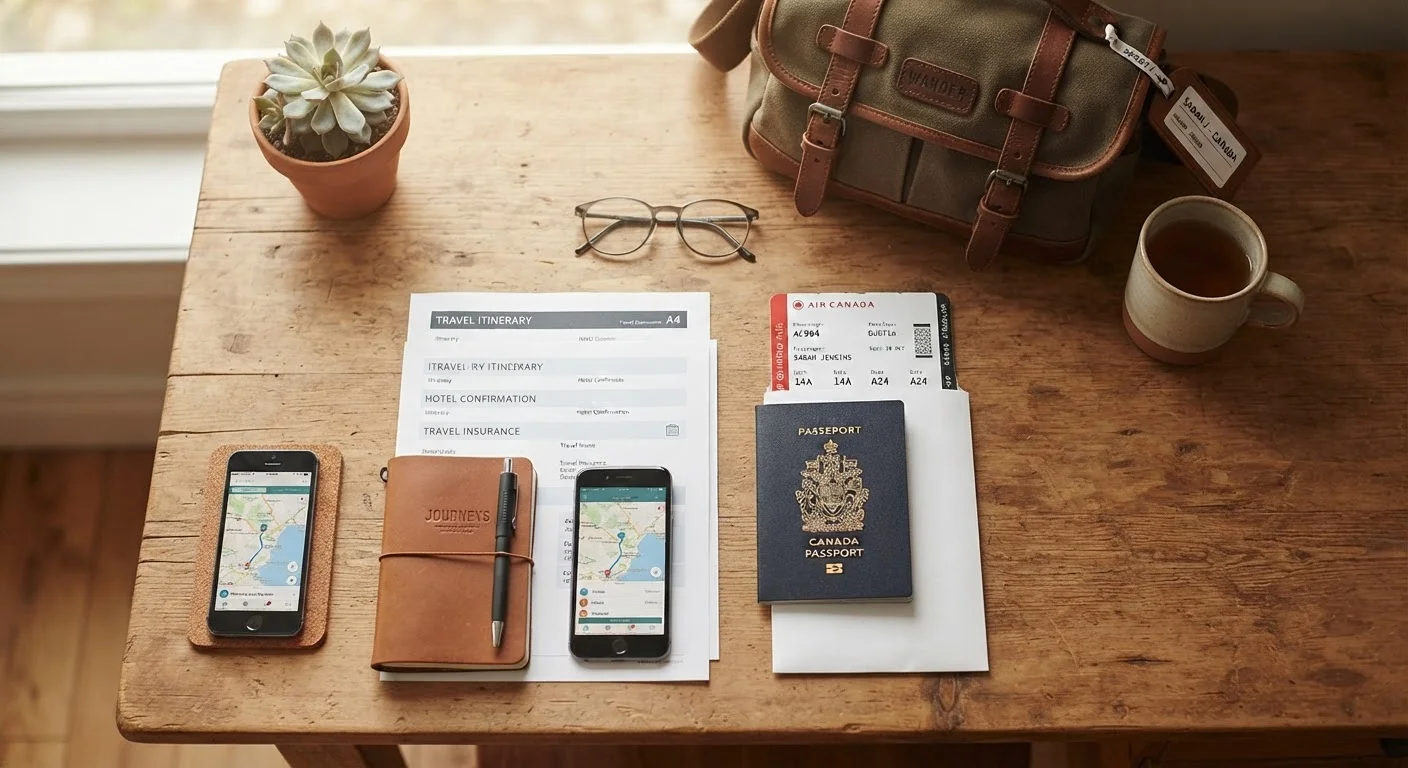
The Core Documents Every International Traveler Needs
Before any international trip, knowing which documents are required - and which are simply useful to have - saves significant stress. Here's a breakdown of what each primary document does and when you need it.
| Passport validity rule | 6 months beyond return date (most countries) (U.S. State Department general guidance) |
| Passport renewal processing time | 6-8 weeks standard; expedited options available (U.S. State Department, general estimate) |
| Visa-free destinations for U.S. passports | Approximately 186 countries/territories (Henley Passport Index, general figure) |
| Who issues entry visas | The destination country's government |
| Where to verify entry requirements | U.S. State Department travel.state.gov |
| Emergency passport replacement | Available at U.S. embassies and consulates abroad (U.S. State Department) |
Passport
Your U.S. passport is the single most important document for international travel. It proves your citizenship and identity at border crossings, customs, and check-in. Most countries require your passport to be valid for at least six months beyond your planned return date - a rule that catches travelers off guard more often than you'd expect. Renewing early is always safer than cutting it close.
Visa
A visa is an official authorization, issued by a foreign government, that permits you to enter that country for a specific purpose and duration. Some countries offer visa-free or visa-on-arrival access to U.S. passport holders; others require advance applications that can take weeks to process. Entry requirements vary widely by destination, and they change. Always verify current requirements through official government sources - both the U.S. State Department and the destination country's embassy or consulate - before booking.
REAL ID and Domestic Travel
If your trip starts with a domestic leg, note that federal REAL ID requirements now apply to U.S. airport security. A standard state driver's license may not be sufficient. See our guide to REAL ID compliance for a clear explanation of which documents qualify.
Supporting Documents Worth Carrying
Beyond your passport and visa, a handful of supporting documents can prevent complications at borders, hotels, and in emergencies.
Passport
A government-issued travel document proving the holder's identity and nationality. Required for international entry and re-entry into the United States.
Visa
An official endorsement from a foreign government authorizing entry into that country for a specific purpose, duration, and sometimes number of entries. It may be stamped in your passport or issued electronically.
REAL ID
A federally compliant form of state-issued identification that meets minimum security standards. Required for domestic air travel in the U.S. when a passport is not used.
Proof of onward travel
Documentation showing that a traveler has a confirmed plan to leave the country being entered - typically a return flight or connecting itinerary. Some countries require this at immigration.
Travel authorization (eTA / ESTA)
An electronic pre-travel authorization required by certain countries (such as Canada's eTA or the U.S. ESTA for Visa Waiver Program countries) before boarding a flight. Distinct from a traditional visa but still mandatory.
- Proof of onward travel: Many countries and airlines require evidence that you plan to leave - typically a return or connecting flight booking. Immigration officers in certain destinations routinely ask for this.
- Travel insurance documentation: A summary of your policy, including the 24-hour emergency contact number, can be essential if you need medical help abroad. Keep a printed copy separate from your phone.
- Vaccination records or health documentation: Some destinations require proof of specific vaccinations for entry. Requirements shift - check with official health and foreign affairs sources close to your departure date. If you're traveling with prescription medications, our article on traveling with medications covers what documentation to carry.
- Hotel confirmation and itinerary: A printed or offline-accessible copy of where you're staying for at least your first night is often requested at customs.
- Emergency contact card: A simple card listing your name, emergency contacts, and any critical medical information can be invaluable if your phone is lost or stolen.
For a comprehensive pre-departure review, our pre-trip checklist walks through documents, bookings, and last-minute tasks in one place.
How to Organize and Protect Your Documents
Losing a passport abroad is one of the most disruptive travel setbacks there is. A few practical habits reduce that risk considerably.
Make Copies Before You Leave
Photograph the photo page of your passport, your visa, your travel insurance card, and any other key documents. Store copies in a secure cloud folder and email them to yourself. Leave physical copies with a trusted contact at home. If your passport is lost or stolen, having a clear copy significantly speeds up the replacement process at the nearest U.S. embassy or consulate.
Separate Your Originals
Don't carry all your documents in one bag. Keep your passport on your person - a travel wallet worn under clothing works well in higher-risk areas - while storing other documents separately. At your hotel, use the room safe for your passport when it isn't needed for the day.
Know What to Do If Something Goes Missing
If your passport is stolen, report it to local police immediately and get a copy of the police report. Contact the nearest U.S. embassy or consulate to begin the emergency passport replacement process. The U.S. State Department's website lists embassy locations worldwide.
Before you commit to any international destination, our traveler's verification checklist helps you confirm entry requirements, health advisories, and local conditions in advance - so there are no surprises at the border.
Always Verify Requirements Before You Travel
Entry requirements, visa policies, and health documentation rules can change with little notice. This article provides general guidance only - not definitive legal or immigration advice. Always confirm current requirements directly with the U.S. State Department at travel.state.gov and the official embassy or consulate of your destination country before departing.
The content on this site is provided for informational purposes only and should not be considered a substitute for professional advice. While we strive to provide accurate and up-to-date information, we make no guarantees regarding its completeness or accuracy. Always consult a qualified professional for advice specific to your circumstances before making any decisions.