

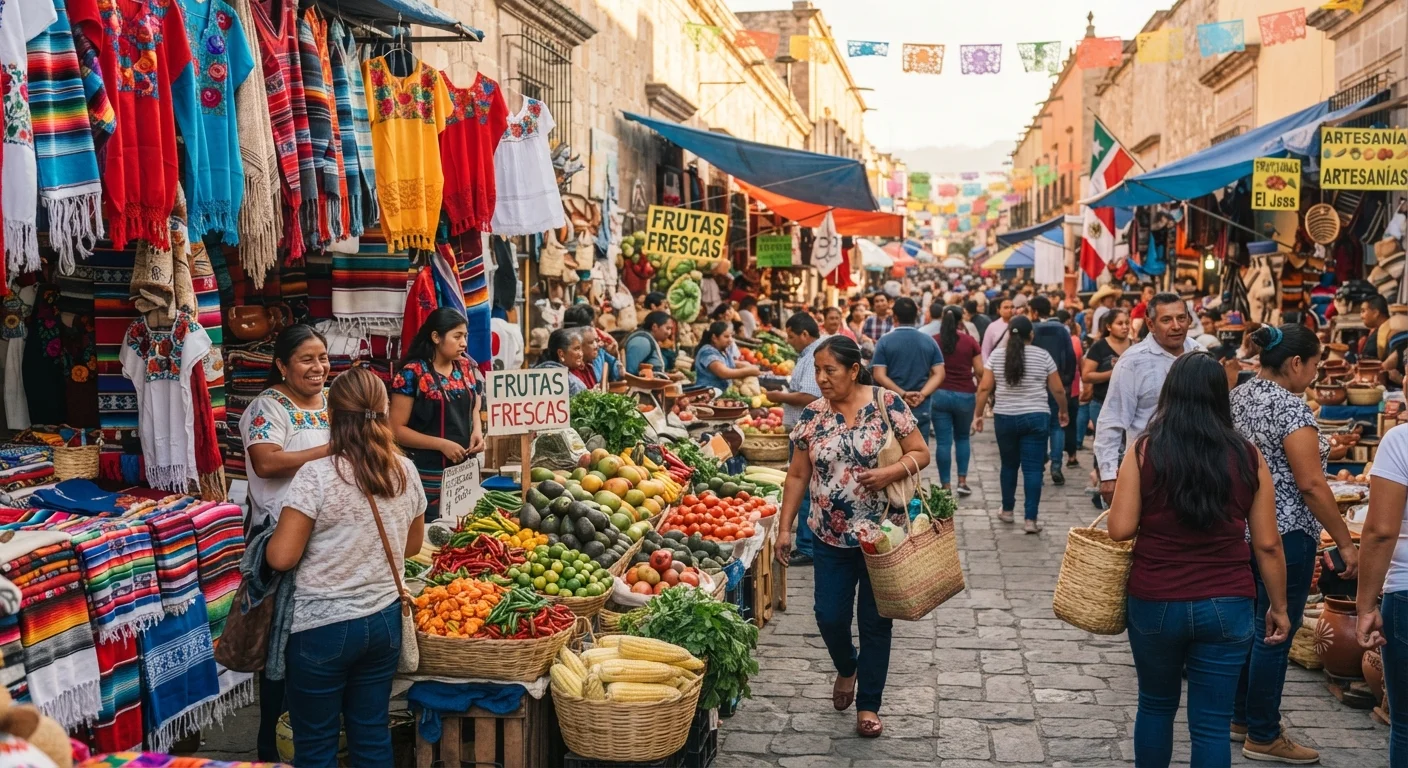
Why Mexico Gets Misread More Than Most Destinations
For many American travelers, Mexico occupies a strange mental space - simultaneously one of the most visited foreign countries by U.S. citizens and one of the most misunderstood. Persistent myths, media coverage that skews toward violence and instability, and a resort industry that has little incentive to show visitors anything beyond the pool all conspire to keep the fuller picture out of reach.
Mexico shares a nearly 2,000-mile border with the United States, receives tens of millions of American visitors annually, and contains an enormous range of landscapes, cultures, cuisines, and urban environments. Treating it as a single monolithic destination - either uniformly dangerous or uniformly resort-friendly - flattens a country of extraordinary complexity. What follows are some of the most common misconceptions, corrected with more nuance than a travel brochure is likely to offer.
For a useful comparison of how destination myths play out elsewhere, see our guide to planning a trip to Costa Rica, which faces its own share of gap between perception and reality.
Myth
Mexico is too dangerous for American tourists right now.
Fact
Risk in Mexico is highly localized. Many popular destinations - including Mexico City, Oaxaca, the Yucatán Peninsula, and Los Cabos - have safety profiles that are meaningfully different from areas flagged in travel advisories.
The U.S. State Department issues travel advisories at the state level, not for Mexico as a whole. Some Mexican states carry a "Do Not Travel" designation, while others rate as "Exercise Normal Precautions" - the same level assigned to many European countries. Millions of American tourists visit Mexico annually without incident. That doesn't mean risk is absent, but it means the risk picture is specific, not universal. Checking the current advisory for your specific destination - not for "Mexico" in the abstract - is the right starting point.
Myth
You'll spend the whole trip sick from the food or water.
Fact
Traveler's diarrhea is a real risk in some areas, but it's manageable and far from inevitable, particularly in higher-end restaurants and tourist-frequented establishments in major cities.
Tap water in most Mexican cities is not safe to drink, and that guideline holds. But the food itself - prepared properly, from reputable vendors - is not inherently unsafe. Street food in Mexico City, for instance, is eaten daily by millions of locals and visitors without illness. Reasonable precautions (bottled or purified water, being selective about raw produce, choosing busy food stalls with high turnover) reduce risk substantially. Blanket avoidance of Mexican food on hygiene grounds causes travelers to miss one of the genuinely great food cultures in the world.
Myth
Mexican food is basically the same as Tex-Mex - tacos, burritos, nachos.
Fact
Mexican cuisine is one of the most regionally diverse food traditions in the world, recognized by UNESCO. Tex-Mex is a distinct American regional cuisine with Mexican roots, not a representative sample of what people eat in Mexico.
Oaxacan cuisine features mole sauces built from dozens of ingredients; Yucatán cooking reflects Mayan heritage and uses achiote and citrus in ways rarely seen elsewhere; Veracruz food draws heavily on Spanish and Afro-Caribbean influence. Even the taco, eaten widely across Mexico, changes dramatically in ingredients, tortilla style, and preparation depending on the region. Travelers who arrive expecting familiar Tex-Mex flavors are often surprised - and, once they adjust expectations, pleasantly so.
Myth
Staying at an all-inclusive resort means you're seeing Mexico.
Fact
All-inclusive resorts in Cancún, Los Cabos, and similar zones are largely self-contained environments designed to keep guests on property. They offer comfort and convenience, but limited exposure to Mexican culture, food, or urban life.
There's nothing wrong with choosing a resort vacation - it delivers a predictable, low-stress experience that many travelers genuinely want. But calling it a trip to Mexico in any cultural or experiential sense overstates what's happening. The architecture, the staff interactions, and the buffet are not representative of life in Mexico. Travelers who want more depth - local markets, regional cooking, colonial architecture, independent hotels - have to actively seek it out, and it's very much available. The two types of trip can even be combined: a few resort days alongside day trips or urban stays in nearby cities.
Myth
You don't need to learn any Spanish - everyone speaks English in tourist areas.
Fact
English is widely spoken in heavily touristed zones, but fluency is inconsistent. Even basic Spanish dramatically improves the quality of interactions outside resort corridors.
In Cancún hotel zones and Los Cabos marinas, English is common. Venture fifteen minutes off the main strip, or travel to cities like Mérida, Oaxaca, or Guadalajara, and the proportion of English speakers drops considerably. Travelers who rely entirely on English in those contexts will manage, but they'll miss a great deal - and occasionally struggle. Learning a handful of phrases (greetings, ordering food, asking for directions, numbers) signals respect and opens doors that staying in tourist-English mode keeps closed.
What This Means for How You Plan
The practical upshot of clearing away these myths is that you can plan with more precision. Instead of avoiding Mexico based on a generalized fear, you can research the specific region you're considering, check current U.S. State Department travel advisories (which rate by state, not the whole country), and make decisions grounded in actual conditions rather than composite impressions.
35M+
American tourists visiting Mexico annually
Mexico consistently ranks as one of the top international destinations for U.S. travelers, according to figures from Mexico's tourism ministry.
31
Mexican states with individualized U.S. travel advisories
The U.S. State Department issues separate advisories for each Mexican state, ranging from Level 1 (Normal Precautions) to Level 4 (Do Not Travel), reflecting that risk is not uniform across the country.
Instead of assuming a resort package covers everything, you can weigh what a more independent itinerary might look like - and what it might cost. And instead of expecting Mexican food to taste like the combination plates at your neighborhood Tex-Mex chain, you can arrive ready to eat something genuinely different and better.
Travelers who approach destinations with calibrated expectations tend to make smarter choices about timing, accommodation, and activities. Our piece on destination decisions travelers tend to regret covers how mismatched expectations are the root cause of most travel disappointment - and Mexico is a prime example of that dynamic in action.
Always Verify Entry and Safety Information Officially
Travel advisories, visa requirements, and local regulations in Mexico can change. Before any trip, check the U.S. State Department's Mexico travel advisory page and the Mexican government's official entry requirements for the most current information. Do not rely solely on travel forums or tourism marketing materials for safety-critical decisions.
If you're sorting out the logistics of how to book, our overview of booking directly vs. through a third party addresses some of the assumptions travelers carry into that decision as well. More practical guidance is available through our travel tips hub.
The content on this site is provided for informational purposes only and should not be considered a substitute for professional advice. While we strive to provide accurate and up-to-date information, we make no guarantees regarding its completeness or accuracy. Always consult a qualified professional for advice specific to your circumstances before making any decisions.