

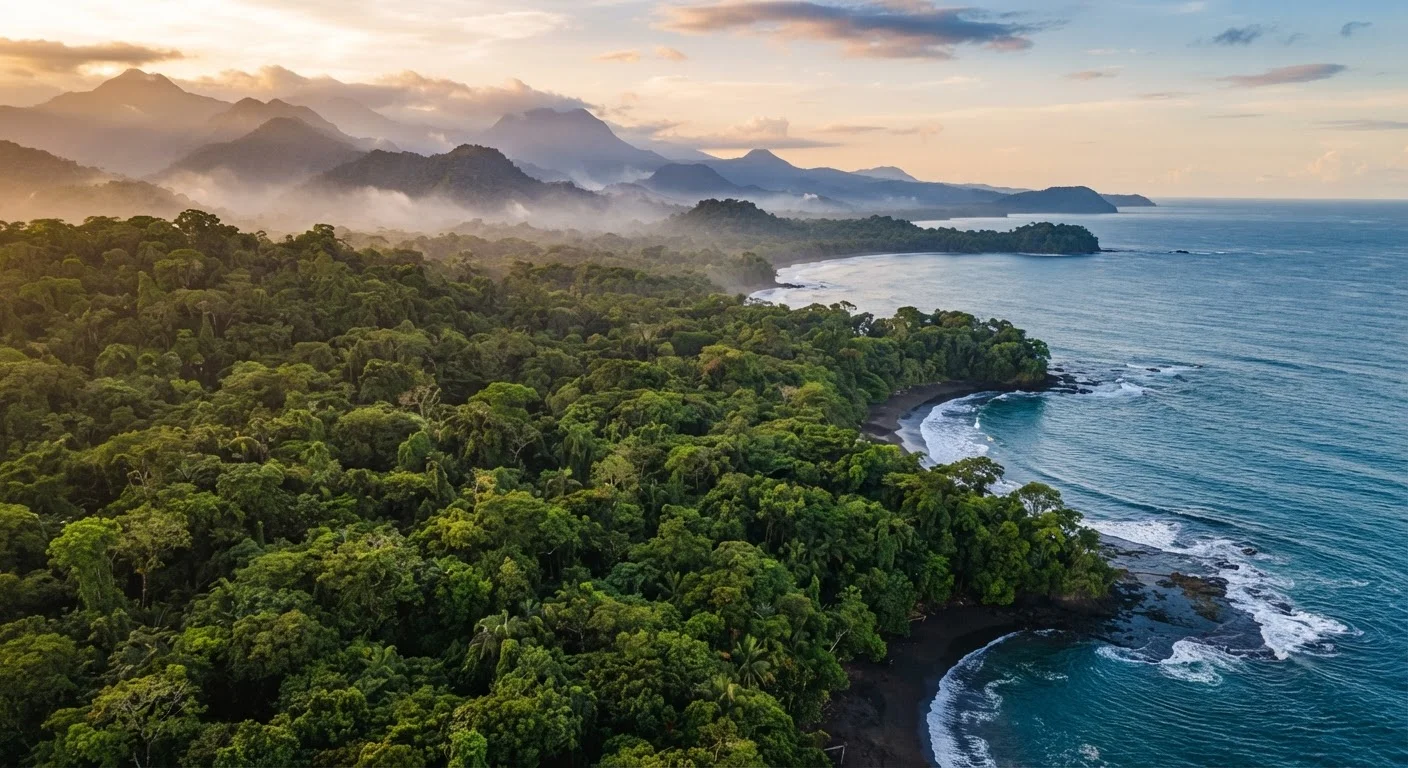
Why Costa Rica Works Differently Than Most Destinations
Costa Rica is roughly the size of West Virginia, but its ecological diversity makes it feel like multiple countries stacked together. That compression is its biggest asset - and its most common planning trap. Travelers often expect to cover rainforests, volcanoes, and beaches in a single week without fully accounting for how long it actually takes to get between them.
A route that looks like 90 miles on a map can take four hours on mountain roads. Infrastructure varies sharply by region. Some areas have well-developed tourism amenities; others are intentionally remote. Before you book anything, it helps to understand the country's major regions as distinct ecosystems with different characters, access points, and trade-offs.
This guide is structured around those regions. It's designed to help you match your interests and travel style to where you actually go - rather than trying to visit everything and feeling rushed throughout. For a broader framework on how to sequence your research, see our trip planning overview.
25%
Land protected as national parks or reserves
Costa Rica has set aside approximately one-quarter of its territory in some form of protected area, one of the highest proportions globally.
500+
Bird species recorded in Costa Rica
The country's varied elevation zones support extraordinary avian biodiversity, making it a primary destination for birding travelers from around the world.
4-5 hrs
Typical drive: San José to Osa Peninsula
Road travel times in Costa Rica routinely exceed map-distance expectations due to mountain terrain and road quality - plan transit days accordingly.
The Central Valley and Highlands
San José, the capital, sits inside the Central Valley at roughly 3,800 feet elevation. Most international flights arrive here, and many travelers treat it purely as a transit point - which is a reasonable choice, but the surrounding highlands offer more than people expect.
The Poás and Irazú volcanoes are accessible as day trips from the capital. The cloud forest town of Monteverde, while technically requiring a cross-country drive or domestic flight, is often mentally grouped with this interior zone because of its altitude and temperate feel. Monteverde is one of the most visited destinations in the country, and for good reason: the canopy walks, hummingbird gardens, and wildlife diversity are legitimate. Book accommodation ahead during high season (December-April).
The Central Valley also contains the town of Sarchí, known for traditional craftwork, and the colonial-era city of Cartago, which gives some cultural texture to what can otherwise feel like a purely nature-focused itinerary.
The Pacific Coast: North and South
Costa Rica's Pacific side divides into two distinct personalities. The Guanacaste region in the northwest - including the Nicoya Peninsula - is drier, sunnier, and more developed for beach tourism. This is where you'll find surf towns like Tamarindo, as well as quieter spots along the peninsula that require longer drives down unpaved roads. Guanacaste has its own regional airport (Liberia), which many travelers prefer to avoid the San José connection entirely.
The South Pacific - anchored by areas like Dominical and the Osa Peninsula - is wetter, wilder, and considerably less developed. The Osa Peninsula contains Corcovado National Park, which conservation biologists have described as one of the most biologically intense places on earth. Access is genuinely difficult: small charter flights or multi-hour drives on roads that become impassable in heavy rain. That difficulty filters the crowd, which is part of the appeal.
On the South Pacific coast, book any Corcovado excursion through a certified guide before arrival - park regulations require it, and permit availability genuinely limits access.
Corcovado has strict visitor management policies to protect its ecosystem; showing up without a pre-arranged guide and permit typically means you won't enter.
Request a room that doesn't face the main road in busy Pacific surf towns - noise levels at night can be significant in peak season.
Nightlife activity in towns like Tamarindo runs late, and light sleepers who don't account for this often find their experience negatively affected in ways advance planning easily prevents.
Between these two zones sits the Central Pacific coast - Manuel Antonio is the main draw here, offering a well-maintained national park with good wildlife visibility (white-faced capuchins, two-toed sloths, scarlet macaws) at a much easier access level. It's arguably the most visitor-friendly wildlife experience in the country, which also means it's heavily visited.
The Caribbean Coast
The Caribbean side operates on a completely different rhythm - culturally, ecologically, and meteorologically. Afro-Caribbean heritage shapes the food, music, and architecture of towns like Puerto Viejo de Talamanca. The cuisine shifts to rice and beans cooked in coconut milk, and the overall pace is slower and less commercialized than Pacific resort areas.
Crucially, the Caribbean coast's rainy and dry seasons are nearly the inverse of the Pacific. September and October tend to be drier on the Caribbean side, while the Pacific coast sees peak rain. This asymmetry is genuinely useful for trip planning if you're visiting during mid-year.
Tortuguero National Park, accessible only by boat or small plane, is one of the premier sea turtle nesting sites in the Western Hemisphere. Nesting season for green turtles runs roughly July through October, though exact timing varies annually. Verify current conditions and access logistics with tour operators before committing, as routes and regulations can change.
Arenal and the Northern Lowlands
Arenal Volcano is the country's most iconic landmark and one of its most visited destinations. The cone-shaped stratovolcano looms over the town of La Fortuna, which has grown substantially around tourism infrastructure - hot springs, white-water rafting, zip lines, and boat tours on Lake Arenal are all well-established here.
One honest note: Arenal is often cloud-covered, particularly in the afternoon. Many visitors spend multiple days hoping for a clear view and don't get one. That's not a reason to skip it - the surrounding activities stand on their own - but it's worth calibrating expectations rather than centering your trip around a volcano sighting that weather may not cooperate with.
North of Arenal, the lowland plains stretch toward Nicaragua. This region - including areas like Caño Negro Wildlife Refuge - sees far fewer tourists and offers boat-based wildlife watching (caimans, river otters, waterbirds) in a less curated environment. It suits travelers who want to move beyond the well-worn itinerary.
What to Realistically Expect
Costa Rica is a well-established tourism destination with solid infrastructure in most popular areas. Prices have risen meaningfully over the past decade; it is no longer a budget destination by Central American standards. Lodging, tours, and food in high-traffic areas reflect that positioning.
Wildlife encounters depend heavily on timing, guide quality, and patience. Hiring a local naturalist guide dramatically increases what you actually see - an untrained eye will miss animals a guide spots in seconds. Entry fees for national parks have also increased; verify current pricing through official sources before you go.
Road and Weather Conditions Can Change Plans
During rainy season, river crossings and unpaved roads in remote areas can become impassable within hours of heavy rainfall. Always check current conditions locally before setting out on rural routes, and travel with a vehicle that has adequate ground clearance for the area you're entering. Travel insurance that covers trip interruptions is worth considering - verify coverage details directly with your provider.
For first-time visitors weighing where to focus, a practical split is to choose one or two regions rather than attempting a full loop. The classic combination of Arenal plus one coast (Pacific or Caribbean based on season and preference) gives enough variety without punishing transit time. If you're weighing Costa Rica against other regional options, our breakdown of common misconceptions about Mexico and what sets Caribbean islands apart can help you compare destinations more objectively. Travelers who want a budgeting framework before committing to a destination may also find it useful to read how to plan around a budget versus a destination.
The content on this site is provided for informational purposes only and should not be considered a substitute for professional advice. While we strive to provide accurate and up-to-date information, we make no guarantees regarding its completeness or accuracy. Always consult a qualified professional for advice specific to your circumstances before making any decisions.