

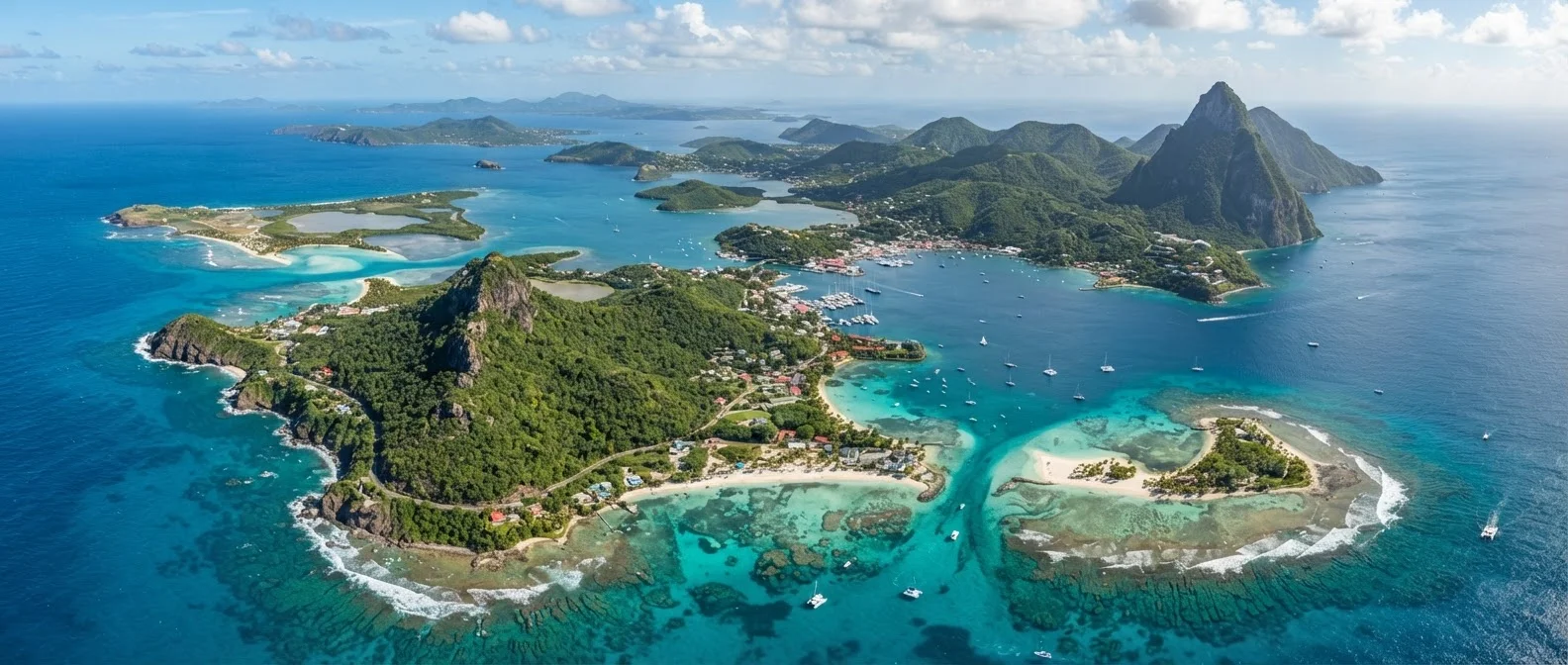
Why 'The Caribbean' Isn't One Place
When Americans say they're "going to the Caribbean," they could mean dozens of wildly different travel experiences. Jamaica and the Cayman Islands are about 180 miles apart, yet they differ in language emphasis, terrain, nightlife culture, and the type of traveler each tends to attract. Lumping the region together leads to mismatched expectations - and disappointed trips.
The Caribbean is best understood as a geographic umbrella, not a unified destination. Its islands span more than 1,700 miles from northwest to southeast and were colonized by at least six different European powers, leaving behind distinct languages, legal systems, cuisines, and architectural traditions. Understanding these differences before you book is one of the most practical things you can do as a traveler.
Just as Hawaii's islands each carry their own character, Caribbean islands require the same kind of island-by-island thinking - not a one-size-fits-all approach.
The Greater Antilles: Bigger Islands, More Variety
The Greater Antilles - Cuba, Jamaica, Hispaniola (shared by Haiti and the Dominican Republic), and Puerto Rico - are the Caribbean's largest islands. Their size means more interior terrain: mountains, rivers, rainforests, and agricultural valleys alongside their coastlines. If you want landscape diversity within a single trip, these islands offer it.
Puerto Rico is a U.S. territory, so American citizens need no passport and can use U.S. dollars. San Juan offers urban culture, colonial architecture, and a functioning metro area. El Yunque National Forest is the only tropical rainforest in the U.S. National Forest system.
Jamaica is an independent English-speaking nation with a strong distinct cultural identity - reggae, Rastafari traditions, jerk cuisine, and Blue Mountain coffee are all rooted here, not generic Caribbean exports. The island's interior highlands are often overlooked by beach-resort visitors.
The Dominican Republic offers some of the Caribbean's most developed all-inclusive resort infrastructure alongside significant poverty, complex history, and terrain ranging from Caribbean beaches to Pico Duarte - the highest peak in the entire Caribbean at over 10,000 feet.
700+
Islands, islets, and cays in the Caribbean
According to geographic surveys of the Caribbean Sea basin, the region contains more than 700 individual land masses of varying size.
6
Primary European colonial languages still spoken today
English, Spanish, French, Dutch, Danish (historical), and their Creole derivatives all left lasting linguistic imprints across the region.
10,164 ft
Height of Pico Duarte, Caribbean's highest peak
Located in the Dominican Republic, Pico Duarte is the highest mountain in the entire Caribbean island chain.
The Lesser Antilles: Smaller, But Far From Uniform
The Lesser Antilles form a chain of smaller islands running from the Virgin Islands south to Grenada and east toward Barbados and Trinidad. They split further into the Windward Islands (more exposed to Atlantic weather) and the Leeward Islands (more sheltered). Political identity here is particularly diverse.
Martinique and Guadeloupe are French overseas departments - they use the euro, French is the primary language, and they operate under French law. You'll find French bakeries and Creole cuisine side by side.
Aruba, Bonaire, and Curaçao - the ABC islands - are Dutch constituent countries sitting close to Venezuela. They're notably drier than most Caribbean islands, with cacti landscapes instead of dense jungle, and sit largely outside the main hurricane belt.
Barbados has English as its official language but a culturally distinct Bajan identity, a well-developed tourism infrastructure, and a reputation for relatively strong public safety compared to some regional neighbors.
Dominica (not to be confused with the Dominican Republic) is often called the Nature Isle - it's rugged, volcanic, and genuinely underdeveloped for mass tourism. If you want ecotourism over beach lounging, it's a different experience than nearly anywhere else in the region.
“The Caribbean is not a monolith. Its islands are products of vastly different histories, ecologies, and peoples - and treating them as interchangeable does a disservice to all of them.”
— Polly Pattullo, Author of 'Last Resorts: The Cost of Tourism in the Caribbean'
What This Means When You're Planning
Entry requirements, currency, language, and safety conditions are not consistent across the Caribbean. Before booking, confirm whether your destination requires a passport, what currency is accepted, and whether the U.S. State Department has any current travel advisories in effect. These conditions can and do change.
Consider what kind of trip you actually want. If you want resort infrastructure, flat beaches, and calm water, islands like the Turks and Caicos, Aruba, or the Cayman Islands are commonly cited for those qualities. If you want hiking, waterfalls, and cultural immersion, volcanic islands like St. Lucia, Dominica, or the interior of Jamaica offer something structurally different.
Travelers comparing the Caribbean to other warm-weather destinations with regional variation - like Costa Rica's distinct ecosystems and regions - will find a similar truth: geography and political history shape the on-the-ground experience more than the regional label does.
The Caribbean rewards specific research over generic assumptions. Knowing which island you're going to - and why - is the difference between a trip that meets your expectations and one that doesn't.
Frequently Asked Questions
It depends on the island. U.S. territories like Puerto Rico and the U.S. Virgin Islands require no passport for American citizens. Most independent Caribbean nations - including Jamaica, the Bahamas, and the Dominican Republic - require a valid U.S. passport. Always verify current requirements with the U.S. Department of State before travel.
Safety conditions vary by island and can change over time. Islands like Aruba, Barbados, and the Cayman Islands have historically had lower crime rates in tourist areas, but no destination is without risk. Check current U.S. State Department travel advisories for the specific islands you're considering.
December through April is generally considered peak season - drier, cooler, and less hurricane risk. Hurricane season runs approximately June through November, with peak activity in August and September. The southern Caribbean islands (like Aruba and Trinidad) sit outside the main hurricane belt and see fewer impacts.
Most have tropical climates, but terrain varies widely. Some islands - like Dominica and St. Lucia - are dominated by dense rainforest and volcanic peaks with relatively few wide sandy beaches. Others, like Aruba and the Turks and Caicos, are flat and arid with extensive white-sand coastlines.
The Caribbean has no single language. English, Spanish, French, and Dutch are all official languages on different islands. Many islands also have distinct Creole languages - like Haitian Creole or Papiamentu in the Dutch ABC islands - that reflect their layered colonial and African heritage.
No - they share the island of Hispaniola (Dominican Republic) and are separate geographically and politically. Puerto Rico is a U.S. territory where Spanish and English are widely spoken and no passport is needed for Americans. The Dominican Republic is an independent nation with Spanish as its primary language and passport entry requirements for U.S. citizens.
The content on this site is provided for informational purposes only and should not be considered a substitute for professional advice. While we strive to provide accurate and up-to-date information, we make no guarantees regarding its completeness or accuracy. Always consult a qualified professional for advice specific to your circumstances before making any decisions.