

How Zero-Based Budgeting Actually Works
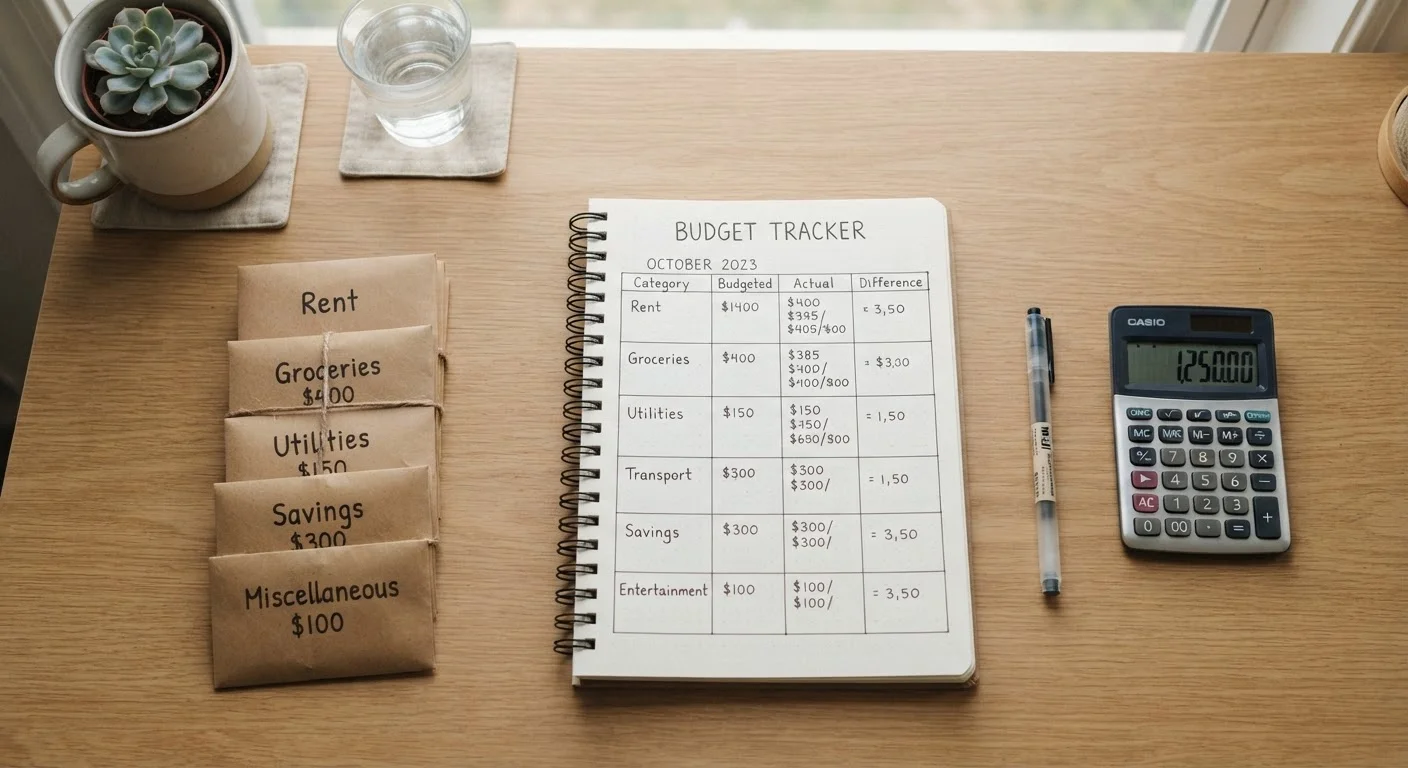
The process follows a straightforward sequence each month. First, you write down your total expected take-home income. Then you list every category of spending and saving until those two numbers match - income minus total allocations equals zero. Categories can include rent, groceries, utilities, transportation, clothing, entertainment, emergency savings, retirement contributions, and debt payments.
What makes ZBB distinct from a loose spending plan is that every category requires a deliberate decision. You're not estimating in broad strokes. You're deciding, in advance, that $320 goes to groceries, $150 to gas, $200 to debt repayment, and $100 to a vacation fund. Nothing is left undefined.
Once the month begins, the work shifts to tracking. If you spend $340 at the grocery store instead of $320, you need to pull $20 from another category - maybe dining out or entertainment. This real-time adjustment is what keeps the budget accurate and honest. For a practical system to help with that tracking, see our guide on tracking where your money actually goes.
Start With Last Month's Bank Statement
Before building your first zero-based budget, pull your last 30 days of transactions and tally what you actually spent by category. This gives you a realistic baseline for how much to allocate - rather than guessing - and often reveals spending patterns you hadn't noticed. You can refine category amounts in month two once you have real data to work from.
Why People Choose This Method
The core appeal of zero-based budgeting is intentionality. Because every dollar has a named destination, habitual or unnoticed spending gets exposed. Many people who try ZBB for the first time discover they were allocating significant amounts to vague categories - or to nothing at all - simply because they'd never been asked to account for every dollar explicitly.
~$300
Average monthly spending underestimate
Consumer finance researchers consistently find that people underestimate their discretionary spending by several hundred dollars monthly when not actively tracking - a gap ZBB is specifically designed to close.
1 in 3
Americans with no monthly budget
Surveys by the National Foundation for Credit Counseling and similar organizations have repeatedly found that roughly one-third of U.S. adults do not follow any formal monthly budget.
ZBB also tends to align well with specific financial goals. Whether someone is paying down credit card debt, building a three-month emergency fund, or saving for a home, the method creates a direct line between income and goal. Savings isn't what's left at the end of the month - it's a line item that gets funded before discretionary spending fills in.
For readers who've heard that budgeting is restrictive or only necessary during hard times, our piece on budgeting myths that keep people from starting addresses those assumptions directly.
The Honest Tradeoffs
Zero-based budgeting demands more time and attention than percentage-based methods. Creating a new budget from scratch each month - rather than rolling over the same figures - takes effort. Tracking spending in real time, especially across multiple spending categories, requires a consistent habit. For people with simple finances or limited time, a lighter-touch framework may be more sustainable.
It can also feel rigid. Life doesn't always fit neatly into predetermined categories, and unexpected expenses (a car repair, a medical bill) can throw off even a carefully planned budget. The method works best when users treat it as a flexible guide, not an immovable ruleset - adjusting categories mid-month when reality diverges from the plan.
If you're weighing ZBB against other approaches, the 50/30/20 rule vs. envelope budgeting offers a useful side-by-side look at two other popular frameworks. And once you've run ZBB for a few months, a monthly budget audit checklist can help you catch drift and realign categories before small overages compound.
This article is for general informational purposes only and does not constitute personalized financial advice. Consult a qualified financial professional for guidance specific to your situation.
Frequently Asked Questions
No - savings is a budget category just like rent or groceries. You assign dollars to a savings category before the month starts, so saving becomes intentional rather than leftover. The method actually reinforces consistent saving by making it a line item, not an afterthought.
The 50/30/20 rule assigns income in broad percentage buckets (needs, wants, savings), while ZBB assigns every specific dollar to a named category. ZBB requires more granular planning and ongoing tracking, whereas 50/30/20 offers a simpler high-level framework. Both aim at intentional spending with different levels of detail.
You move money from another category to cover the shortfall. This is called a budget adjustment, and it's expected - especially early on. The key is to update your budget in real time rather than ignore the overage, which is what makes ZBB a living document rather than a one-time exercise.
Yes, though it requires a different starting point. Many people with variable income budget using their lowest typical monthly income as the baseline, then assign any additional income when it arrives. Prioritizing essential categories first gives the budget a stable foundation even when earnings fluctuate.
No - a spreadsheet or even a paper notebook works fine. Several budgeting apps are built around the ZBB concept, but the method itself requires nothing more than knowing your income and listing your categories. Starting simple often helps new budgeters build the habit before adding tools.
The content on this site is provided for informational purposes only and should not be considered a substitute for professional advice. While we strive to provide accurate and up-to-date information, we make no guarantees regarding its completeness or accuracy. Always consult a qualified professional for advice specific to your circumstances before making any decisions.