

How Planned Obsolescence Actually Works
The term was popularized in the 1950s, but the practice predates it. The idea is straightforward: if products last indefinitely, customers stop buying. So some manufacturers engineer products with a ceiling on their useful life - either by making components difficult or impossible to replace, or by controlling the software ecosystem that keeps the product functional.
There are two primary mechanisms worth knowing:
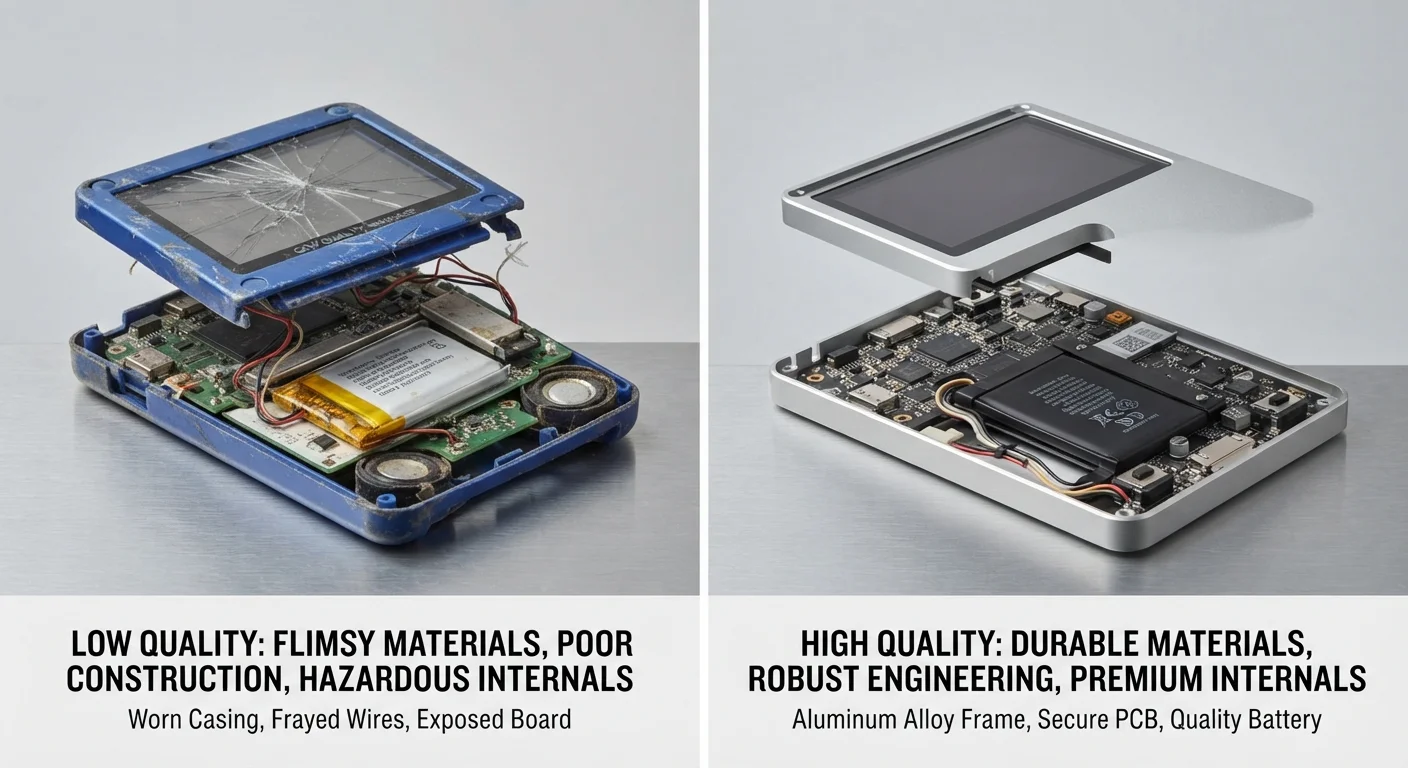
- Physical obsolescence: Components are made non-replaceable (glued batteries, soldered RAM), low-grade materials are used in high-wear areas, or parts simply aren't made available for consumer repair.
- Software and ecosystem obsolescence: A manufacturer ends software support for older models, requiring an upgrade to access security patches or key features. Proprietary accessories and connectors make switching costly.
Both forms serve the same function - shortening the gap between purchase and repurchase. Understanding which type you're dealing with helps you choose more strategically.
Obsolescence Isn't Always Intentional
Not every product failure reflects a deliberate strategy. Component shortages, evolving safety standards, and genuine technological leaps can all shorten a product's useful life without any cynical intent. The practical question for shoppers is the same regardless: how long can this product realistically serve me, and what happens when it doesn't?
Signals to Watch Before You Buy
The good news: the signs of built-in obsolescence are usually visible before purchase if you know where to look.
Repairability
Organizations like iFixit publish repairability scores for consumer electronics that grade how easy it is to access, disassemble, and replace components. A low score often means that when one part fails, the whole unit is effectively disposable. Pair this with a search for replacement parts availability - if third-party parts don't exist and the manufacturer doesn't sell them, the product has a hard ceiling on its serviceable life.
Warranty terms
Warranty length is an imperfect but useful signal. Short warranties on high-cost items suggest the manufacturer has limited confidence in longevity. More importantly, read what the warranty actually covers - warranty fine print frequently excludes the components most likely to fail first.
Software support timelines
For any connected device, ask how long the manufacturer commits to software and security updates. Some manufacturers publish this explicitly; others don't, which is itself informative. A smart TV or appliance that loses app support in three years may still work physically but lose meaningful functionality.
Before any significant purchase, running through a structured evaluation - including these signals - pays dividends. See our pre-purchase research checklist for a step-by-step approach.
Check Repairability Before You Commit
Before purchasing any electronics or appliance, search the product name alongside 'repairability score' or 'iFixit score.' A score of 7 or above out of 10 generally indicates the product can be meaningfully repaired. Also check whether replacement parts - batteries, screens, motors - are sold separately by the manufacturer or third parties.
Shopping Around Planned Obsolescence
Recognizing the pattern doesn't mean you need to avoid entire product categories - it means you can adjust how you evaluate and time purchases.
Prioritize serviceable products
When two products are functionally comparable, favor the one with user-replaceable parts, available components, and documented repair guides. A product that can be fixed extends its value well beyond what a disposable equivalent offers. This is especially true for appliances, power tools, and electronics where repair is practical.
Factor in total cost of ownership
A cheaper product replaced every three years often costs more over a decade than a pricier, durable alternative. Running this basic math - especially for frequently used items - reframes the initial sticker price into a more accurate lifetime cost. Build quality versus brand name is a useful lens here: construction and materials matter more than marketing.
Time purchases to avoid early-cycle products
New product releases often come with immature software, supply-chain parts challenges, and premium pricing that drops within a year. Buying a product after its initial release cycle - when reliability data from real users is available - reduces the risk of landing a product with unresolved design flaws. Our guide to timing purchases around sale cycles can also help you plan major buys more strategically.
Invest in maintenance where it counts
For products where longevity is achievable, routine upkeep genuinely extends life. The same principle that applies to vehicle maintenance schedules - staying ahead of wear rather than reacting to failure - holds across product categories from appliances to footwear.
~50%
Americans who repaired electronics rather than replacing them
A Pew Research Center survey found roughly half of American adults attempted to repair a broken electronic device rather than replace it, though success rates varied significantly.
4-6 years
Typical software support window for mainstream smartphones
Most major smartphone manufacturers publicly commit to security updates for four to six years from a device's release date, after which software obsolescence risk increases substantially.
2-3x
Lifetime cost difference: repairable vs. disposable products
Consumer advocacy analyses have estimated that choosing repairable, durable products over frequently replaced disposable equivalents can reduce lifetime category spending by two to three times over a decade.
Frequently Asked Questions
Generally, no - designing products with a limited lifespan is not illegal in the US. However, some states have passed or proposed 'right to repair' legislation that requires manufacturers to provide parts and repair information, which partially counters the practice.
Look for high repairability scores (iFixit publishes these for electronics), strong warranty terms, widely available replacement parts, and user-serviceable components like replaceable batteries. <a href="/smart-shopping/product-knowledge/build-quality-vs-brand-name-what-actually-predicts-how-long-a-product-lasts">Build quality signals</a> are often more telling than brand reputation.
Not necessarily. Premium pricing doesn't guarantee longer support cycles or better repairability. Research the specific product's software support timeline and parts availability - those matter more than the price tag or brand name.
Right to repair refers to legislation or policies that give consumers access to parts, tools, and documentation needed to fix their own devices. It directly counters planned obsolescence by making products serviceable beyond the manufacturer's preferred replacement window.
Yes. Smart appliances, televisions, security systems, and even some vehicles receive software-dependent features that can be discontinued. A device that works physically may lose core functionality when app or firmware support ends.
Categories like cast iron cookware, mechanical tools, solid hardwood furniture, and some categories of hand tools tend to have longer functional lifespans. These products lack software dependencies and use durable materials without engineered failure points.
The content on this site is provided for informational purposes only and should not be considered a substitute for professional advice. While we strive to provide accurate and up-to-date information, we make no guarantees regarding its completeness or accuracy. Always consult a qualified professional for advice specific to your circumstances before making any decisions.