

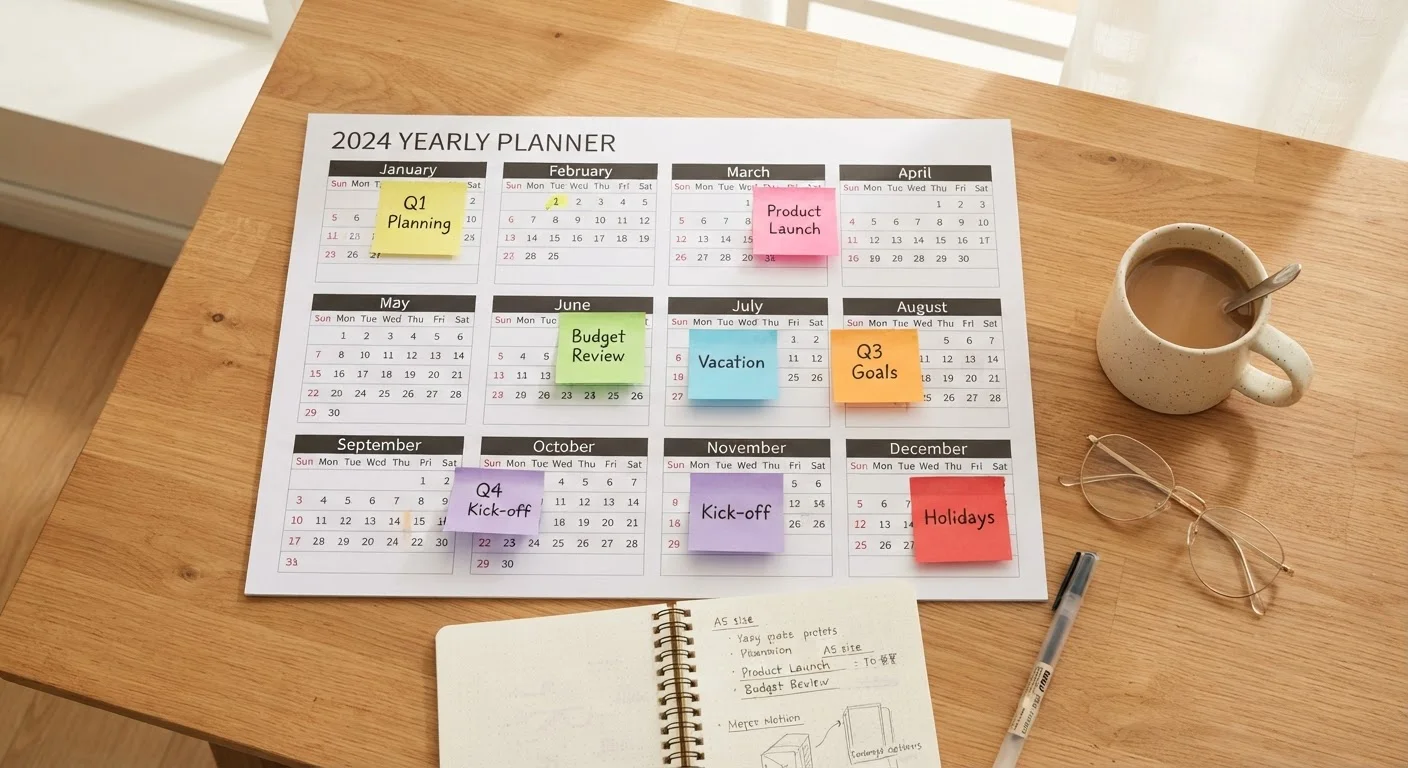
Why a Shopping Calendar Pays Off
Most people buy things when they need them, which means they rarely buy at the right time. A personal shopping calendar flips that equation: identify what you'll likely need over the next 12 months, then map those needs to the periods when prices in those categories historically drop.
Retail pricing isn't random. As our guide to the retail calendar explains, prices rise and fall according to inventory management, model-year transitions, and promotional traditions that repeat on a largely consistent annual schedule. When you understand those rhythms, you stop paying full price by accident.
The result isn't about chasing every sale - it's about reducing the number of times you pay peak price for a planned purchase.
Four Practices for Building a Useful Calendar
Getting started is a straightforward planning exercise, not a complex financial project. These practices form the core of a calendar that actually influences your spending.
Build a prioritized wish list before opening any calendar
Without a defined list, a shopping calendar has nothing to anchor it. Knowing what you actually need prevents you from filling your plan with opportunistic purchases that don't serve real priorities.
Assign a rough budget estimate to each planned item
Attaching a number to each item transforms the calendar from a vague intention into an actionable financial plan. It also helps you evaluate whether a sale price actually represents good value relative to your research.
Set price-tracking alerts well before your target window
Knowing what an item normally costs is the only way to judge whether a sale price is genuinely low. Alerts set months in advance give you a price history baseline, which makes the discount window much easier to evaluate accurately.
Review and update your calendar at the start of each quarter
Needs change, priorities shift, and items become urgent unexpectedly. A quarterly review keeps the calendar accurate and prevents you from missing a window or holding out for a sale on something you no longer need.
What to Put on the Calendar
Your calendar is only as useful as the wish list behind it. Start by auditing likely purchases for the next 12 months: appliances showing wear, clothing kids will outgrow, electronics on your list for a while, furniture replacements, or a vehicle purchase.
Then match each category to known discount windows. Our seasonal discount patterns reference guide breaks down when appliances, electronics, clothing, and furniture tend to hit their annual price lows.
20-40%
Typical seasonal discount range for major categories
Consumer research broadly finds that product categories like appliances and electronics can see reductions of this magnitude during their seasonal low windows, though results vary by retailer and year.
~72%
Shoppers who made an unplanned purchase during a sale
Consumer behavior surveys consistently find that a large majority of shoppers report making at least one unplanned purchase during a promotional sale event.
A few consistent patterns worth noting: large appliances tend to see meaningful price movement in September and October as new models arrive. Televisions often dip around major sporting events and late-winter holiday windows. Outdoor furniture typically bottoms out late in summer. Winter clothing clearance usually runs through January and February. For auto purchases, understanding the full costs of vehicle ownership helps you factor in more than just the sticker price before committing to a window.
Staying Disciplined When Sales Happen
A calendar protects you in both directions: it pushes you to wait for the right window, and it helps you resist buying things that aren't on your list. Impulse purchases during sale events are one of the most common ways shoppers end up spending more during discount periods, not less.
It also helps to understand what type of promotion you're looking at. Flash sales and sitewide promotions work very differently, and urgency built into a flash sale can push you to buy outside your planned windows. Your calendar gives you a reference point: if a category isn't due for a price valley, a flash sale on that item may not be the opportunity it appears to be.
For deeper timing strategies that complement a calendar-based approach, experienced shoppers rely on a range of methods - from model-year changeovers to post-holiday lulls - that pair well with planned purchase windows. The broader complete guide to deals and timing covers the full picture if you want to go further.
The content on this site is provided for informational purposes only and should not be considered a substitute for professional advice. While we strive to provide accurate and up-to-date information, we make no guarantees regarding its completeness or accuracy. Always consult a qualified professional for advice specific to your circumstances before making any decisions.