

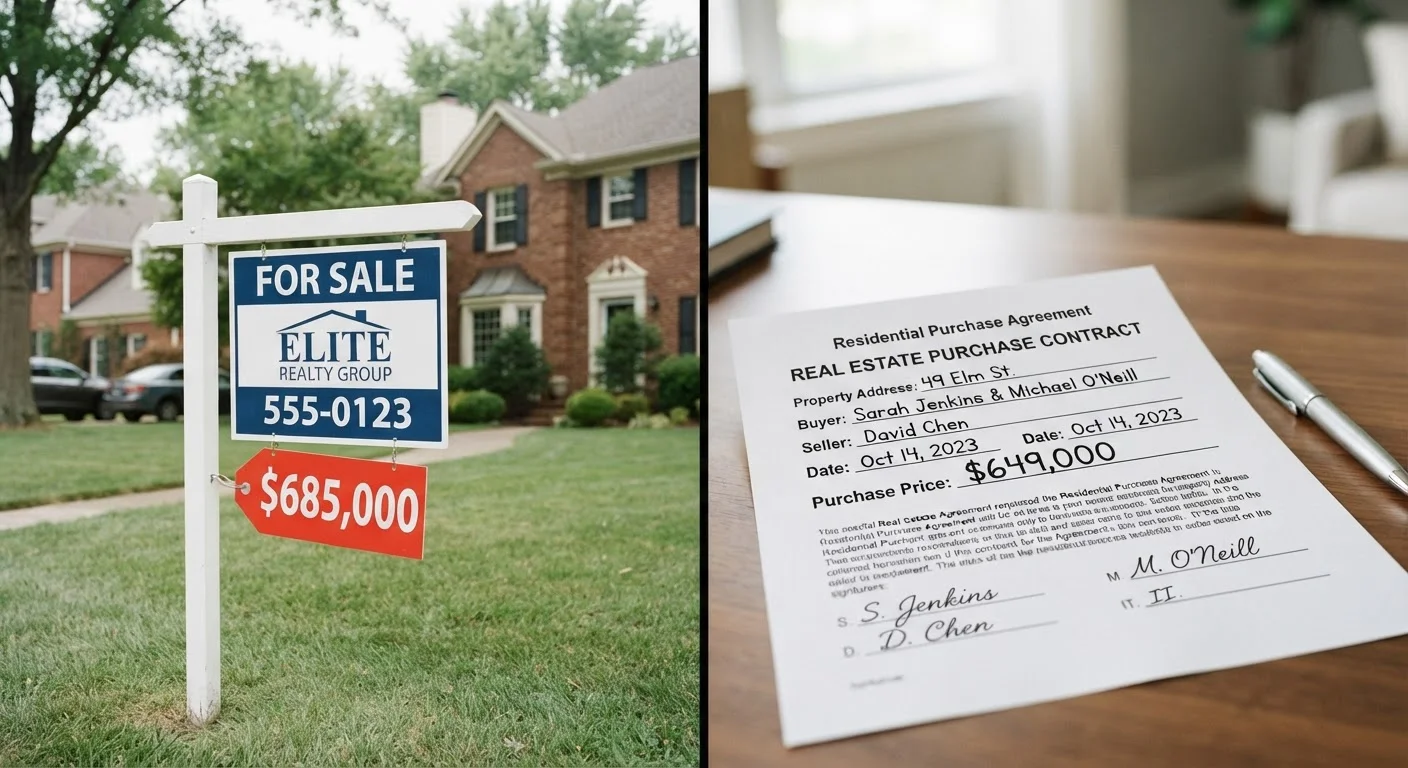
Option A
Listing Price
The seller's opening statement - aspirational and strategic.
Best for: Sellers who want to signal value, attract buyers, and anchor negotiations before a single offer arrives.
Option B
Sale Price
The agreed reality - shaped by market forces, negotiations, and concessions.
Best for: Understanding what a seller actually nets after offers, inspections, and closing costs have all been factored in.
What Each Price Actually Means
The listing price - sometimes called the asking price - is the number a seller publishes when they put a home on the market. It reflects the seller's assessment of the property's value, guided (ideally) by a comparative market analysis of recently sold homes nearby. It is, in essence, an opening bid in a negotiation.
The sale price is the figure that appears on the purchase agreement and eventually the closing statement. It represents what a buyer and seller mutually agreed to after offers, counteroffers, inspection findings, and any concessions worked through. This number is what gets recorded publicly and what shapes future comparable sales (called "comps") for the neighborhood.
The gap between them is not random. It is a measurable signal about local demand, pricing accuracy, and negotiating dynamics. Real estate professionals track a metric called the list-to-sale ratio (or sale-to-list ratio) - the sale price divided by the listing price, expressed as a percentage. A ratio above 100% means buyers paid over asking; below 100% means sellers accepted less. Understanding that ratio in your market is essential before you price a home.
List-to-Sale Ratio: A Quick Market Gauge
Your local list-to-sale ratio tells you how close sellers in your area are typically coming to their asking prices. A ratio consistently below 97% suggests a buyer's market with room to negotiate; ratios at or above 100% signal high competition. Ask your agent for the current ratio in your specific zip code or neighborhood - it is one of the most practical benchmarks for setting realistic expectations before you list.
What Drives the Gap Between Listing and Sale?
Several forces consistently push sale prices away from listing prices - in either direction.
Overpricing at the Outset
Homes priced above what comparable sales support tend to sit. The longer a listing lingers, the more buyers wonder what is wrong with it, and the more negotiating leverage shifts to the buyer. As the risks of overpricing make clear, an ambitious list price often leads to a steeper discount than a realistic one would have required.
Inspection Findings and Repair Credits
Even after an offer is accepted, the sale price can shift. Buyers routinely request credits or price reductions when a home inspection uncovers deferred maintenance, aging systems, or material defects. A roof with five years of useful life left or an HVAC system near end-of-service can translate directly into dollars off the agreed price - or seller-paid repair costs that reduce net proceeds.
Closing Cost Concessions
Sellers sometimes agree to cover a portion of the buyer's closing costs as part of the deal. These concessions don't change the headline sale price, but they reduce what the seller actually walks away with. See how closing costs are structured to understand what's commonly negotiated.
Competitive Market Conditions
In high-demand markets with limited inventory, buyers may bid above the listing price to win a home. Multiple-offer situations can push the sale price past what the seller originally asked. Conversely, in slower markets, sellers regularly accept offers 3-8% below list without much resistance.
| Criterion | Listing Price | Sale Price |
|---|---|---|
| Set by | Seller (with agent guidance) | Buyer and seller through negotiation |
| When it appears | When home hits the market | At offer acceptance and closing |
| Public record | Listed on MLS and portals | Recorded at county level post-closing |
| Affected by inspection | No | Yes - credits can reduce effective price |
| Reflects market demand | Indirectly (based on comps) | Directly (what a buyer actually paid) |
| Used in future comps | No | Yes - shapes neighborhood valuations |
| Can exceed the other | Yes - if overpriced | Yes - in competitive, multi-offer markets |
How Sellers Can Close the Gap Strategically
Closing closer to your listing price - or above it - requires deliberate preparation before the sign goes in the ground.
Price from Evidence, Not Emotion
The most effective pricing strategy is anchored in what similar homes have actually sold for in the past 90 days, adjusted for differences in size, condition, and location. A licensed real estate agent or a certified appraiser can provide this analysis. Emotional attachment to a number you have in mind - based on what you paid, what you've invested, or what you need - does not move buyers.
Address Condition Issues Before Listing
Buyers discount for uncertainty. Pre-listing inspections allow sellers to identify and resolve issues that would otherwise surface during the buyer's inspection and become leverage for a price reduction. Presenting a clean or well-documented property reduces the ammunition buyers have to negotiate down from your listing price.
Understand What Concessions Cost You
Agreeing to pay $8,000 of a buyer's closing costs is functionally the same as reducing your price by $8,000 - but it may be less visible to future comp analysis. Track all concessions as part of your true net proceeds calculation, not just the contract price. The buyer's perspective on closing costs can help you anticipate where concession requests are likely to arise.
Know When to Negotiate Beyond Price
Sometimes preserving your sale price means giving ground elsewhere. Flexible closing timelines, leaving appliances in place, or accommodating an earlier possession date can satisfy a buyer without touching the number on the contract. What sellers can negotiate beyond price is worth understanding before you receive your first offer.
This article is for general informational purposes only and does not constitute financial, legal, or real estate advice. Consult a licensed real estate professional for guidance specific to your situation and local market.
The content on this site is provided for informational purposes only and should not be considered a substitute for professional advice. While we strive to provide accurate and up-to-date information, we make no guarantees regarding its completeness or accuracy. Always consult a qualified professional for advice specific to your circumstances before making any decisions.