

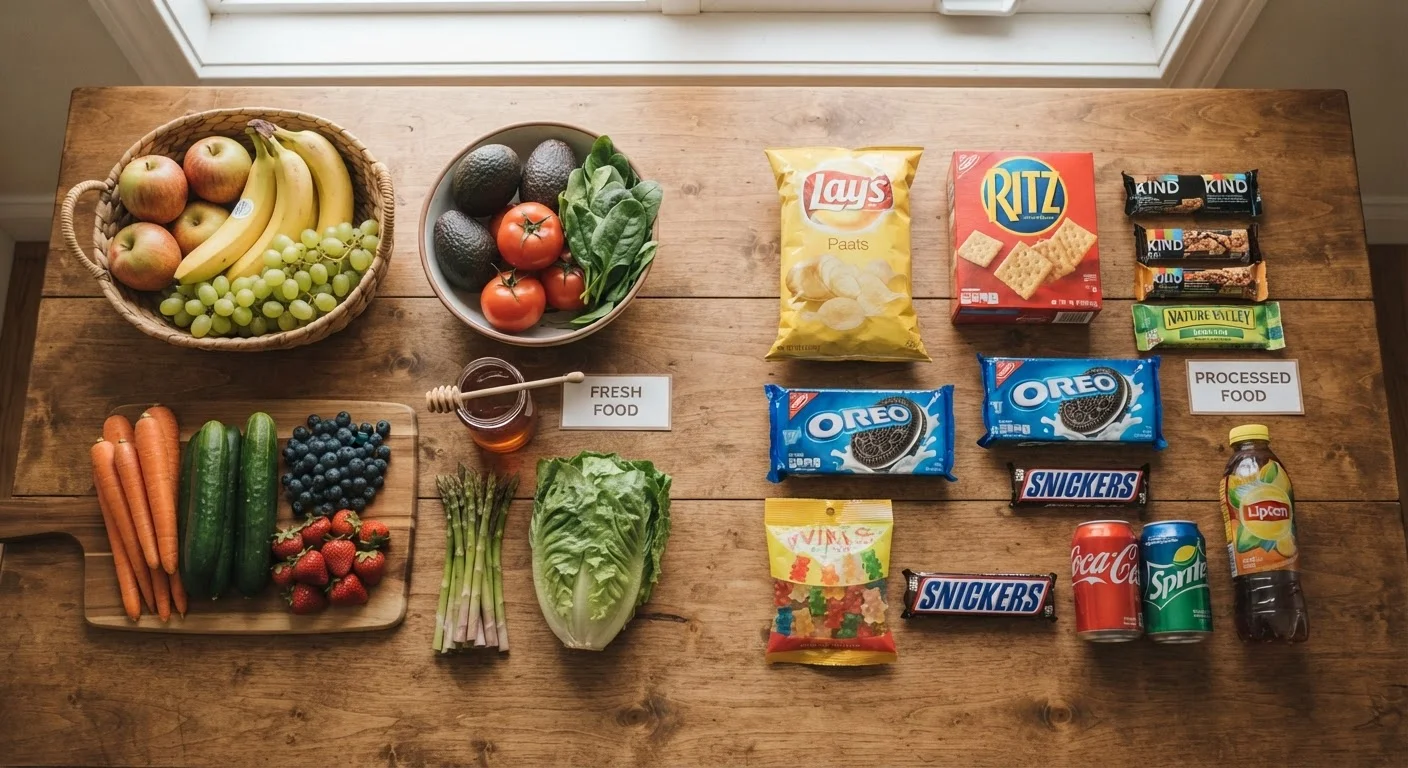
What Makes Natural Sugars Different?
When you eat an apple, a cup of plain yogurt, or a handful of carrots, you're consuming sugar - but it arrives with company. Naturally occurring sugars in whole foods are bound up with dietary fiber, water, vitamins, minerals, and plant compounds. That built-in packaging matters: fiber, in particular, slows the rate at which sugar is digested and absorbed, preventing the sharp blood sugar spikes that can follow a can of soda or a handful of candy.
Fruit contains fructose; dairy contains lactose. Neither is something to fear when consumed as part of a balanced diet built around minimally processed whole foods. The nutritional context - what else is in that food alongside the sugar - is what separates a piece of fruit from a sugar-sweetened breakfast bar claiming to contain "real fruit."
Understanding this distinction is the first step toward smarter daily choices. For a deeper look at how whole and processed foods differ, see our guide to whole foods vs. processed foods.
What Are Added Sugars - and Why Do They Matter?
Added sugars are introduced to food and drinks by manufacturers, cooks, or consumers - not found naturally within the original ingredient. Common examples include table sugar stirred into coffee, high-fructose corn syrup in soft drinks, and cane syrup baked into packaged cookies. Honey, maple syrup, and agave nectar are also added sugars when used as sweeteners, even though they come from natural sources.
The practical problem with added sugars isn't the molecules themselves - chemically, sucrose is sucrose regardless of source. The concern is what's missing around them. Foods high in added sugars typically deliver calories with little to no fiber, protein, vitamins, or minerals. Eating a lot of them regularly means crowding out more nutrient-dense choices, which can have downstream effects on energy, weight, and long-term health. Research consistently links high added-sugar intake to increased risk of conditions including cardiovascular disease and type 2 diabetes, though diet is just one piece of a complex picture.
17 tsp
Average daily added sugar intake for U.S. adults
According to data from the CDC, American adults consume an average of about 17 teaspoons of added sugar per day - well above the 6-9 teaspoon range suggested by the American Heart Association.
~39%
Share of added sugar coming from beverages
The CDC reports that sugar-sweetened beverages - including sodas, energy drinks, and sweetened coffees - account for roughly 39% of all added sugar consumed by U.S. adults.
10%
Recommended daily calorie cap from added sugars
The Dietary Guidelines for Americans recommend limiting added sugars to less than 10% of total daily calories for individuals aged 2 and older.
How to Find Added Sugars on a Label
Since 2020, the updated Nutrition Facts label required by the FDA includes a dedicated line for Added Sugars, listed in grams and as a percentage of the Daily Value. This makes it significantly easier than before to see at a glance how much added sugar a product contains - without needing a chemistry degree.
Still, ingredient lists tell an equally important story. Added sugars hide behind more than 60 names. Some of the most common include:
- High-fructose corn syrup
- Cane sugar or cane juice
- Dextrose, maltose, or sucrose
- Agave nectar or syrup
- Fruit juice concentrate (when used as a sweetener)
- Molasses, honey, or maple syrup
Ingredients are listed by weight from most to least, so if multiple sugars appear in the top five ingredients - or if one appears first - the product likely contains a substantial amount. For a full walkthrough of how to read every section of a nutrition label with confidence, visit our plain-language guide to Nutrition Facts labels.
Quick Label Check Before You Buy
Flip any packaged food over and scan the Nutrition Facts panel for the 'Added Sugars' line. As a general reference, 5% Daily Value or less is considered low, and 20% or more is considered high. Cross-check the ingredient list for multiple sugar names - they each count separately toward the total, even when individually listed lower.
Practical Ways to Reduce Added Sugar Without Deprivation
Cutting back on added sugars doesn't have to mean giving up everything sweet. Small, consistent shifts tend to be more sustainable than dramatic overhauls. A few approaches that many people find helpful:
- Choose whole fruit over juice - the fiber makes a real difference in how your body processes the sugar.
- Swap flavored yogurts for plain and add fresh fruit yourself - flavored varieties can contain surprising amounts of added sugar.
- Read labels on sauces and condiments - ketchup, barbecue sauce, salad dressings, and even pasta sauces are frequent hidden sources.
- Rethink beverages - sugary drinks are one of the largest contributors to added sugar intake in American diets. Water, unsweetened sparkling water, or plain coffee and tea are straightforward alternatives.
- Adjust gradually - if you sweeten your coffee, try reducing it a little at a time rather than all at once. Taste preferences do shift with time.
No single food or ingredient makes or breaks an overall diet. The goal is awareness, not anxiety. If you have specific health conditions - such as diabetes, heart disease, or metabolic concerns - it's worth having a conversation with a registered dietitian or your healthcare provider about sugar intake targets that make sense for your situation.
This article is for general informational and educational purposes only and is not a substitute for professional medical or nutritional advice. Always consult a qualified healthcare provider for guidance specific to your health needs.
Frequently Asked Questions
For most healthy adults, the sugar naturally found in whole fruit is not a concern. Fruit delivers fiber, vitamins, antioxidants, and water alongside its natural sugars, which slows how quickly sugar enters the bloodstream. Eating whole fruit is very different metabolically from drinking fruit juice or eating candy.
The Dietary Guidelines for Americans suggest limiting added sugars to less than 10% of total daily calories. The American Heart Association recommends even lower limits for most adults. Because individual needs differ, speaking with a healthcare provider or registered dietitian can help you identify what's appropriate for you.
Yes. Even though honey is a natural sweetener, when it is added to a recipe or product during manufacturing it is classified as an added sugar. It still contributes calories without significant additional nutrients in the amounts typically consumed.
Added sugars appear under many names: corn syrup, high-fructose corn syrup, cane juice, maltose, dextrose, sucrose, agave nectar, and molasses are all common examples. If any form of sugar appears among the first few ingredients, the product likely contains a significant amount.
The research on artificial and low-calorie sweeteners is still evolving, and health guidance on their long-term use varies. They may reduce calorie intake in the short term, but they are not universally recommended as a simple swap. Discuss your options with a qualified healthcare professional.
The content on this site is provided for informational purposes only and should not be considered a substitute for professional advice. While we strive to provide accurate and up-to-date information, we make no guarantees regarding its completeness or accuracy. Always consult a qualified professional for advice specific to your circumstances before making any decisions.