

Why Nutrition Labels Exist - and Why They Can Feel Confusing
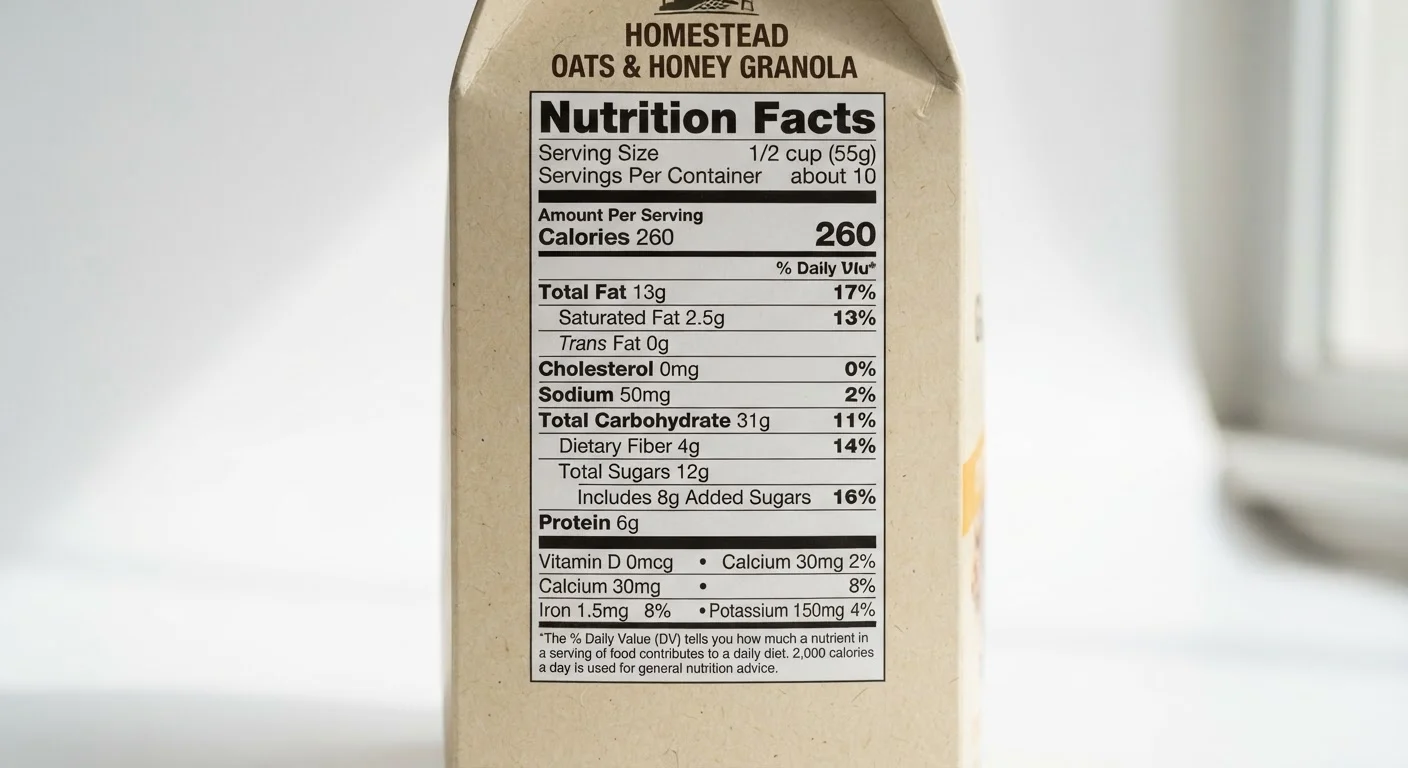
The Nutrition Facts label is a federally mandated tool, required by the FDA on most packaged foods sold in the United States. Its purpose is straightforward: give consumers consistent, standardized information so they can make informed choices. The format was last significantly updated in 2020, adding clearer serving sizes, a dedicated line for added sugars, and larger calorie type.
Despite that clarity, labels can still feel overwhelming in a grocery aisle. You're scanning small print, comparing numbers across products, and trying to remember which nutrients matter - all while keeping a shopping cart moving. This walkthrough breaks the label into manageable parts so each section makes intuitive sense.
What you will need
If you're also thinking about how your overall shopping habits shape what ends up in your cart, our piece on grocery habits and nutrition goals offers useful context.
A food package with a Nutrition Facts label
Provides the real-world label you will practice reading through each step.
Pen and notepad (or notes app)
Useful for jotting down serving size and key nutrient figures while comparing products.
Reading the Label Step by Step
Start with Serving Size and Servings Per Container
The very top of every Nutrition Facts label shows two lines: serving size and servings per container. This is the most important section because every other number on the label - calories, fat, sodium, everything - applies to one serving, not the whole package.
If a bag of chips lists a serving size of 1 oz (about 28 g) and contains 3 servings, eating the whole bag means tripling every number you see. Check this line before anything else.
Check the Calorie Count
Calories appear in large, bold print directly below the serving information. This number tells you how much energy one serving provides. For a deeper look at what calories actually represent and how energy balance works, see our plain-language guide to calories and energy balance.
Calorie count alone doesn't tell you much about the quality of a food - a serving of almonds and a serving of candy may have similar calories, but very different nutritional profiles. Use calories as one data point, not the only one.
Identify Nutrients to Limit
The label lists several nutrients you generally want to keep on the lower end of your daily intake:
- Saturated fat: Linked to cardiovascular risk when consumed in excess. Look for a lower % Daily Value.
- Sodium: High sodium intake is associated with elevated blood pressure in some people. Processed foods are often the biggest contributors.
- Added sugars: Listed separately from total sugars since 2020, added sugars are those incorporated during processing - not naturally occurring in fruit or dairy. For more detail, see our article on natural vs. added sugars.
Look for Nutrients to Prioritize
Below the nutrients to limit, the label highlights nutrients many Americans under-consume:
- Dietary fiber: Supports digestive health and helps you feel full. Most Americans fall well short of recommended amounts - our article on dietary fiber explains why it matters.
- Vitamin D, calcium, potassium, and iron: These are flagged because deficiencies are common in the U.S. population. A higher % DV here is a positive sign.
Understanding what carbohydrates, protein, and fat each contribute to your body helps make these numbers more meaningful - our guide on macronutrients explained is a good companion read.
Use % Daily Value as Your Quick Gauge
The % Daily Value (%DV) column on the right side of the label shows how much a nutrient in one serving contributes toward a general daily target, based on a 2,000-calorie reference diet.
[tip_callout]Use %DV to quickly compare similar products - for example, two brands of canned soup - without doing mental math. A soup with 35% DV sodium per serving is meaningfully higher than one at 15% DV.
Scan the Ingredient List
The ingredient list appears below the Nutrition Facts box and is ordered by weight from greatest to least. The first few ingredients make up the bulk of what you're eating. A bread that lists whole wheat flour first is composed primarily of whole wheat; one that lists enriched white flour first is not, regardless of front-of-package claims.
Shorter ingredient lists often - though not always - signal less processing. For a broader look at how processed vs. minimally processed foods differ, see our article on whole foods vs. processed foods.
[warning_callout]Once you're comfortable reading labels individually, you can apply this knowledge more broadly - our foundational nutrition checklist shows how label reading fits into a wider set of everyday eating habits. And if you're curious about choosing foods that pack more nutritional value per calorie, explore our article on nutrient density.
This Is General Information, Not Medical Advice
This article explains how to read a Nutrition Facts label for general educational purposes. It is not a substitute for personalized dietary guidance. If you have a chronic health condition, food allergy, or specific nutritional need, please consult a registered dietitian or your healthcare provider before making significant dietary changes.
This article is for general informational and educational purposes only. It does not constitute medical or dietary advice. Always consult a qualified healthcare professional or registered dietitian for guidance tailored to your individual health needs.
The content on this site is provided for informational purposes only and should not be considered a substitute for professional advice. While we strive to provide accurate and up-to-date information, we make no guarantees regarding its completeness or accuracy. Always consult a qualified professional for advice specific to your circumstances before making any decisions.