

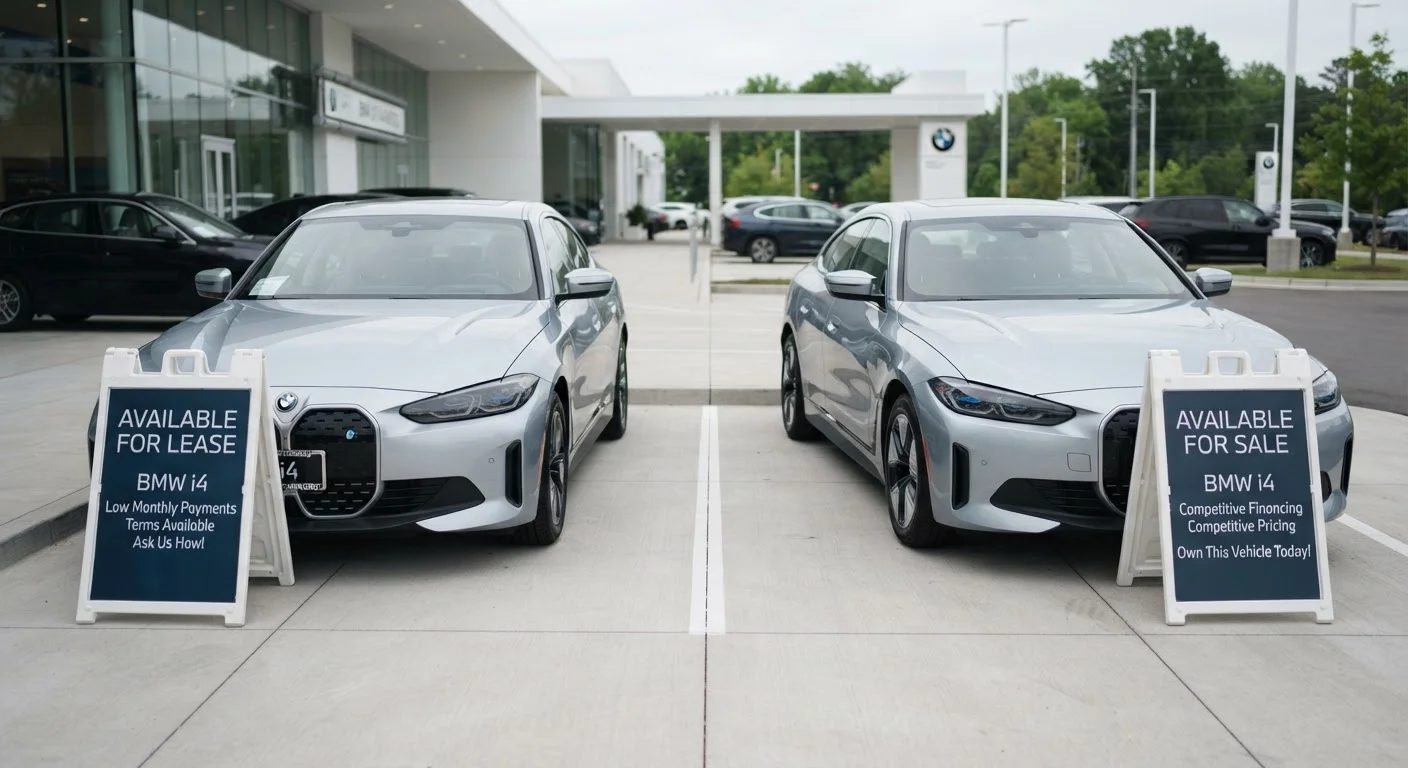
Our Verdict
Neither leasing nor buying is universally better - the right choice depends on how you drive, how long you plan to keep the vehicle, and what you value most. Buyers who hold their cars for many years typically come out ahead financially, while leasing suits those who prioritize driving a newer vehicle with predictable short-term costs.
| Best for | Recommended |
|---|---|
| Drivers who want to build equity and minimize long-term costs | Buying |
| Those who prefer lower monthly payments and a new vehicle every few years | Leasing |
| High-mileage drivers who regularly exceed 15,000 miles per year | Buying |
| Drivers who need flexibility to customize or modify their vehicle | Buying |
How Leasing and Buying Actually Work
When you buy a car - whether with cash or a loan - you own it outright once the loan is paid off. You build equity as you pay down the balance, and you can sell or trade the vehicle at any point. The car is yours to keep as long as it runs.
When you lease, you're essentially renting the vehicle for a fixed term, typically 24 to 36 months. Your monthly payments cover the vehicle's projected depreciation during that period - not the full purchase price. At the end of the lease, you return the car, buy it at a pre-set residual value, or walk away. You never own the vehicle unless you exercise that buyout option.
Understanding this structural difference is the foundation of the whole comparison. Everything else - payments, flexibility, long-term cost - flows from it. For a broader look at how financing shapes total cost, see our guide to monthly payments and real costs.
Monthly Costs vs. Total Long-Term Spending
Lease payments are almost always lower than loan payments for the same vehicle. That's because you're only financing the depreciation, not the full price. On a $40,000 vehicle with a strong residual value, a lease payment might run $200-$300 less per month than a comparable purchase loan.
But monthly payment comparisons can be misleading. Depreciation hits hardest in the first few years - precisely the years you're paying lease premiums. When a lease ends, you have no asset. When a loan ends, you own a vehicle that still has real market value.
Over a 10-year period, a driver who buys and holds the same car will typically spend less in total than someone who chains together back-to-back leases. That gap widens the longer you keep a purchased vehicle after the loan is paid off - during those years, your only ongoing costs are insurance, fuel, and maintenance.
| Leasing | Buying | |
|---|---|---|
| Monthly payment | Lower (covers depreciation only) | Higher (covers full vehicle price) |
| Ownership at end of term | No - return or buyout required | Yes - vehicle is fully yours |
| Equity built | None | Grows as loan is paid down |
| Mileage restrictions | Yes - overage fees apply | No restrictions |
| Early exit cost | High - penalties apply | Sell or trade at any time |
| Vehicle modifications | Not permitted | Permitted |
| Long-term total cost | Higher (perpetual payments) | Lower if vehicle is held long-term |
| Access to new models | Easy - cycle every 2-3 years | Requires selling or trading in |
For a fuller picture of what ownership actually costs month to month, our breakdown of the true cost of owning a car covers insurance, fuel, and maintenance together.
Hidden Costs and Restrictions in Leasing
Lease agreements come with terms that can add meaningful costs if you're not careful.
- Mileage limits: Most leases cap annual mileage at 10,000-15,000 miles. Exceeding that limit typically triggers a per-mile overage fee, often $0.15-$0.25 per mile. A driver who goes 5,000 miles over per year on a three-year lease could owe $2,250-$3,750 at return.
- Wear-and-tear charges: Normal use is covered, but leasing companies define acceptable wear narrowly. Curb rash, minor dents, or worn tires can result in end-of-lease fees.
- Disposition fee: If you return the vehicle and don't lease another from the same brand, many agreements charge a disposition fee of $300-$500.
- Early termination: Exiting a lease before the term ends is expensive and complicated - often costing thousands of dollars in remaining payments and penalties.
Read the Fine Print Before You Sign
Lease agreements vary significantly between lenders and manufacturers. Pay close attention to the money factor (lease interest rate), residual value, annual mileage cap, and all end-of-term fees before committing. A lease that looks affordable on the surface can become costly if your actual driving habits don't match the contract's assumptions.
Buyers face different pitfalls. Common car-buying mistakes like rolling negative equity into a new loan can make ownership expensive in ways that aren't obvious at signing.
Equity, Flexibility, and What Fits Your Life
Ownership gives you an asset you can leverage. If you've paid down a loan significantly and the vehicle has held its value, you may have equity to apply toward a future purchase. Our trade-in timing guide explains when that equity position actually works in your favor.
Leasing offers a different kind of flexibility: predictability. You know your payment, your term, and roughly what you'll owe at the end. If driving a newer vehicle with the latest safety features or technology matters to you, a lease cycle delivers that without committing to long-term ownership.
However, leasing restricts you in meaningful ways - you can't modify the vehicle, you're locked into mileage assumptions, and you can't easily exit early. Buyers, by contrast, can sell or trade at any time and aren't penalized for high mileage or personal modifications.
The comparison also looks different depending on whether you're considering a new or used vehicle. See how new and used vehicles stack up financially for the broader context around depreciation and financing rates.
This article provides general financial information for educational purposes and does not constitute personalized financial or legal advice. Consult a qualified financial professional before making significant vehicle financing decisions.
The content on this site is provided for informational purposes only and should not be considered a substitute for professional advice. While we strive to provide accurate and up-to-date information, we make no guarantees regarding its completeness or accuracy. Always consult a qualified professional for advice specific to your circumstances before making any decisions.