

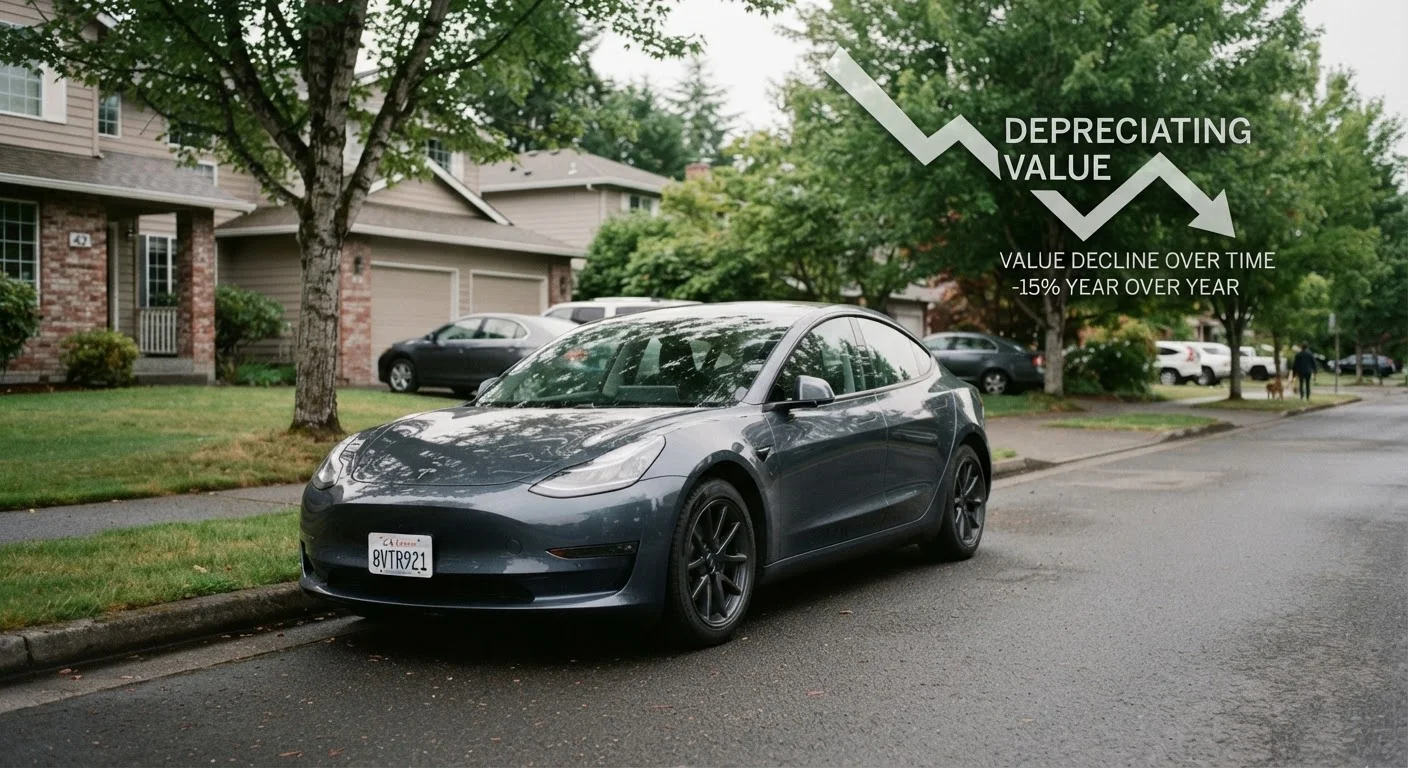
What Depreciation Actually Means for Vehicle Owners
Depreciation is not a fee you pay - it is value you lose. Every vehicle, regardless of brand or price point, is worth less tomorrow than it is today. For most drivers, depreciation represents a larger financial cost than fuel, insurance, or maintenance combined over a five-year ownership period. Understanding it is a core part of understanding the true cost of owning a vehicle.
The steepest drop happens early. A new vehicle can lose a significant portion of its value simply by being registered and driven for the first time. This is not a manufacturing defect or a sign that the car is unreliable - it reflects the way used-car markets price risk, warranty status, and unknown history relative to a factory-fresh vehicle.
Depreciation matters most when you plan to sell or trade in a vehicle, when you are financing a purchase, or when you are comparing the long-term costs of leasing versus buying. It is general financial information, not a prediction for any specific vehicle - values vary considerably based on market conditions and individual circumstances.
The Factors That Determine How Fast a Car Loses Value
No two vehicles depreciate at exactly the same rate. Several factors combine to determine how quickly a specific car, truck, or SUV loses market value:
- Mileage: Higher mileage signals more wear and a shorter remaining service life. Vehicles with well above-average annual mileage (typically considered above 12,000-15,000 miles per year) tend to depreciate faster.
- Condition: Physical condition - interior wear, paint quality, and the presence or absence of accident history - directly affects resale value. A clean vehicle with documented maintenance will hold its value better than a comparable model with visible damage.
- Brand and model reputation: Vehicles from manufacturers with strong reliability track records historically retain value more effectively. Consumer perception of dependability, cost of ownership, and brand prestige all feed into resale demand.
- Vehicle category: Pickup trucks and certain SUVs have historically depreciated more slowly than sedans or luxury vehicles. Fuel prices also influence demand for specific segments, which in turn affects their resale value.
- Technology and features: A vehicle that feels dated due to outdated infotainment or safety technology may depreciate faster as buyers gravitate toward newer options.
- Supply and demand: When a particular model is in short supply, used examples command higher prices and depreciate more slowly. Oversupply has the opposite effect.
20%+
Typical first-year value loss for new vehicles
Industry estimates consistently show new cars losing 15-25% of their purchase price within the first 12 months of ownership.
~50%
Average value retained after five years
Many mainstream vehicles retain roughly half their original value after five years, though this varies significantly by brand and segment.
#1
Depreciation as a cost-of-ownership factor
For many drivers, depreciation exceeds fuel, insurance, and maintenance costs combined over a typical five-year ownership period.
The Depreciation Curve: When Value Drops Fastest
Depreciation does not occur at a flat, steady rate. It follows a curve - steep at first, then gradually flattening. The first year of ownership typically brings the sharpest decline. From years two through five, the rate of loss continues but slows. After five years, many vehicles have settled into a more gradual decline, though they continue to lose value.
This curve has a direct practical implication: buying a vehicle that is one to three years old can allow a buyer to let someone else absorb the initial steep depreciation while still purchasing a relatively recent, well-equipped vehicle. This is one of the financial arguments explored in a comparison of new versus used car trade-offs.
The curve also matters for financing. When loan amortisation schedules are structured so that early payments are heavily weighted toward interest rather than principal, a borrower's equity build-up can lag behind the vehicle's value decline - a situation that creates negative equity. This dynamic is explained in more detail in an overview of how auto loan terms and APR work.
How to Use Depreciation Knowledge to Your Advantage
Understanding depreciation does not require any special expertise - it requires applying a few straightforward principles when making ownership decisions.
Protect Resale Value From Day One
The choices you make when buying a vehicle - colour, trim level, optional packages - can influence how easy it is to sell later. Neutral colours and popular trim configurations tend to appeal to a broader pool of buyers, supporting stronger resale values. Avoid over-customising if resale value matters to you.
Keep maintenance records: A documented service history signals to future buyers that the vehicle was cared for, which can support a higher resale price. The fundamentals of car maintenance are one of the most effective tools for protecting long-term value.
Be mindful of mileage: If you drive significantly more than average, your vehicle will depreciate faster. This is worth factoring into how long you plan to own it and how you structure financing.
Think twice about add-ons: Dealer-installed accessories and optional packages rarely return their full cost at resale. Structural modifications can also reduce market appeal.
Recognise when you are underwater: If you owe more on your vehicle than it is worth, rolling that balance into a new loan is one of the car buying moves that cost more than most people realise. Avoiding this situation starts with understanding how depreciation affects your equity at each stage of ownership.
Depreciation is an unavoidable reality of vehicle ownership - but it is one that informed buyers and owners can plan around effectively.
This article is for general informational purposes only and does not constitute financial or investment advice. Vehicle values vary by market, condition, and circumstances. Consult a qualified financial professional for guidance specific to your situation.
Frequently Asked Questions
Most new vehicles lose between 15% and 25% of their value within the first 12 months of ownership. Some vehicle segments, particularly luxury cars, can depreciate even faster. By the end of five years, many cars retain only around 40-60% of their original purchase price.
Trucks, certain SUVs, and vehicles from brands with strong reliability reputations tend to hold their value better than average. High demand relative to supply also plays a role. No vehicle avoids depreciation entirely, but these segments historically depreciate at a slower rate.
Both factors matter, but mileage is often a stronger driver of market value because it signals wear and remaining useful life. A five-year-old car with low mileage will typically be worth more than the same model with significantly higher mileage.
You cannot stop depreciation entirely, but you can slow it. Keeping mileage reasonable, maintaining the vehicle well, preserving service records, and avoiding accident damage all help retain value. Classic or rare vehicles sometimes appreciate, but this is the exception, not the rule.
If a car depreciates faster than your loan balance decreases, you become 'underwater' - owing more than the vehicle is worth. This is called negative equity and can create financial complications if you need to sell or trade in the vehicle before the loan is paid off.
Yes - depreciation is central to how lease payments are calculated. The lender estimates the vehicle's residual value at lease-end, and your monthly payment essentially covers the projected depreciation during the lease term, plus fees and interest.
The content on this site is provided for informational purposes only and should not be considered a substitute for professional advice. While we strive to provide accurate and up-to-date information, we make no guarantees regarding its completeness or accuracy. Always consult a qualified professional for advice specific to your circumstances before making any decisions.