

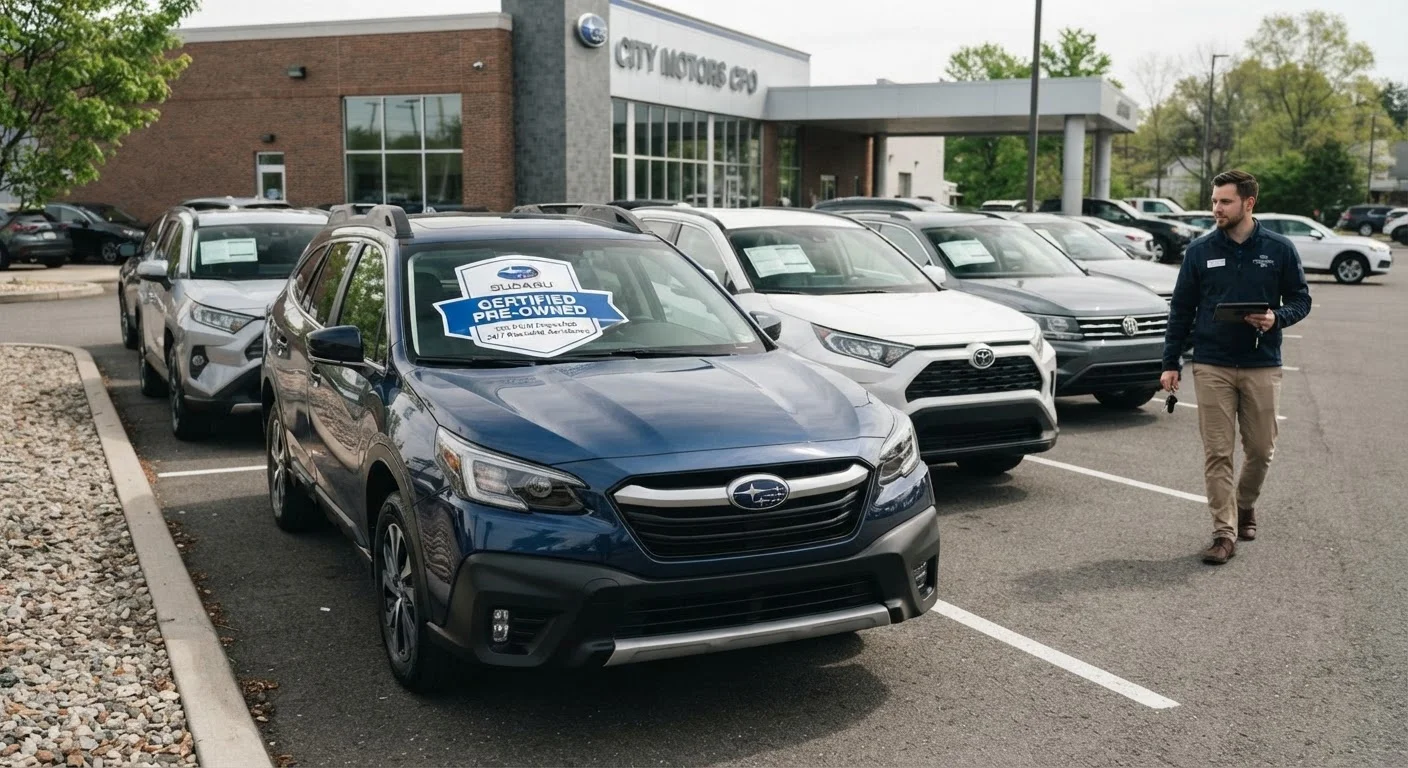
What the CPO Label Actually Signals
Walk onto any used-car lot and you'll likely see "certified" attached to dozens of vehicles. The word carries weight - but it doesn't carry a consistent meaning. Unlike a standardized government rating, CPO is a program designation created and administered by individual manufacturers or dealers. Understanding who created the program, and what it actually requires, is the first step to evaluating whether the label is worth a premium to you.
Manufacturer-backed programs - offered through brand-authorized dealerships - are the most rigorous tier. Automakers like Toyota, Honda, BMW, and others publish their CPO inspection checklists publicly, detailing the number of inspection points covered (often 150 or more), the mileage and age eligibility caps, and the specific warranty terms. These programs typically extend the factory powertrain warranty and may include roadside assistance or complimentary maintenance.
Dealer-certified programs operate independently of the manufacturer. A dealership creates its own inspection criteria and warranty product, which may be administered through a third-party service contract company. These programs are not inherently bad, but the protections can be narrower, and service contract claims may be subject to exclusions that a factory warranty would not have.
Manufacturer vs. Dealer Certification: A Key Distinction
Not all CPO programs are created equal. Manufacturer-backed programs are governed by the automaker and honored across the brand's authorized dealership network nationwide. Dealer-certified programs are created independently and may only be honored at the issuing dealer or through a third-party contract administrator. Always confirm who stands behind the warranty before you rely on it.
How CPO Pricing Compares to Standard Used
The cost difference between a CPO vehicle and an equivalent non-certified used car is real and should factor into your evaluation. CPO vehicles commonly carry a premium of several hundred to several thousand dollars depending on the vehicle's age, mileage, and the depth of the program's warranty coverage.
$1,000-$3,500
Typical CPO price premium over non-certified equivalents
Industry observers generally cite this range as common, though the actual gap varies by vehicle segment, mileage, and program strength.
150+
Inspection points in many manufacturer CPO programs
Many major automaker CPO programs publicly document 150 or more inspection items covering mechanical, safety, and appearance components.
5-6 years
Typical maximum vehicle age for manufacturer CPO eligibility
Most manufacturer-backed CPO programs cap eligibility by model year; dealer-certified programs may apply looser age restrictions.
That premium buys something concrete: a documented inspection, an extended warranty, and in many cases a cleaner title and accident-history screen baked into the certification requirements. The question is whether those benefits are worth the price gap relative to your specific needs. For buyers who plan to hold a vehicle for five or more years, warranty coverage on drivetrain components can offset repair costs meaningfully. For buyers who plan to trade in within two or three years, the math often works differently.
It's also worth noting that CPO vehicles are typically financed through manufacturer captive lenders, who sometimes offer lower interest rates on CPO inventory as an additional incentive - though financing terms depend on your creditworthiness and current market conditions. This is general information; for guidance tailored to your financial picture, consult a qualified financial professional.
For a broader look at how new and used vehicles compare financially, see our breakdown of new vs. used trade-offs.
What CPO Doesn't Cover - and What to Do About It
Even the strongest manufacturer CPO programs have limitations. Wear items like tires, brake pads, and wiper blades are typically excluded. Cosmetic issues - minor interior wear, paint chips - may or may not be addressed before sale. And a CPO warranty does not mean every prior repair was disclosed or every latent issue detected during inspection.
Vehicle history remains your responsibility to verify. Most CPO programs require a clean title and no major accident history, but the definition of "major" varies. Reviewing an independent vehicle history report and understanding what prior damage disclosures mean is essential regardless of certification status. See our checklist of things to verify before buying a used car for a structured approach to due diligence.
An independent pre-purchase inspection by a qualified mechanic you choose - not the selling dealer - adds another layer of confidence. CPO reduces uncertainty; it does not eliminate it. Treating the certification as one favorable data point rather than a final verdict gives you the clearest picture before signing.
Always Request the CPO Inspection Report
Before finalizing a CPO purchase, ask the dealership for a copy of the completed inspection checklist. Legitimate manufacturer programs generate a documented record of every item inspected and any repairs performed during reconditioning. If a dealer cannot produce this document, treat that as a red flag regardless of what badge is on the windshield.
Making the Decision: CPO or Non-Certified?
There's no universal right answer. CPO makes most sense when the manufacturer program is robust, the price premium is modest relative to the warranty value, and you intend to own the vehicle long enough to benefit from the coverage. It makes less sense when the premium is steep, the program is dealer-administered with thin terms, or you're buying a vehicle model known for reliability with lower repair-cost exposure.
The CPO label is one signal among several - much like how a "premium" price tier in any category doesn't automatically mean superior value. See why premium doesn't always mean better for a broader framework on evaluating price-tier signals across purchases.
Read the specific CPO program terms for any vehicle you're seriously considering. What is the warranty duration and mileage cap? What components are covered? Is the warranty honored at any dealer in the brand's network, or only at the selling location? The answers to those questions - more than the badge itself - determine whether the designation delivers genuine value for your situation.
Frequently Asked Questions
Yes - a CPO vehicle is still a used car, just one that has completed a specific inspection and reconditioning process under a structured program. The certification adds warranty coverage and a documented inspection record, but it does not change the fundamental nature of the vehicle as previously owned.
No certification can guarantee a vehicle will be problem-free. CPO programs reduce risk by requiring inspections and offering warranty coverage, but mechanical issues can still arise after purchase. An independent pre-purchase inspection from a trusted mechanic remains a sound step regardless of certification status.
It depends on the program. Manufacturer-backed CPO warranties are administered by the automaker through its dealership network. Dealer-certified programs are created by individual dealers or dealer groups and are not backed by the original manufacturer. The distinction matters when it comes to claim coverage and nationwide service access.
Manufacturer CPO programs typically restrict eligibility to vehicles within a certain age (often five to six years) and mileage threshold (commonly under 80,000 miles). Vehicles with significant accident history or title problems are generally ineligible. Dealer-certified programs may apply looser standards.
That depends on your situation. If warranty coverage and reduced uncertainty matter to you - especially for a vehicle you plan to keep several years - the premium may deliver real value. If you're buying short-term or have access to a trusted independent mechanic, a non-certified vehicle inspected thoroughly may be the more cost-effective path.
The content on this site is provided for informational purposes only and should not be considered a substitute for professional advice. While we strive to provide accurate and up-to-date information, we make no guarantees regarding its completeness or accuracy. Always consult a qualified professional for advice specific to your circumstances before making any decisions.