

Why Long-Haul Flights Hit Harder Than Other Travel
A three-hour domestic hop and a fourteen-hour transoceanic flight are fundamentally different physiological events. On long-haul routes, your body is simultaneously dealing with low cabin pressure (typically equivalent to 6,000-8,000 feet of altitude), severely low humidity, a disrupted circadian cycle, prolonged immobility, and irregular food and sleep schedules. The result, for most travelers, is a combination of dehydration, fatigue, stiffness, and disorientation that can take days to fully resolve.
The good news is that most of these effects are manageable - not by expensive add-ons or upgrades, but through deliberate habits and simple preparation. This guide covers what to do before you board, what to do during the flight, and how to set yourself up for a faster recovery on the other side. For a broader view of how in-flight health connects to overall trip logistics, the anatomy of a well-planned trip is a useful companion read.
What you will need
What You'll Need Before You Board
Preparation happens at home and at the airport - not on the plane. The items below aren't luxury additions; most experienced long-haul travelers treat them as standard kit. Packing smart more broadly is covered in the packing strategies frequent travelers rely on, but for the in-flight phase specifically, the tools below are what matter most.
Compression Socks
Improve circulation in the lower legs during extended periods of sitting, reducing swelling and DVT risk.
Noise-Cancelling Headphones or Earplugs
Block consistent cabin noise, making it substantially easier to sleep or concentrate during flight.
Neck Pillow
Supports cervical spine alignment when sleeping upright in an economy seat.
Eye Mask
Blocks ambient cabin light and screen glare to improve sleep quality.
Reusable Water Bottle
Allows frequent hydration without depending on sporadic cabin service.
Moisturizer and Lip Balm
Counters the extreme low humidity in aircraft cabins, which can reach 10-20% - drier than most deserts.
Electrolyte Packets
Helps maintain mineral balance lost through high-altitude dehydration, especially on flights exceeding 10 hours.
Step-by-Step: Getting Through the Flight
The steps below are sequenced by when they apply - from pre-departure decisions through landing. Not every step applies equally to every traveler or route, but the core ones (hydration, movement, time zone commitment) apply universally across long-haul travel.
Deep Vein Thrombosis Is a Real Risk
Sitting immobile for many hours on a long flight raises the risk of deep vein thrombosis (DVT) - blood clots that typically form in the legs. Travelers with prior clot history, recent surgery, or other risk factors face elevated concern. Compression socks, regular movement, and adequate hydration are the primary preventive measures most travelers use, but consult your doctor before a long flight if you have any relevant health conditions.
Choose your seat strategically before the day of travel
Seat selection is one of the most impactful decisions you make before boarding. For sleep, window seats eliminate mid-flight disturbances from seatmates needing to pass. For circulation, aisle seats allow you to stand without disrupting others. Bulkhead rows offer leg room but typically lack under-seat storage. Exit rows provide extra legroom but don't recline and may feel cold. Check the specific aircraft's seat map - not all "premium economy" or "extra legroom" designations are equal across carriers or planes.
Shift your sleep schedule 1-2 days before departure
Your circadian rhythm - the internal clock regulating sleep, hunger, and alertness - doesn't reset automatically when you cross time zones. Begin nudging it before you leave. If flying east, go to bed and wake up earlier by 30-60 minutes each day before travel. Flying west, do the reverse. This reduces the circadian mismatch on arrival. For a deeper explanation of the mechanics involved, see what's actually happening to your body during jet lag.
Set your watch to your destination's time zone at boarding
The moment you board, change your watch and phone to the destination's local time. Commit to that frame of reference for eating and sleeping decisions throughout the flight. If it's nighttime at your destination, prioritize sleep. If it's daytime, resist long naps even if you're tired. This mental reframe, combined with the behavioral cues that follow from it, is one of the simplest tools to accelerate adjustment.
Hydrate consistently - more than you think you need
Cabin air humidity typically falls between 10% and 20%, significantly lower than most indoor environments. At this level, you lose fluid through respiration at a higher rate than you may notice. Aim for roughly 8 ounces of water per hour of flight as a general orientation - more if you feel dry or fatigued. Fill your reusable bottle after passing security. Ask flight attendants for water proactively rather than waiting for scheduled service. Avoid alcohol and limit caffeine, both of which compound dehydration and interfere with sleep quality.
Move intentionally every 60-90 minutes
Prolonged stillness is the primary physical risk on long-haul flights. Stand, stretch, and walk the aisle for 2-3 minutes at least once every 90 minutes. When seated, do ankle rolls, calf raises while seated, and periodic knee bends. Compression socks (worn from the start of the flight, not applied mid-journey) assist with venous return in the lower legs throughout. Avoid crossing your legs for extended periods, which restricts circulation further.
Create a sleep environment in your seat
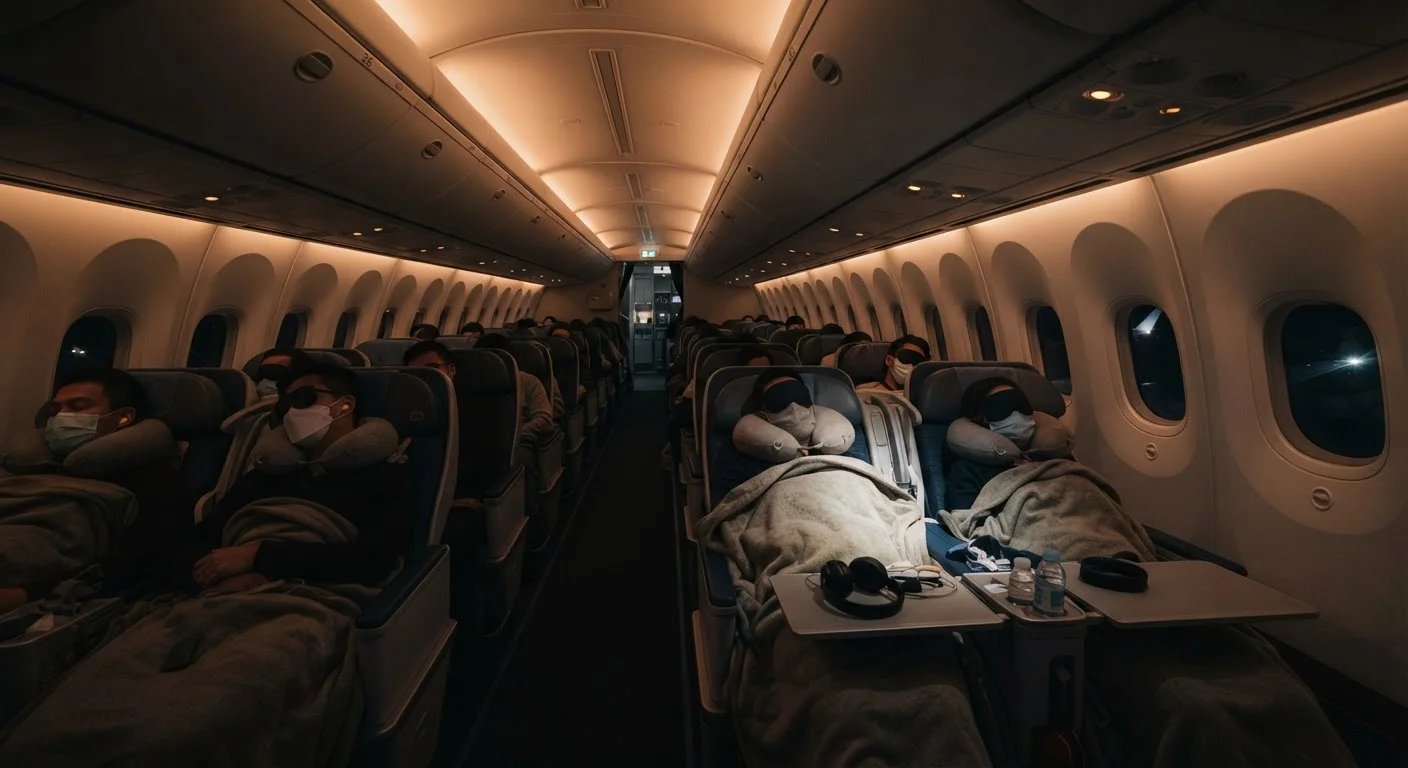
Economy seats aren't built for sleep, but you can improve the conditions significantly. Put on your compression socks and change into a soft layer before attempting to rest. Use your neck pillow to support cervical alignment - it should push your chin slightly forward, not let your head drop. Put in earplugs or noise-cancelling headphones, put on an eye mask, and recline as much as the row behind you permits. Consider a light blanket or large scarf that can double as one. Your goal is to minimize sensory input and maintain physical warmth, since cabin temperatures often drop during overnight segments.
Plan your first 24 hours at the destination before you land
Decide in advance whether you'll push through to the local bedtime or allow a short nap on arrival (no more than 90 minutes is a commonly cited guideline to avoid locking in the wrong sleep phase). Exposure to natural light at the destination - particularly morning sun - helps reset your circadian rhythm faster than staying indoors. Keep your first day's activities light enough to be manageable if you're running on limited sleep. For building this into a broader trip plan, see how a well-planned trip comes together.
Managing Your Mind Over Many Hours
Physical discomfort gets most of the attention on long flights, but mental fatigue - boredom, anxiety, restlessness - is equally real and often harder to plan for. Having a structured approach to your in-flight hours helps. A rough block schedule works well: designate time for sleep, a period for media or reading, a period for light movement, and mealtimes anchored to your destination clock. Trying to passively endure 12-plus hours typically leads to more stress than building a loose framework.
If you find flight anxiety is a recurring issue, the broader habits around supporting emotional wellbeing day-to-day - like breathing techniques and consistent sleep practices - translate directly into in-flight coping. Distraction has its place, but grounded self-regulation tends to hold up better across very long flights.
Eat According to Your Destination, Not the Cabin
When possible, try to time meals to align with your destination's meal schedule rather than the flight's service timing. This helps accelerate your body clock adjustment and is one of the lower-effort circadian reset techniques travelers frequently report as effective.
For travelers new to international flying and managing all of the above for the first time, the first-time international traveler overview covers the full picture from planning through landing.
Sleeping Pills and Altitude Don't Always Mix
Over-the-counter sleep aids can cause grogginess and reduced awareness in the low-oxygen, low-humidity cabin environment. They may also discourage the movement needed to reduce clot risk. If you're considering any sleep aid for long-haul travel, speak with a healthcare provider beforehand rather than experimenting mid-flight.
The content on this site is provided for informational purposes only and should not be considered a substitute for professional advice. While we strive to provide accurate and up-to-date information, we make no guarantees regarding its completeness or accuracy. Always consult a qualified professional for advice specific to your circumstances before making any decisions.