

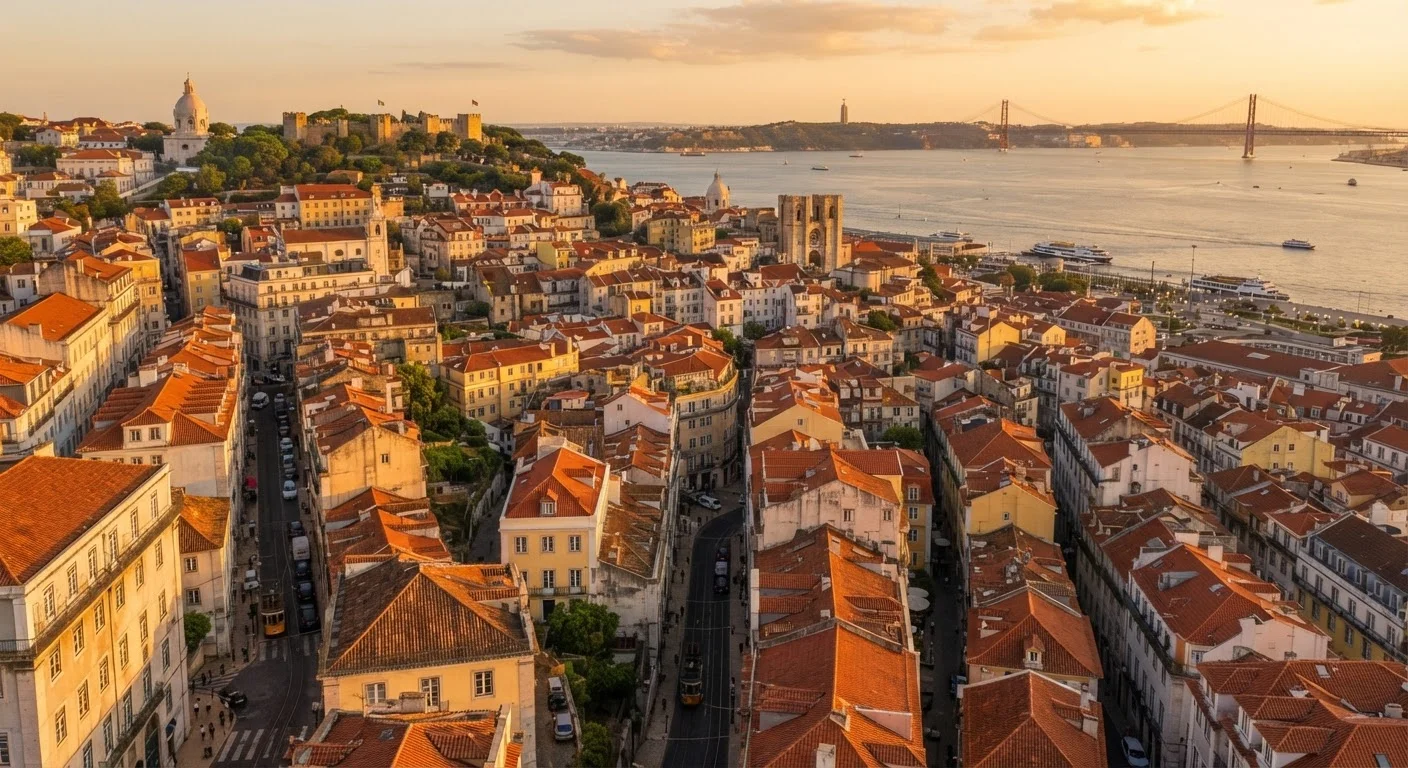
Our Verdict
Portugal earns its reputation as an accessible, rewarding destination for American travelers - but it's no longer the hidden bargain it was a decade ago. Visitors who plan around crowds, explore beyond Lisbon's city center, and check entry requirements in advance will have a far better experience than those relying on travel-brochure assumptions.
Best for travelers who want European history, coastal scenery, and manageable logistics without the cost or congestion of Paris or Rome - and who are willing to do a little homework before departure.
Why Portugal Has Become a Go-To for American Visitors
Portugal punches well above its weight as a travel destination. It's compact enough to cover multiple regions in one trip, historically rich, and logistically easier for Americans than many European alternatives. English is spoken broadly in hotels, restaurants, and transit hubs - a genuine comfort for first-time international travelers.
Flight options have expanded, with direct routes from New York, Boston, and Newark to Lisbon operating on several carriers. Porto has also added transatlantic connections. That said, travelers departing from the Midwest or West Coast will still face at least one layover, adding meaningful travel time each way.
For those interested in comparing Portugal with other European destinations that fly under the radar, this overview of undervisited Western European cities provides useful context.
English widely spoken in tourist areas
American travelers rarely face language barriers in hotels, restaurants, and major transit hubs. This is a meaningful practical advantage over several other Southern European destinations.
Direct transatlantic flights available
Lisbon and Porto both have direct connections from several U.S. East Coast cities, reducing travel time and the friction of layovers compared to some European alternatives.
Genuine regional diversity in a compact country
Portugal's relatively small size means travelers can experience wine country, historic inland towns, Atlantic beaches, and a major capital city all within a single two-week trip.
Milder climate than much of Northern Europe
The shoulder seasons - particularly May and September - offer warm, dry weather that many Northern European destinations can't reliably match, extending the comfortable travel window.
Rich history with accessible, well-maintained sites
From Moorish castles to Age of Discovery monuments, Portugal's historical depth is substantial. Entry fees at most sites are modest compared to comparable European attractions.
The Cost Reality: Not as Cheap as It Used to Be
Portugal was long celebrated as one of Europe's most affordable countries. That reputation, while not entirely gone, deserves a significant update. Lisbon and Porto have seen sharp increases in accommodation and dining costs over the past several years, driven partly by tourism growth and partly by broader economic pressures on housing.
Mid-range hotels in central Lisbon now price comparably to cities like Barcelona or Prague. Short-term rental prices in popular neighborhoods reflect similar pressure. Travelers expecting 2015-era budget conditions will likely be caught off guard - and hidden costs have a way of compounding.
Value is still available - particularly in the Alentejo wine region, smaller coastal towns, and inland areas - but it requires deliberate planning rather than assuming Portugal will be automatically affordable.
Top 5
Portugal's European tourism ranking by arrivals
Portugal consistently ranks among Europe's most-visited countries, according to data from UNWTO and the Portuguese Tourism Authority (Turismo de Portugal).
90 days
Visa-free Schengen stay for U.S. passport holders
American citizens may stay within the Schengen Area for up to 90 days in any 180-day period without a visa - travelers should verify current rules with official sources before departure.
Crowds, Seasonality, and the Algarve Problem
The Algarve - Portugal's southern coastline - is genuinely beautiful, with dramatic cliffs and accessible beaches. It's also extremely crowded from late June through August, with accommodation prices to match. The experience in peak summer can feel less like discovering Portugal and more like sharing a beach with most of northern Europe.
Lisbon's most visited sites - Belém, Alfama, Sintra - follow a similar pattern. Sintra in particular, a UNESCO-listed town west of Lisbon, has become so heavily visited that timed-entry systems and long queues are now standard during peak months.
Understanding what peak and off-season actually mean in practical terms is essential before committing to dates. May, early June, September, and October offer meaningful improvements in both crowd levels and pricing without sacrificing weather quality.
Costs have risen sharply in Lisbon and Porto
Accommodation and restaurant prices in both cities have increased significantly in recent years. Budget travelers relying on outdated cost assumptions may find the reality jarring.
Severe summer crowding at key attractions
Sites like Sintra and the Algarve coast are genuinely overwhelmed during July and August. Queue times, traffic, and reduced enjoyment are predictable consequences of peak-season visits.
Rural areas require a rental car
Train coverage is good between major cities but limited in the Alentejo, Douro Valley, and coastal areas outside major hubs. Travelers without driving confidence face real itinerary restrictions.
Cobblestone terrain can be physically demanding
Lisbon and many historic town centers involve steep, uneven cobblestone streets. This is a real barrier for travelers with mobility limitations and harder than photos suggest for all visitors.
Azores add significant logistical complexity
Reaching the Azores from mainland Portugal requires an additional flight, and the archipelago's weather is notoriously changeable. It's worth researching thoroughly before adding to a first-time itinerary.
Regional Portugal: Where Brochures Often Fall Short
Tourism marketing tends to funnel attention toward Lisbon, the Algarve, and Sintra - which are all worth visiting, but don't represent the country's full range. Several regions consistently reward travelers who venture further.
- The Douro Valley: Portugal's wine country, best reached by train or car from Porto. Terraced vineyards along the river make for striking scenery, and the region is far quieter than the coast.
- Alentejo: A vast, relatively uncrowded inland region known for cork forests, medieval walled villages like Évora, and a slower pace. Accommodation tends to be more affordable here.
- The Azores: A Portuguese archipelago in the mid-Atlantic. Volcanic landscapes, whale watching, and dramatically different weather make it a distinct experience - though flights add complexity and cost.
Travelers who've been disappointed by over-hyped itineraries elsewhere may find the Alentejo or Douro Valley particularly grounding - destination mismatches are a common source of travel regret, and they often stem from skipping the research phase.
Entry Requirements Can Change
The EU's ETIAS travel authorization system - a pre-travel registration requirement for Schengen-area entry - has been under development and may affect American travelers in coming years. Before booking, check current entry requirements through the U.S. State Department and the official Portuguese immigration authority (SEF/AIMA). Do not rely on travel blog posts or forums for definitive visa or entry information.
Practical Logistics Americans Sometimes Overlook
Portugal is part of the Schengen Area, which means American passport holders can enter without a visa for stays of up to 90 days within any 180-day period - but requirements can change, and travelers should verify current entry conditions through official U.S. and Portuguese government sources before booking.
Getting around between cities is manageable via train, though rural and inland areas generally require a rental car. Driving culture is more aggressive in urban areas than most Americans are used to, and parking in Lisbon is a genuine challenge. Cobblestone streets - charming in photos - can be hard on wheeled luggage and difficult for travelers with mobility concerns.
Portugal uses the Euro, and contactless payment is widely accepted. Phone coverage through a local SIM or international roaming plan is straightforward to arrange. The time difference from the U.S. East Coast is five hours, making it one of the more jet-lag-friendly European destinations for Americans.
The content on this site is provided for informational purposes only and should not be considered a substitute for professional advice. While we strive to provide accurate and up-to-date information, we make no guarantees regarding its completeness or accuracy. Always consult a qualified professional for advice specific to your circumstances before making any decisions.