

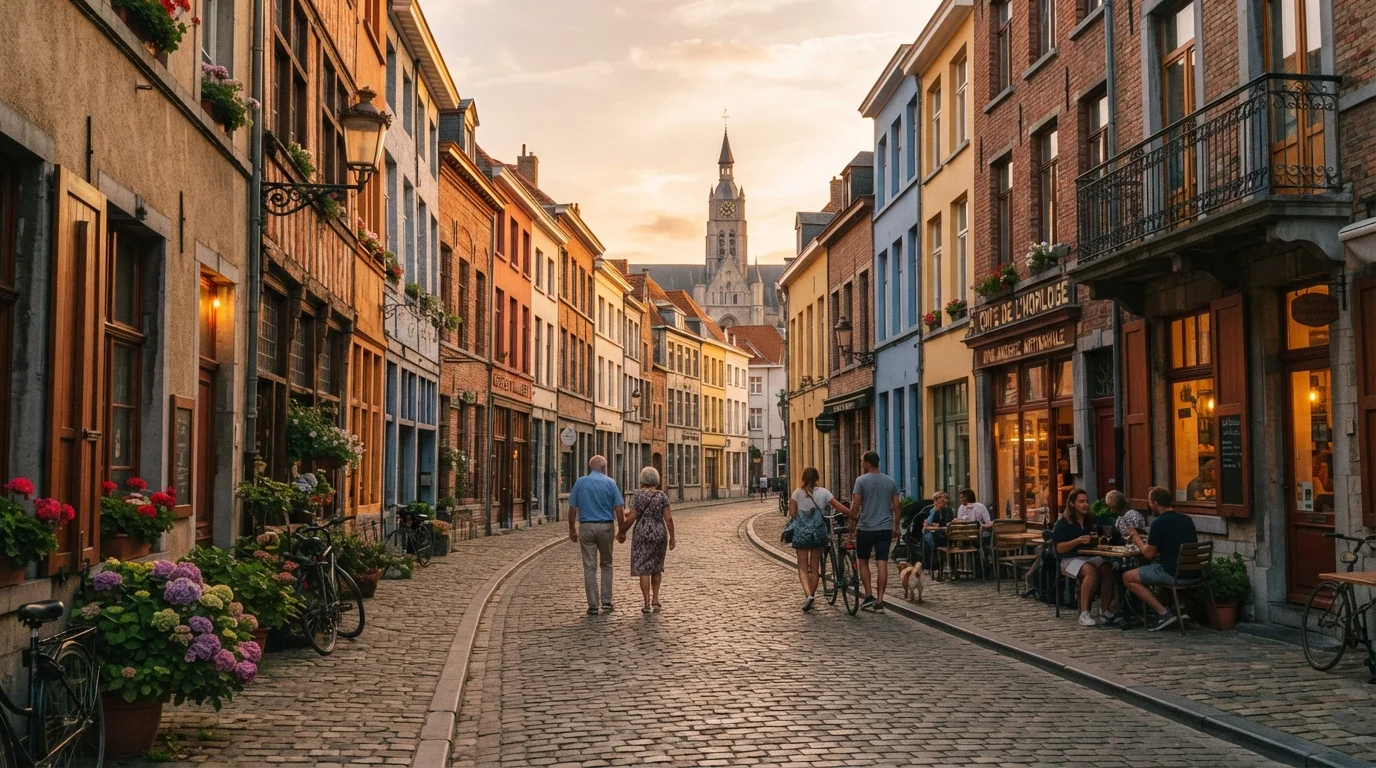
Why the Obvious Choices Aren't Always the Right Ones
Paris, Rome, and London are extraordinary cities. They're also, at peak times, exhaustingly crowded, logistically demanding, and increasingly expensive. For American travelers who have either already visited the marquee destinations or simply want a different kind of experience, Western Europe has an abundance of alternatives that rarely make it into the first conversation.
These cities aren't obscure. They have real infrastructure, rich histories, walkable cores, and enough English spoken to avoid constant translation anxiety. What they lack is the brand recognition that sends entire tour groups to the same piazza. That's often the point.
The list below isn't exhaustive, and it isn't ranked - it's a set of honest snapshots to help you figure out whether any of these places belong in your planning. If you're still working on structuring your days once you've chosen a destination, see our guide to building a trip itinerary that actually holds up for practical help with pacing.
Ghent, Belgium
Ghent sits between Brussels and Bruges but draws a fraction of either city's tourist traffic. Its medieval center - canals, guild houses, a massive castle - is genuinely intact, not reconstructed for tourism. The city has a large university, which keeps the food and nightlife scene unpretentious and affordable by Belgian standards.
Practically speaking, Ghent is about 30 minutes by train from Brussels, making it an easy addition to any Belgium itinerary. Most signage is in Dutch, but English is widely understood. The city is walkable and compact enough that two full days covers it well without feeling rushed.
Ghent offers a medieval core as impressive as Bruges with far fewer crowds and a livelier local scene.
Bologna, Italy
Bologna is one of Italy's most important culinary cities and one of its least visited by international travelers. It's the origin of ragù, mortadella, and fresh egg pasta, and its covered portico walkways - a UNESCO-listed feature - make it comfortable to explore in most weather conditions.
The city has a serious university population dating back to the Middle Ages, giving it energy that Florence and Venice, increasingly dominated by tourism, can struggle to maintain. Train connections to Milan, Florence, and Venice are fast and frequent, making it a logical base for northern Italy.
Bologna is Italy's undisputed food capital and one of the few major Italian cities where locals still outnumber tourists.
Porto, Portugal
Porto has grown in popularity over the past decade but still operates at a very different pace from Lisbon. The city is hillier, rougher around some edges, and architecturally striking - azulejo tile facades, a dramatic riverside neighborhood, and a historic wine trade infrastructure that's still actively working.
Day trips to the Douro Valley vineyards are straightforward by train or guided excursion. Porto's airport has expanded direct routes from North America, making it a viable entry point rather than just a secondary stop. Budget two to three nights minimum; the city doesn't reveal itself quickly.
Porto rewards patience - its layered character and Douro Valley access make it more than a secondary stop after Lisbon.
Seville, Spain
Most American itineraries in Spain start and end in Barcelona or Madrid. Seville is a different kind of Spanish city: slower, more rooted in Andalusian culture, and dramatically beautiful in its architecture. The Alcázar palace complex and the cathedral are genuine world-class sites that rarely require advance booking months out.
Summer heat in Seville is intense - temperatures regularly exceed 100°F in July and August, which is worth taking seriously when planning. Spring and fall are considerably more comfortable. The city also connects to other Andalusian destinations (Córdoba, Granada) via fast rail, making it a useful hub rather than a single stop.
Seville's Alcázar and cathedral rank among Europe's finest historic sites, yet the city runs at a fraction of Barcelona's tourist volume.
Lyon, France
Lyon occupies an unusual position in France's travel hierarchy: it's the country's third-largest city, historically significant, and widely considered one of the great food cities in Europe - yet it gets bypassed constantly in favor of Paris and the Provence region. Its old town, the Vieux-Lyon district, is a UNESCO World Heritage Site with Renaissance architecture largely intact.
Lyon sits at the intersection of high-speed rail lines, making it easily reachable from Paris (about two hours by TGV) or en route to the south of France. Its bouchon restaurants - small, traditional Lyonnaise eateries - are the local institution worth seeking out, though they tend to book up, so planning ahead helps.
Lyon's TGV connections and world-class food culture make it one of the most practical and rewarding stops in France outside Paris.
Utrecht, Netherlands
Amsterdam is one of Europe's most overcrowded tourist destinations, particularly in summer. Utrecht, 30 minutes by train, offers canals, historic churches, and a lively café culture without the volume of day-trippers. Its canal system sits at a lower level than the street, creating a unique wharf-level terrace culture that's distinctly its own.
The city is highly walkable and extremely bikeable - rental infrastructure is solid. Utrecht also functions as the Netherlands' central rail hub, so it connects efficiently in every direction. For travelers who want the Dutch canal-city experience but find Amsterdam overwhelming, Utrecht is the more functional alternative.
Utrecht delivers the Dutch canal-city experience at a human scale, without Amsterdam's crowds or accommodation pressure.
Choosing the Right Fit for Your Trip
Each city above rewards a different kind of traveler. Ghent suits those who want art and architecture without the pressure of a bucket-list checklist. Bologna rewards food-driven itineraries. Porto is ideal if you want coastal access, easy day trips, and a city that scales well for a longer stay - though it's worth reading about what tourism brochures leave out about Portugal before you finalize plans.
The practical advantage these cities share: most connect easily to major hubs by train, which means you can work them into a multi-city trip without backtracking or burning time on long drives. Two to four nights is usually enough to get past the surface without feeling rushed.
Build In More Time Than You Think You Need
A recurring mistake with lesser-known cities is underestimating them and allocating only a single night. These destinations often have layered neighborhoods, strong day-trip options, and a slower pace that benefits from an unhurried approach. If you're already prone to overscheduling, see our piece on why overpacking an itinerary backfires before finalizing your dates.
One common mistake is building too tight a schedule the moment you arrive somewhere new. Our piece on getting oriented in a new city without losing two days covers how to read an unfamiliar destination quickly so you spend less time lost and more time present.
If you're drawn to a city primarily because it's trending on social media or appeared on a recent best-of list, it's worth pausing - those are exactly the conditions that lead to the kind of trip disappointment covered in our look at destination decisions travelers tend to regret. Match the city to what you actually want from a trip, not to what sounds impressive.
Travel conditions, entry requirements, and local regulations can change. Always verify visa requirements, transportation schedules, and safety information with official government and provider sources before you travel.
The content on this site is provided for informational purposes only and should not be considered a substitute for professional advice. While we strive to provide accurate and up-to-date information, we make no guarantees regarding its completeness or accuracy. Always consult a qualified professional for advice specific to your circumstances before making any decisions.