

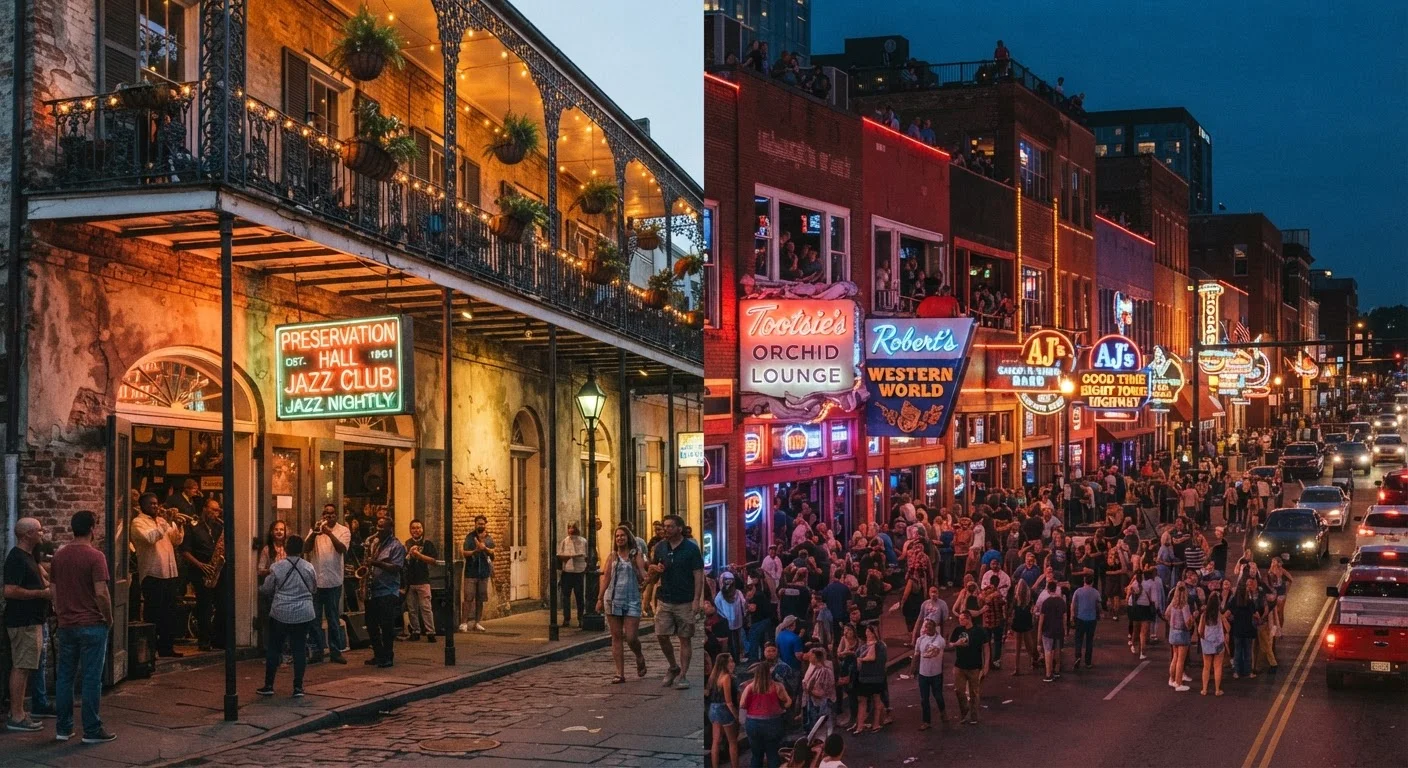
Option A
New Orleans, Louisiana
The layered, sensory city with centuries of cultural depth.
Best for: Travelers who want immersive food culture, street-level live music, and a trip that feels genuinely unlike anywhere else in America.
Option B
Nashville, Tennessee
The energetic, accessible boomtown built around country music.
Best for: Travelers who enjoy a lively bar scene, mainstream entertainment, and a city that's easy to navigate on a short trip.
Music: Two Genres, Two Street Cultures
New Orleans and Nashville are both legitimately music cities - but the experiences they offer are fundamentally different. In New Orleans, jazz, blues, zydeco, and brass band music spill into the streets organically. The Frenchmen Street corridor in the Marigny neighborhood is where locals go to hear serious live music in small clubs, often for a cover charge of just a few dollars. Second-line parades can appear on any given Sunday in residential neighborhoods, completely free of charge.
Nashville's live music identity is anchored in country, Americana, and rock, with Lower Broadway as its beating heart. Honky-tonks like the ones lining that strip run bands on multiple floors simultaneously, all day and night, with no cover. It's loud, unpretentious, and genuinely fun - though critics note that Broadway has grown increasingly tourist-centric over the years. For more authentic country music history, the Ryman Auditorium and the Grand Ole Opry (both ticketed) remain essential stops.
The key difference: in New Orleans, music feels embedded in the city's identity at a street level. In Nashville, the music scene is more concentrated in specific entertainment zones and venues.
Food: Creole Tradition vs. Southern Reinvention
New Orleans holds a singular place in American food culture. Its cuisine is a centuries-old blend of West African, French, Spanish, and Native American influences - producing dishes that exist nowhere else in quite the same form. Gumbo, jambalaya, red beans and rice, muffulettas, and beignets are staples with genuine regional history behind them. The city also has a strong fine-dining tradition, with landmark restaurants that have operated for generations.
Nashville's food scene is younger but impressive in its range. Hot chicken - spiced fried chicken served on white bread with pickles - originated here and has become a nationally recognized dish. Beyond that signature item, Nashville has developed a diverse restaurant landscape over the past decade, spanning everything from traditional meat-and-three cafeterias to sophisticated modern Southern kitchens. Brunch culture is particularly strong.
| Criterion | New Orleans | Nashville |
|---|---|---|
| Primary music genre | Jazz, blues, brass band | Country, Americana, rock |
| Free live music access | Frenchmen Street, street parades | Broadway honky-tonks, all day |
| Signature food | Gumbo, po'boys, beignets | Hot chicken, meat-and-three |
| Walkability | High in historic neighborhoods | Moderate; rideshares often needed |
| Cultural history depth | Centuries of layered influence | Strong 20th-century music heritage |
| Nightlife style | Street-level, neighborhood-based | Concentrated entertainment district |
| City growth pace | Stable, established identity | Rapid growth and development |
Travelers who treat food as the central point of a trip often lean toward New Orleans for the sheer depth and specificity of its culinary tradition. Nashville suits those who want solid Southern comfort food alongside a broader, more contemporary dining scene.
Logistics: Getting Around and What to Expect
New Orleans' historic neighborhoods - the French Quarter, Marigny, Tremé, and Garden District - are compact enough to explore on foot or by streetcar. The city's layout rewards slow travel. However, visitors should know that New Orleans summers are hot and humid, and the city can be crowded during Mardi Gras and Jazz Fest. Always verify current travel conditions and advisories from official government sources before booking, as flooding and weather events can affect the city.
Nashville is geographically more sprawling. While Lower Broadway and the Gulch neighborhood are walkable, getting to neighborhoods like East Nashville or 12 South typically requires a rideshare. The city has grown rapidly, which means more dining and entertainment options but also more traffic. Nashville is generally considered easy for first-time visitors to navigate.
Weather and Timing Matter for Both Cities
New Orleans summers are extremely hot and humid, with peak hurricane season running June through November. Nashville summers are also warm but generally more temperate. Spring and fall are comfortable in both cities. If you're planning around a specific event - Mardi Gras, Jazz Fest, CMA Fest - expect significantly higher accommodation rates and crowds. Always check local event calendars and government travel advisories before finalizing plans.
Both cities attract large crowds during peak seasons and major events. Booking accommodations well in advance is advisable regardless of which destination you choose. For travelers curious about cities with strong cultural identity but fewer tourist crowds, our piece on Western European city breaks worth considering offers useful comparisons.
The content on this site is provided for informational purposes only and should not be considered a substitute for professional advice. While we strive to provide accurate and up-to-date information, we make no guarantees regarding its completeness or accuracy. Always consult a qualified professional for advice specific to your circumstances before making any decisions.