

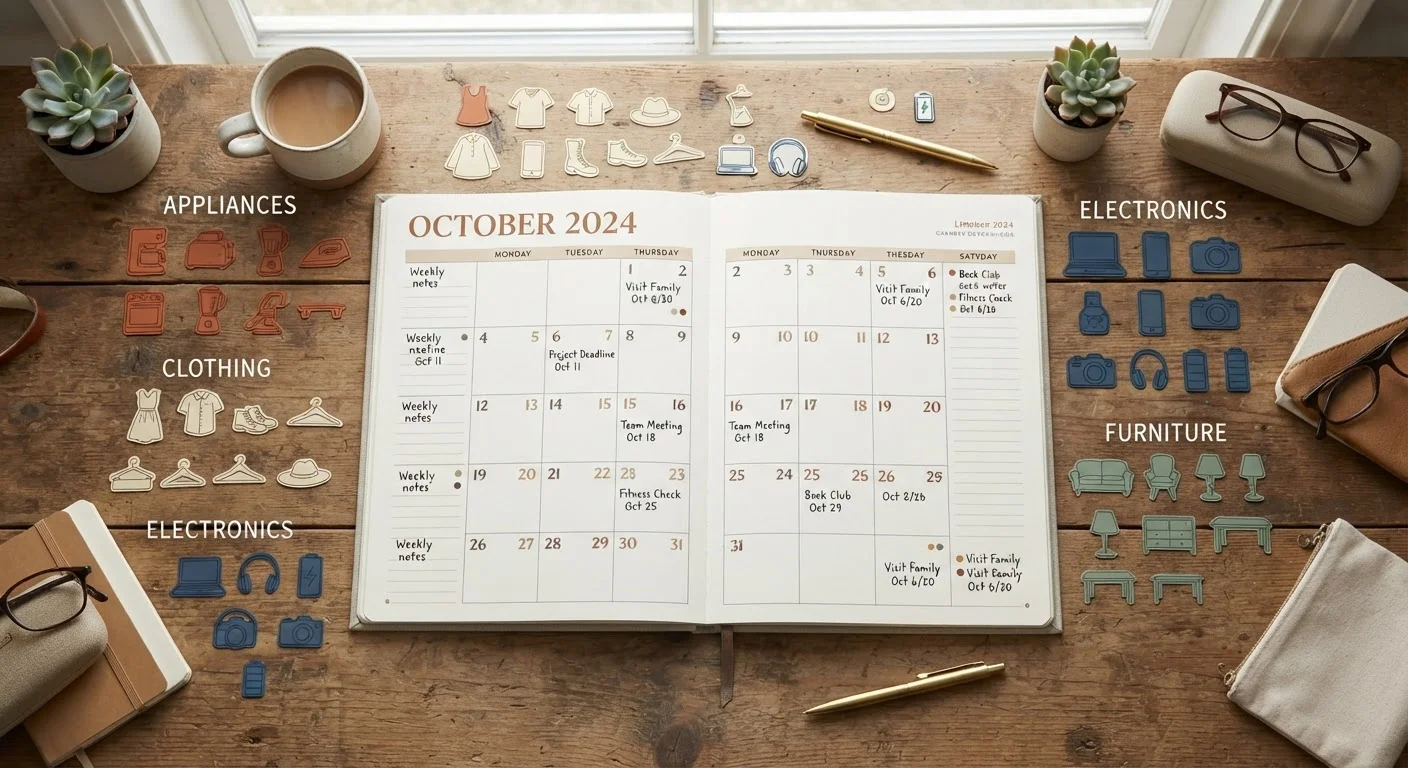
How Seasonal Pricing Works Across Categories
Retailers don't discount products randomly. Markdowns follow predictable inventory cycles tied to model-year changeovers, seasonal demand shifts, and major shopping holidays. Understanding these patterns by product category gives shoppers a concrete advantage - you can plan purchases rather than react to them.
For a broader look at how retailers structure price changes throughout the year, see The Retail Calendar: Why Prices Rise and Fall Throughout the Year. This reference guide focuses on the specific timing windows most relevant to four major spending categories: appliances, electronics, clothing, and furniture.
| Best months for major appliances | September, October, January |
| Peak electronics discount period | November (major shopping holiday) and January |
| Best furniture discount windows | February, August-September |
| Clothing off-season clearance | January-February (winter), August-September (summer) |
| Holiday weekends with broad discounts | Memorial Day, Labor Day, Presidents' Day |
Appliances: End of Month and Model-Year Transitions
Major appliances - refrigerators, washers, dryers, dishwashers - tend to see their deepest discounts in September and October. This is when manufacturers release updated models, pushing prior-year inventory to clearance. January is also a strong window, as retailers work down post-holiday stock.
Holiday weekends - particularly Memorial Day, Labor Day, and Presidents' Day - are consistently cited by industry observers as peak appliance promotional periods. These events give retailers a structured reason to advertise discounts and move floor models. Smaller appliances (blenders, coffee makers) follow different patterns, often discounting heavily in November around the major shopping holiday season.
Model-Year Changeover
The period when manufacturers release updated product versions, prompting retailers to discount existing inventory to clear shelf space. Common in appliances and electronics.
Clearance Cycle
A predictable sequence of markdowns retailers use to move end-of-season or overstocked inventory. Discounts typically deepen the longer items remain unsold.
Floor Model
A display unit used in a physical retail store. Floor models are often sold at a discount when new inventory arrives or a store resets its layout.
Promotional Window
A defined period - often tied to a holiday or seasonal event - when retailers actively advertise price reductions to drive traffic and move specific product categories.
Electronics: November Peaks and Post-Holiday Dips
Consumer electronics have two clear discount windows. The November shopping season - anchored by the major retail holiday at month's end - delivers some of the steepest markdowns of the year on televisions, laptops, and tablets. A secondary window opens in January, when unsold holiday inventory gets marked down further and retailers reset shelf space for spring product launches.
Televisions specifically tend to drop in price in the weeks before major sporting events (such as the Super Bowl), when demand spikes and retailers compete aggressively. New TV models typically debut in spring, so late winter and early spring represent good timing for prior-generation sets. For a side-by-side look at January vs. summer pricing across categories, see Shopping in January vs. July: Which Month Actually Saves You More.
2-3x
TV price competition increase near Super Bowl
Retailers have historically intensified promotional pricing on televisions in the weeks leading up to major sporting events, according to consumer pricing analysts.
January
Month with broadest post-holiday electronics markdowns
Industry observers consistently identify January as the window when unsold holiday electronics inventory reaches its lowest seasonal price points.
Clothing and Furniture: Off-Season Timing Is Key
Clothing follows a well-established end-of-season clearance cycle. Winter apparel discounts deepen through January and February; summer clothing marks down in August and September. The further into the off-season a retailer pushes, the steeper the reductions - though selection narrows. Back-to-school periods (July-August) bring reliable discounts on basics and casual wear. End-of-Season Clearance: How Retail Markdown Cycles Actually Work explains the mechanics behind these schedules in detail.
Furniture discounts cluster in February (around Presidents' Day weekend) and again in August and September, when new collections arrive and floor models need clearing. Holiday weekends generally prompt promotional events, but the late-summer window is often overlooked and can offer strong value. Memorial Day is another historically active period for furniture promotions. For timing strategies that apply across all these categories, Timing Strategies That Experienced Bargain Hunters Rely On covers the broader playbook.
The content on this site is provided for informational purposes only and should not be considered a substitute for professional advice. While we strive to provide accurate and up-to-date information, we make no guarantees regarding its completeness or accuracy. Always consult a qualified professional for advice specific to your circumstances before making any decisions.